
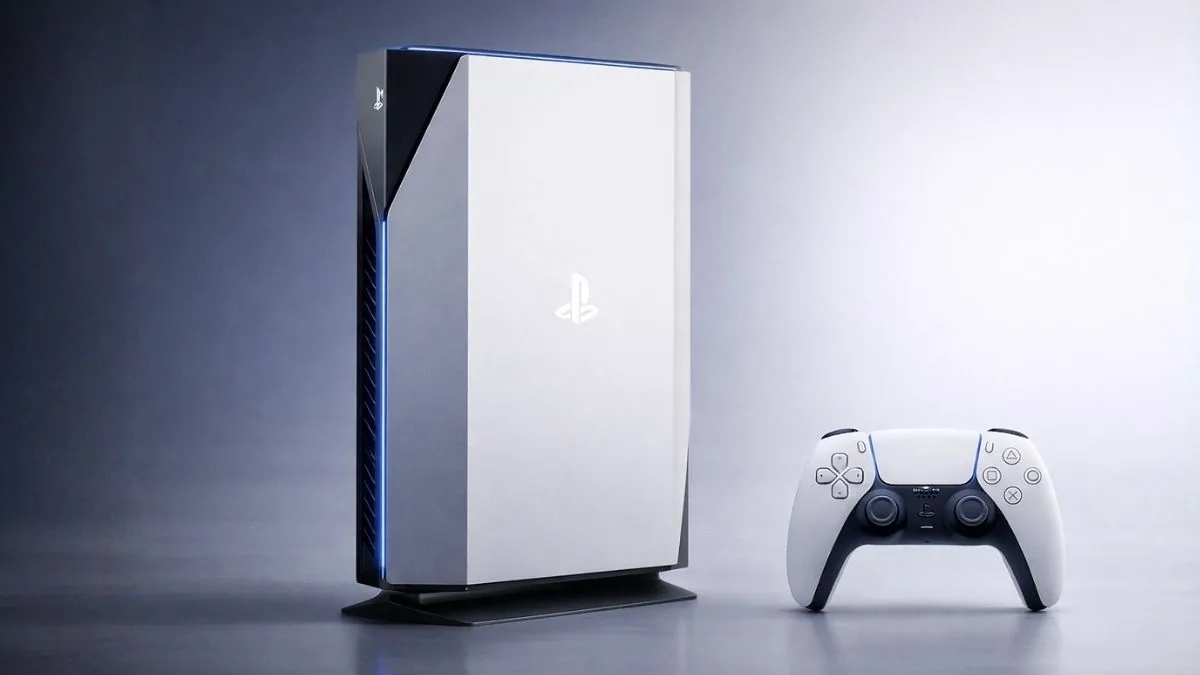
Fresh leaks are beginning to outline Sony’s next-generation PlayStation strategy, pointing to a major leap in memory for the PlayStation 6, alongside an unusually powerful new PlayStation handheld.
Memory has become one of the biggest bottlenecks for modern game engines. As titles push higher-resolution textures, denser open worlds, and heavier ray-traced lighting, available system RAM increasingly determines visual ambition. If these leaks hold true, Sony’s next-generation could remove several constraints developers face today.
According to hardware leaker KeplerL2, the PS6 could ship with up to 30GB of GDDR7 unified memory, while a separate PlayStation handheld is rumored to feature 24GB of LPDDR5X RAM. Similar memory figures have since appeared independently across Insider Gaming, and NotebookCheck, lending additional credibility to the claims.

KeplerL2 has a strong track record with PlayStation-related hardware disclosures, and the alignment across multiple outlets suggests these specifications may reflect Sony’s current internal targets rather than early-stage speculation.
Sony PlayStation Memory Comparison (Leaked) (PS5 vs PS 6)
| Aspect | PlayStation 5 | PlayStation 6 (Leaked) |
|---|---|---|
| Memory Capacity | 16GB GDDR6 | Up to 30GB GDDR7 |
| Memory Speed | 14–18 Gbps | ~32 Gbps per chip |
| Memory Bandwidth | 448 GB/s | ~640 GB/s |
| Memory Bus | 256-bit | 160-bit (clamshell layout) |
| Architecture Focus | Raster + ray tracing | AI-assisted rendering, advanced ray tracing |
| Developer Headroom | Limited for large assets | Significantly expanded |
To reach the reported 30GB configuration, Sony is said to be considering 3GB GDDR7 memory modules arranged in a clamshell layout. While this would reduce the memory bus to 160-bit, the far higher bandwidth of GDDR7, reportedly reaching around 32 Gbps per chip, could still deliver total throughput close to 640 GB/s.
If accurate, this would place the PS6 well ahead of the base PlayStation 5 and slightly above the PlayStation 5 Pro in memory bandwidth, despite the narrower bus.
A jump to 30GB of unified memory would give developers substantially more flexibility for higher-resolution textures, larger environments, and more complex ray-traced lighting without relying as heavily on aggressive asset streaming. Modern engines built around dense, high-detail assets could also see fewer performance dips during demanding scenes.
Sony is expected to expand its use of neural upscaling and machine-learning-driven techniques; additional memory could be allocated to persistent ML models running alongside gameplay, an area where current-generation consoles are tightly constrained.
Sony is also rumored to be developing a new PlayStation handheld, internally referred to as Project Canis. The device is said to feature 24GB of LPDDR5X memory, a capacity that rivals or exceeds many premium Windows-based gaming handhelds currently on the market.
That much memory would let the handheld handle modern games with far fewer trade-offs, especially texture-heavy titles and newer game engines, while still leaving enough breathing room for background tasks and system features.
Both the PS6 and the handheld are expected to rely on custom AMD hardware developed under the long-rumored Project Amethyst collaboration. Leaks point to next-generation Zen 6 CPUs paired with RDNA 5 graphics, with a stronger emphasis on AI-assisted features such as neural rendering, upscaling, and more efficient ray tracing.
There are potential downsides to such a large memory upgrade. Several reports cite ongoing global memory pricing pressure, with estimates suggesting that moving to 30GB of RAM could add around $100 to the PS6’s bill of materials during its early lifecycle, before prices begin to stabilize.
Sony has not officially confirmed any specifications, and final hardware configurations may still change. However, the consistency of these memory figures across multiple independent sources suggests the company is at least targeting this level of capability internally. With the PlayStation 5 continuing to sell strongly, Sony appears in no rush, but the steady convergence of aligned leaks indicates the next generation is already taking shape behind the scenes.
Source: Kepler L2 via NeoGaf via Notebookcheck