
Keebmon, a foldable all-in-one workstation built around AMD’s Ryzen AI 9 HX 370 “Strix Point” processor, has closed its Kickstarter campaign with nearly $4.85 million in funding, showing strong demand for a new category of portable keyboard PCs that combines a mechanical keyboard, ultrawide touchscreen display, and a full Windows PC into a single device.
The campaign positions Keebmon as a Ryzen AI 9 HX 370 mini PC integrated directly into a foldable mechanical keyboard chassis, aimed at developers, creators, and power users who want desktop-level performance in a compact, travel-friendly design.
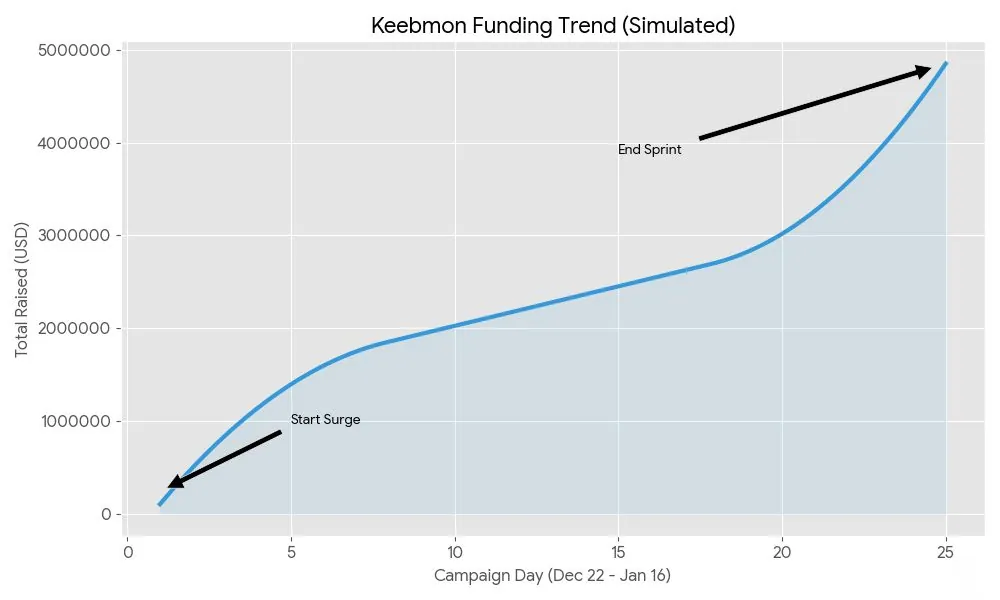
According to campaign data, the project raised $4,850,794 against a $50,000 goal, reaching about 9,702 percent of its target during its 25-day run from December 22, 2025 to January 16, 2026. The campaign attracted 1,119 backers, with funding accelerating at both the start and end of the campaign. The scale of the raise places Keebmon among the more successful recent Kickstarter PC hardware campaigns in the portable workstation segment.
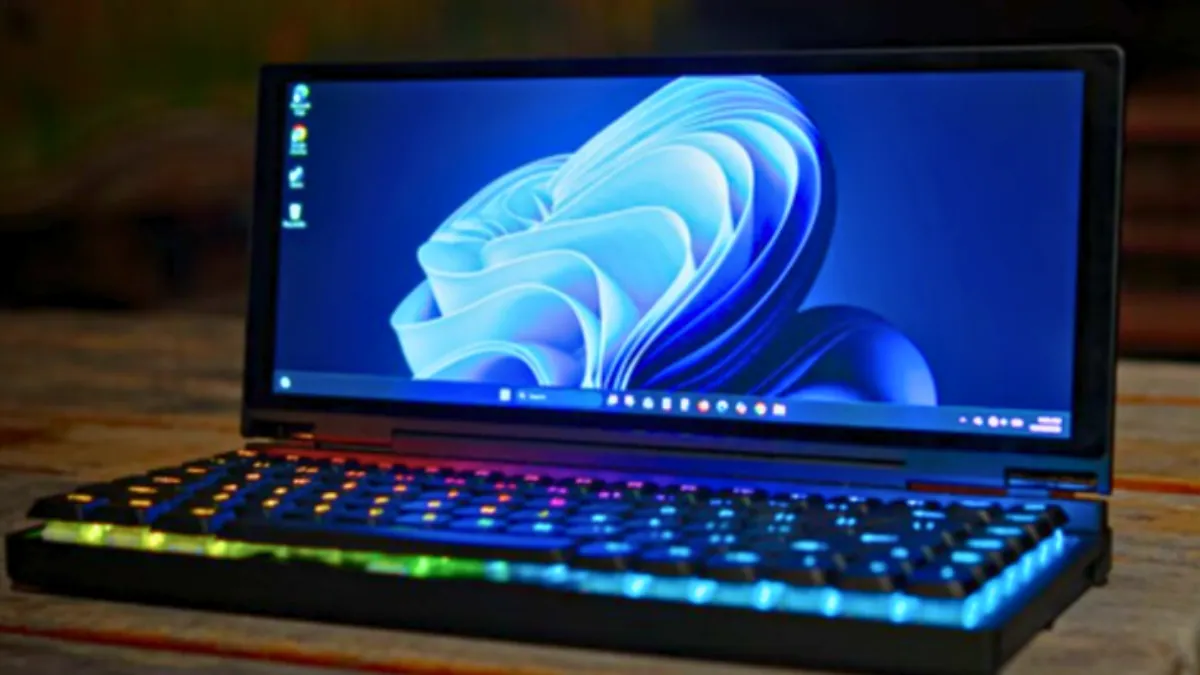
This keebmon is powered by AMD’s Ryzen AI 9 HX 370, part of the Strix Point family. The processor is designed for AI workloads, content creation, multitasking, and gaming in thin and compact devices. Unlike a traditional laptop, the system integrates a 13-inch ultrawide 21:9 touchscreen with 10-point touch directly above an 84-key RGB low-profile mechanical keyboard, all housed in a CNC-machined aluminum chassis that folds flat for transport. The device sits somewhere between a compact desktop PC, a portable monitor setup, and a mechanical keyboard workstation.
The Ryzen AI 9 HX 370 is a high-performance mobile chip capable of handling AI-accelerated applications, demanding productivity tasks, and integrated graphics gaming. However, sustained performance inside a slim aluminum enclosure will depend heavily on thermal design and power management. Users planning to use the OCuLink PCIe 4.0 x4 port for external GPU expansion could significantly extend graphical performance beyond the integrated Radeon graphics.
Keebmon supports up to 64GB of DDR5 memory and M.2 PCIe 4.0 NVMe storage with multi-terabyte capacity options. The base unit does not include preinstalled memory or storage, and users must add at least 16GB of RAM as an add-on. This modular approach makes the device closer to a customizable portable mini PC than a sealed consumer laptop.
Connectivity is a central part of the design. The specifications list two USB4 ports rated at 40Gbps, two USB-A ports at 10Gbps, HDMI 2.1 output, a UHS-II SD card slot, Wi-Fi 7, Bluetooth 5.4, LTE support, and the OCuLink port for high-bandwidth expansion. The inclusion of USB4 and OCuLink positions it as a compact workstation that can connect easily to a larger desktop setup.
The device includes a 70Wh internal battery with support for 100W USB-C Power Delivery charging. At approximately 2.9 lb (1.3 kg), it is marketed as a travel-ready workstation rather than a direct laptop replacement. Battery life will vary depending on brightness, workload, AI usage, and whether high-bandwidth devices such as eGPUs are connected.
A major differentiator is the mechanical keyboard. The 84-key RGB low-profile keyboard uses hot-swappable switches compatible with Kailh Choc V2, allowing users to customize typing feel and actuation. The keymap is programmable and supports layered layouts, targeting developers, writers, designers, and gamers who rely on custom shortcuts and precise input.
During the campaign, early pricing started at approximately $399 for Super Early Bird tiers, while later configurations were listed around $532 plus shipping, depending on bundle selection. Some pricing references were based on 32GB DDR5 RAM and 1TB PCIe 4.0 NVMe storage configurations. Final retail pricing has not yet been confirmed.
The campaign has now moved from fundraising to production preparation, with updates indicating tooling progress and hardware refinements. As with most crowdfunded hardware projects, production timelines and final specifications may still evolve before shipment.
Keebmon’s nearly $5 million raise suggests a clear interest in alternative PC form factors beyond traditional laptops and handheld gaming devices. Its combination of a Ryzen AI 9 HX 370 processor, mechanical keyboard integration, ultrawide touchscreen, OCuLink expansion, and Wi-Fi 7 connectivity places it in a niche between compact mini PCs, creator laptops, and enthusiast mechanical keyboards. Whether it can deliver sustained performance, stable thermals, and consistent battery life will ultimately determine if it becomes a lasting product category or remains a niche concept.
Key Specifications
| Processor | AMD Ryzen AI 9 HX 370 (Strix Point) |
| Graphics | Integrated Radeon graphics |
| Display | 13-inch ultrawide (21:9) touchscreen, 10-point touch |
| Memory | Up to 64GB DDR5 (user configurable) |
| Storage | M.2 PCIe 4.0 NVMe SSD, multi-terabyte support |
| Keyboard | 84-key RGB low-profile mechanical, hot-swappable (Kailh Choc V2 compatible) |
| Expansion | OCuLink PCIe 4.0 x4 for eGPU and high-bandwidth devices |
| Ports | 2× USB4 (40Gbps), 2× USB-A (10Gbps), HDMI 2.1, UHS-II SD card slot |
| Wireless | Wi-Fi 7, Bluetooth 5.4, LTE support |
| Battery | 70Wh with 100W USB-C Power Delivery charging |
| Weight | Approx. 2.9 lb (1.3 kg) |
| Chassis | CNC-machined aluminum alloy |
Sources: Keebmon Kickstarter campaign, BackerKit.com