
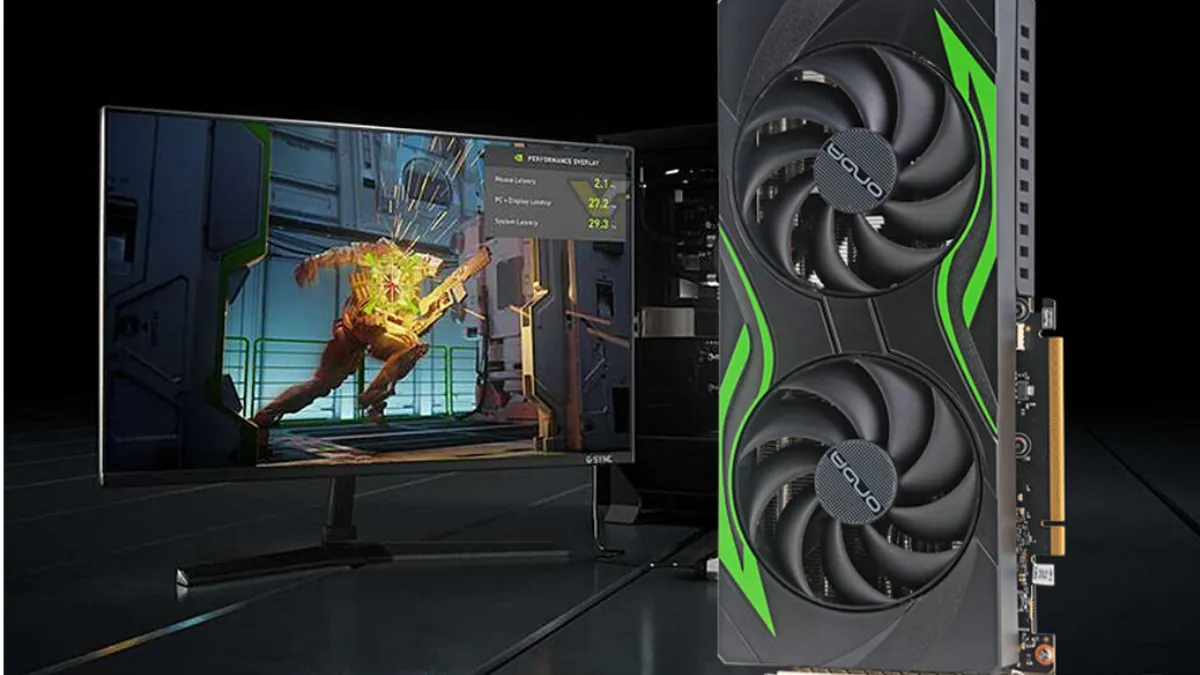
ONDA has unveiled its GeForce RTX 5060 AEGIS 8GD7-B, a compact dual-fan graphics card built on NVIDIA’s latest Blackwell architecture, part of the evolving RTX 50 series lineup. Aimed at mainstream gamers and small-form-factor PC builds, this new GPU focuses on delivering efficient performance, faster memory, and a space-saving design in the midrange segment.
The card uses NVIDIA’s GB206 GPU and comes equipped with 4,608 CUDA cores. It is paired with 8GB of next-generation GDDR7 memory running at 28 Gbps on a 128-bit memory bus, reflecting the shift toward faster graphics memory standards. This setup aligns with expectations for the RTX 5060 class and is designed to handle modern gaming workloads more efficiently than previous GDDR6-based GPUs, especially in bandwidth-sensitive scenarios.
Clock speeds are set at a 2.4 GHz base frequency with a boost clock reaching up to 2.57 GHz. This indicates a reference-level configuration that prioritizes consistent performance, thermal stability, and long-term reliability rather than aggressive factory overclocking.
ONDA has opted for a dual-fan solution featuring two 100 mm ball-bearing fans combined with a heatpipe-based heatsink. The card also includes a semi-passive cooling mode, allowing the fans to stop during low-load conditions. This helps reduce noise during idle or light workloads while maintaining efficient thermal control under load.
The graphics card measures around 264 mm in length and uses a dual-slot design. This makes it suitable for a wide range of PC cases, including compact and mid-sized builds where space can be a limiting factor.
Power is delivered through a single 8-pin connector, with a maximum board power rated at approximately 180W and a recommended 650W power supply. This relatively efficient power requirement makes it easier to integrate into existing systems without needing major PSU upgrades.
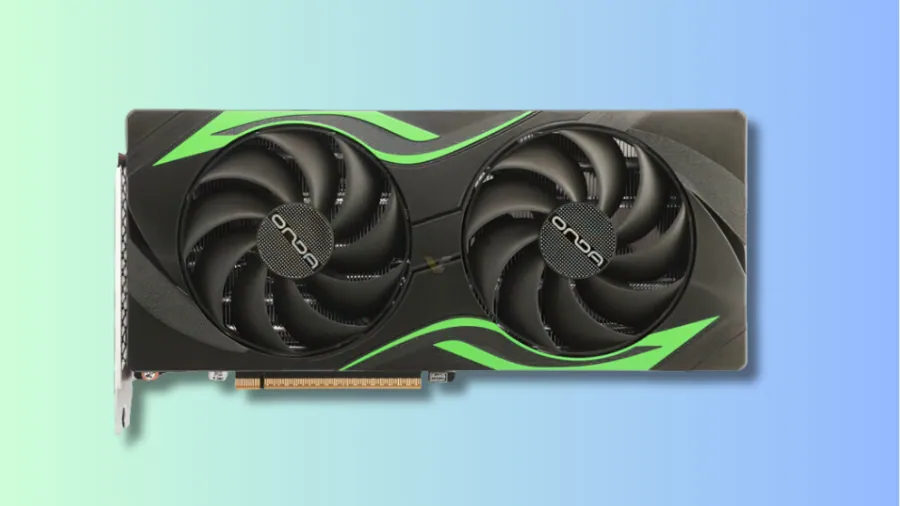
The RTX 5060 AEGIS includes three DisplayPort 2.1b outputs and one HDMI 2.1b port, supporting modern display connectivity standards. It supports up to four displays and is compatible with modern high-refresh-rate monitors. The card also supports DirectX 12, ensuring compatibility with current-generation gaming technologies.
It offers a step up from entry-level options like the RTX 5050 while remaining more accessible than higher-end models in the RTX 50 series lineup, including recent RTX 5060 system builds. For most users, it is expected to deliver solid 1080p gaming performance along with entry-level 1440p capability in many modern titles, aligning with expectations for midrange gaming GPUs.
The combination of compact dimensions, efficient cooling, and balanced specifications makes this card a sensible option for everyday gamers. The inclusion of GDDR7 memory also points toward improved data throughput, which could benefit newer titles and graphics-intensive workloads over time.
ONDA RTX 5060: Key Specifications
| GPU Architecture | NVIDIA Blackwell (GB206) |
| CUDA Cores | 4,608 |
| Base Clock | 2.4 GHz |
| Boost Clock | Up to 2.57 GHz |
| Memory | 8GB GDDR7 |
| Memory Speed | 28 Gbps |
| Memory Bus | 128-bit |
| Cooling System | Dual-fan, heatpipe-based |
| Fan Features | Semi-passive |
| Power Connector | 1× 8-pin |
| Recommended PSU | 650W or higher |
| Maximum Power Draw | 180W |
| Display Outputs | 3× DisplayPort 2.1b, 1× HDMI 2.1b |
| Maximum Displays | Up to 4 |
| DirectX Support | DirectX 12 |
| Card Dimensions | 264 mm, dual-slot design |
Source: Onda