

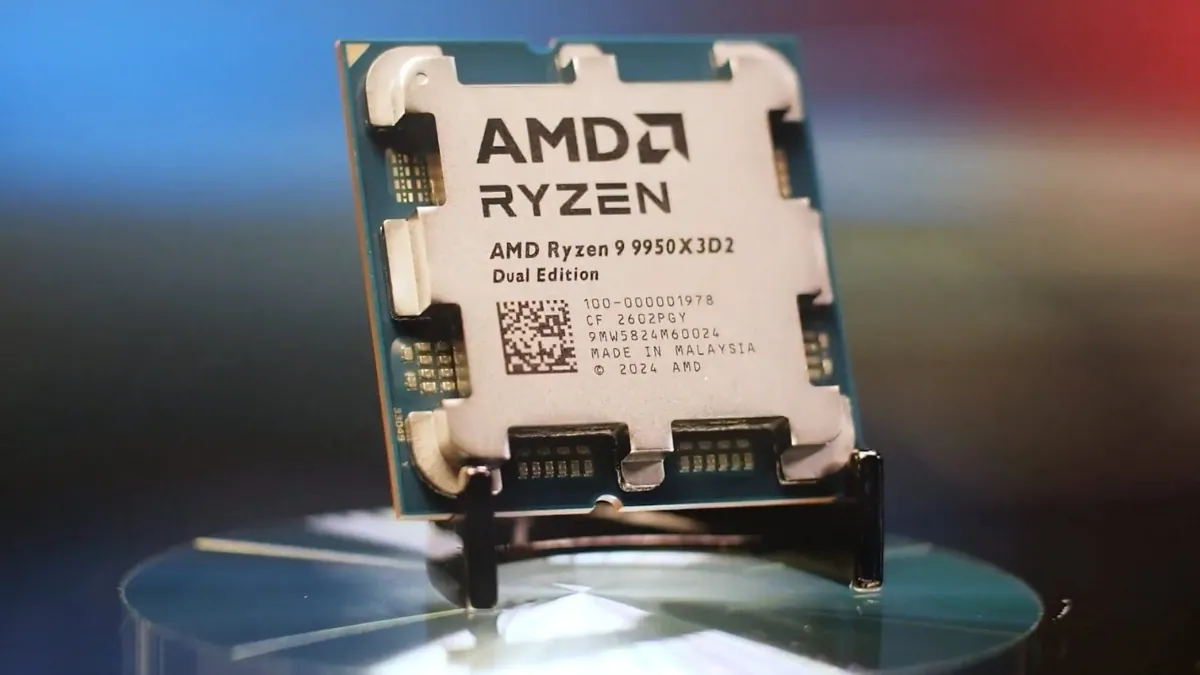
Early benchmark results for AMD’s upcoming Ryzen 9 9950X3D2 have appeared online before its April 22 launch. These results give a first look at how the new processor performs, but they are not final. The tests come from a single user, and the cooling setup is not clearly known. Because of this, the results should be seen as early data, not final performance.
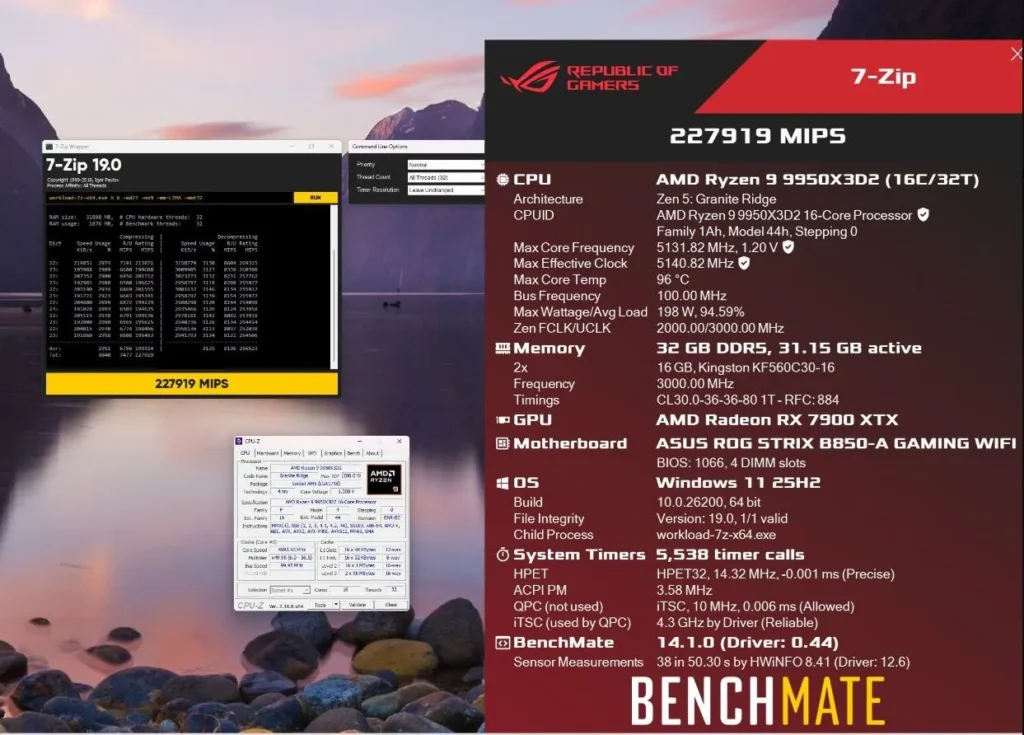
The benchmarks were shared through HWBOT by a user who tested the processor using common tools like 7-Zip and Cinebench. The system used a modern AM5 setup with DDR5 memory and a high-end graphics card. Even though the setup looks strong, one thing is clear in all the tests. The processor reaches very high temperatures during heavy workloads.
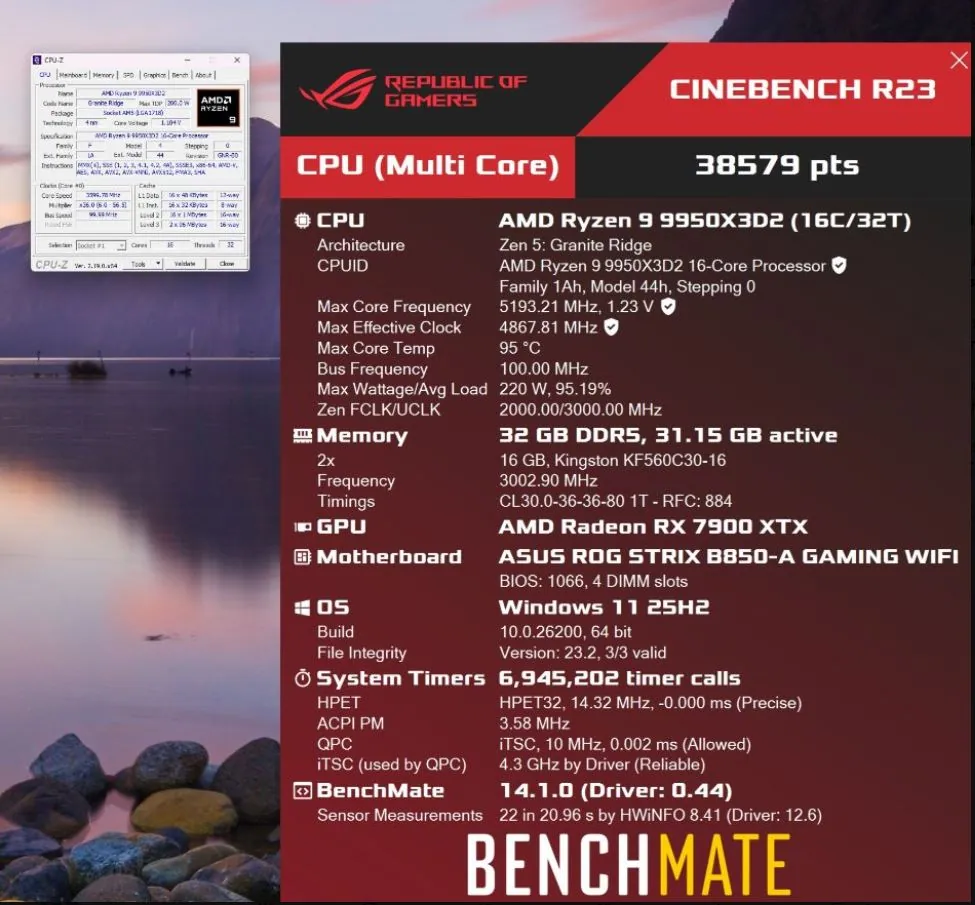
Under multi-core load, the CPU hits around 95°C and sometimes goes slightly higher. When this happens, the processor lowers its speed to protect itself. This is called thermal throttling. Because of this, the processor is not able to keep higher clock speeds for long periods in these early tests.
| Specification | Details |
|---|---|
| Architecture | Zen 5 (Granite Ridge) |
| Cores / Threads | 16C / 32T |
| Cache Design | Dual CCD with 3D V-Cache on both dies |
| Total Cache | Around 208MB |
| TDP | Around 200W |
| Observed Power | Up to around 220W |
| Platform | AM5 |
| Memory | DDR5 around 6000 MT/s |
| Launch Date | April 22, 2026 |
| Expected Price | Around $899 |
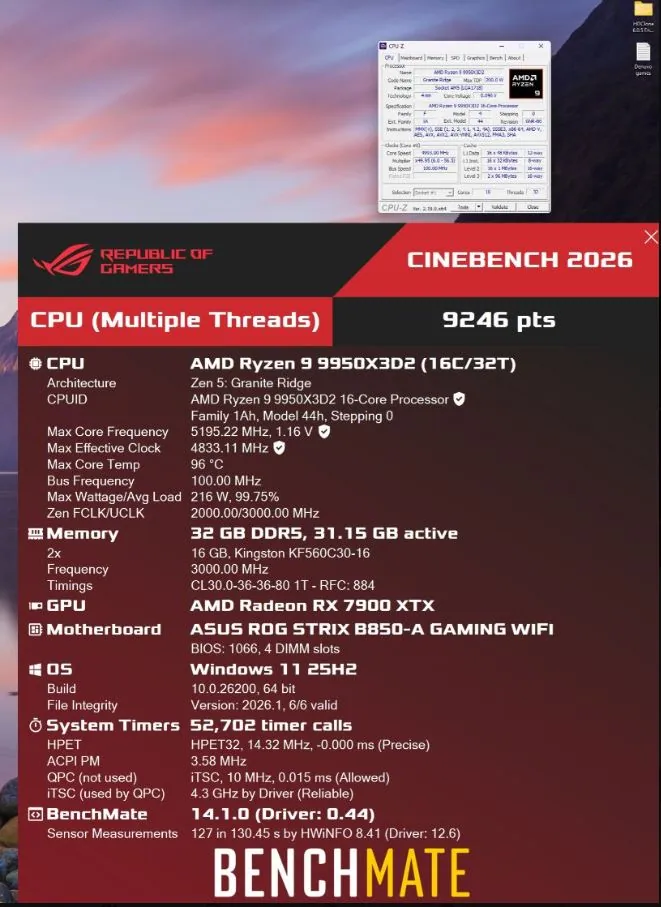
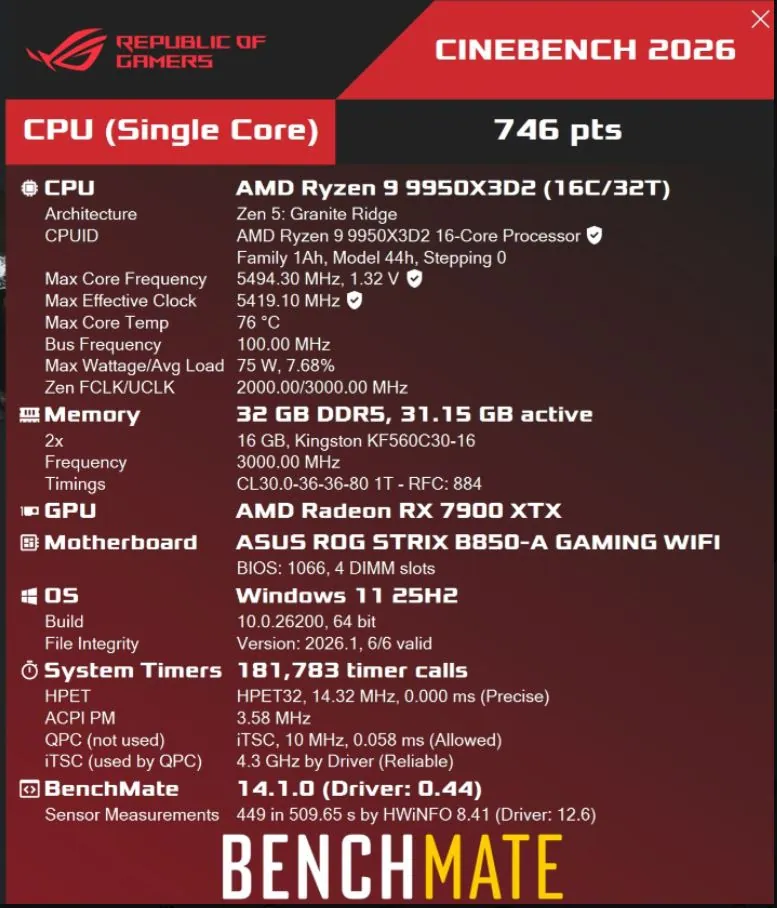
The benchmark scores are similar across all tests. In 7-Zip, the processor scores 227,919 MIPS while running at about 5.13 GHz. In Cinebench 2026 multi-core, it scores 9,246 points. In Cinebench R23 multi-core, it reaches 38,579 points. During these tests, the clock speed stays below about 5.2 GHz, likely due to high temperature and power limits.
| Benchmark | Score | Behavior |
|---|---|---|
| 7-Zip | 227,919 MIPS | Around 5.13 GHz under load |
| Cinebench 2026 Multi-Core | 9,246 | Stays below 5.2 GHz |
| Cinebench R23 Multi-Core | 38,579 | Thermal throttling seen |
| Cinebench 2026 Single-Core | 746 | Up to about 5.5 GHz boost |

Single-core performance looks better. When fewer cores are active, the processor runs cooler at around 76°C and reaches higher speeds of about 5.4 to 5.5 GHz. This shows that the CPU can reach high speeds, but only when heat is lower.
The test system used a B850 motherboard, 32GB of DDR5 memory, and a Radeon RX 7900 XTX graphics card. The cooling was an air cooler, but the exact model is not known. This is important because a better cooler could change the results.
| Test Platform Component | Configuration |
|---|---|
| Motherboard | ASUS ROG Strix B850-A Gaming WiFi |
| Memory | 32GB DDR5 |
| GPU | Radeon RX 7900 XTX |
| Cooling | Air cooler, model not specified |
| OS | Windows 11 25H2 |
This processor uses a new design. It has 3D V-Cache on both compute chips instead of just one. This means all cores can use the extra cache, which can help in games and some tasks. However, adding extra layers of cache can also make it harder for heat to move away from the chip. This may be one reason why temperatures are high in these tests, but it is not confirmed yet.
It is also important to remember that early tests often change. Performance can improve with better BIOS updates, improved memory settings, and stronger cooling. Some results from other setups show that higher performance is possible when better cooling is used.
Also Read: Best Laptops for Data Science: Real Workflow Tested
Right now, there are no gaming benchmarks available. This is important because processors with 3D V-Cache are usually designed to perform best in games. Without gaming data, it is not possible to fully judge the processor.
For users, these early results give a basic idea but not the full picture. Cooling will likely play a big role in how this processor performs. However, it is too early to say that air cooling is not enough in all cases.
The Ryzen 9 9950X3D2 will launch on April 22, and full reviews are expected soon after. Those reviews will give a clearer answer about performance, cooling needs, and real-world usage. For now, the early data shows strong potential, but also shows that heat may limit performance under certain conditions.