

Sapphire has launched a new approach to graphics card power with its NITRO+ Radeon RX 9070 XT PhantomLink series. The design delivers cable-free GPU connectivity by routing power directly through a connector on the motherboard, removing the need for external PCIe power cables. The result is a cleaner build with no visible GPU wiring, but it also means the card depends on a compatible motherboard for full support.
The connector sits at the rear of the graphics card and aligns with a matching port on the motherboard, allowing power to flow straight through the board into the GPU. This removes bulky 8-pin and 12VHPWR cables from the build and avoids the bending or routing issues often seen in compact cases, an issue highlighted in Gigabyte AORUS RTX 5060 Ti AI Box. Sapphire also points to improved connection stability, since the power path is fixed rather than dependent on external cables.
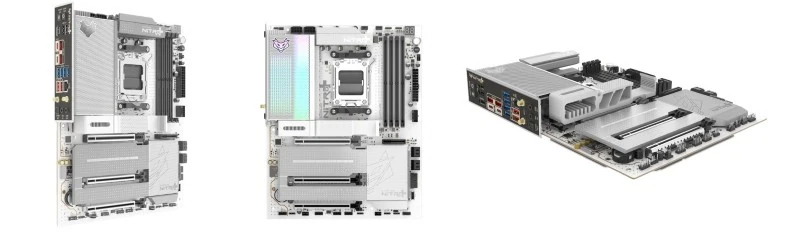
This design is built as a complete platform, a direction that reflects integrated hardware trends reported in NVIDIA PC maker acquisition rumor. The RX 9070 XT PhantomLink is intended to pair with Sapphire’s NITRO+ X870EA PhantomLink motherboard, where connector placement and layout are matched. Support for GC-HPWR and BTF-style boards is mentioned, but the full experience comes from using both parts together. This makes the graphics card part of a coordinated setup rather than a universal drop-in upgrade.
That requirement also affects pricing. The graphics card starts at $989, while the matching motherboard is listed at $399 or $419 depending on the version. A full PhantomLink setup lands close to $1,400 before adding CPU, memory, or storage. This places it well above a standard RX 9070 XT build and closer to the cost of a broader high-end upgrade, aligning with pricing movement tracked in AMD Radeon RX 9070 below MSRP Germany vs US prices.
On the hardware side, the card follows the same configuration as other NITRO+ RX 9070 XT models. It includes 16GB of GDDR6 memory on a 256-bit bus running at 20 Gbps, along with 4096 stream processors and 64 ray accelerators. Boost clock reaches up to 3060 MHz, matching factory-overclocked versions already available.
Cooling focuses on reducing heat without increasing noise, a priority seen in thermal-focused launches such as Thermalright AI Hydronous R1. Sapphire adds a 0.3 mm graphene thermal pad designed to lower hotspot temperatures by up to 10 percent while keeping noise levels around 26 dBA. The Polar Edition introduces a revised grille layout that improves airflow and comes in a white finish aimed at themed builds.
Power monitoring is built into the design. Sensors track energy flow at both the PCIe slot and the PhantomLink connector. If irregular behavior is detected, the card can reduce performance, trigger alerts, or shut down to protect components.
The matching X870EA PhantomLink motherboard adds build-focused features, reflecting trends in modern boards such as ASUS TUF B850I WiFi Neo. It includes tool-free M.2 installation, a debug display for POST codes, and dedicated buttons for BIOS updates and CMOS reset. ARGB lighting is integrated into the VRM heatsink and can be controlled through the same software used for GPU tuning.
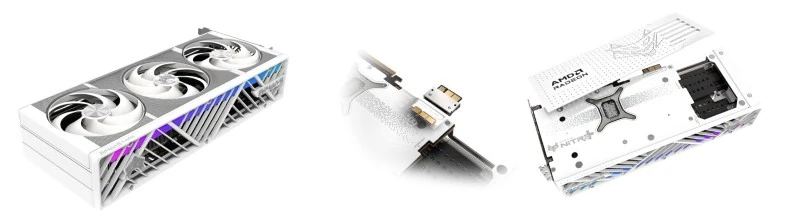
Two versions are available. The standard model comes in a darker finish, while the Polar Edition offers a white design for cleaner-looking builds. Both follow the same PhantomLink layout and share identical core hardware.
Compared to traditional graphics cards, this approach changes how a PC is built. Cable routing around the GPU disappears, leaving a cleaner interior, especially in glass-panel cases. At the same time, it reduces flexibility since the graphics card and motherboard are closely linked. Builders who prefer mixing components across brands may see that as a limitation, while those focused on a clean layout may find the trade-off worthwhile.
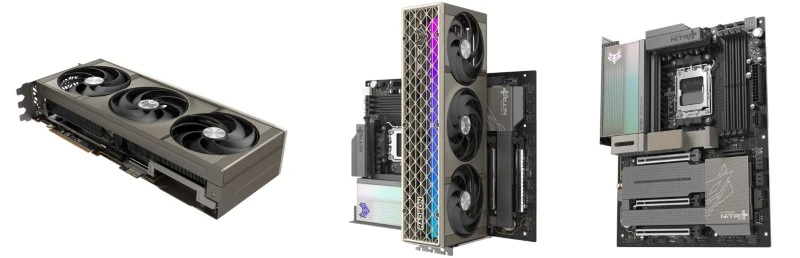
The Sapphire NITRO+ RX 9070 XT PhantomLink Edition is priced at $989, with the Polar Edition at $999. Matching X870EA PhantomLink motherboards are listed at $399 and $419. The lineup is rolling out through global retail channels.
Source: Sapphire