

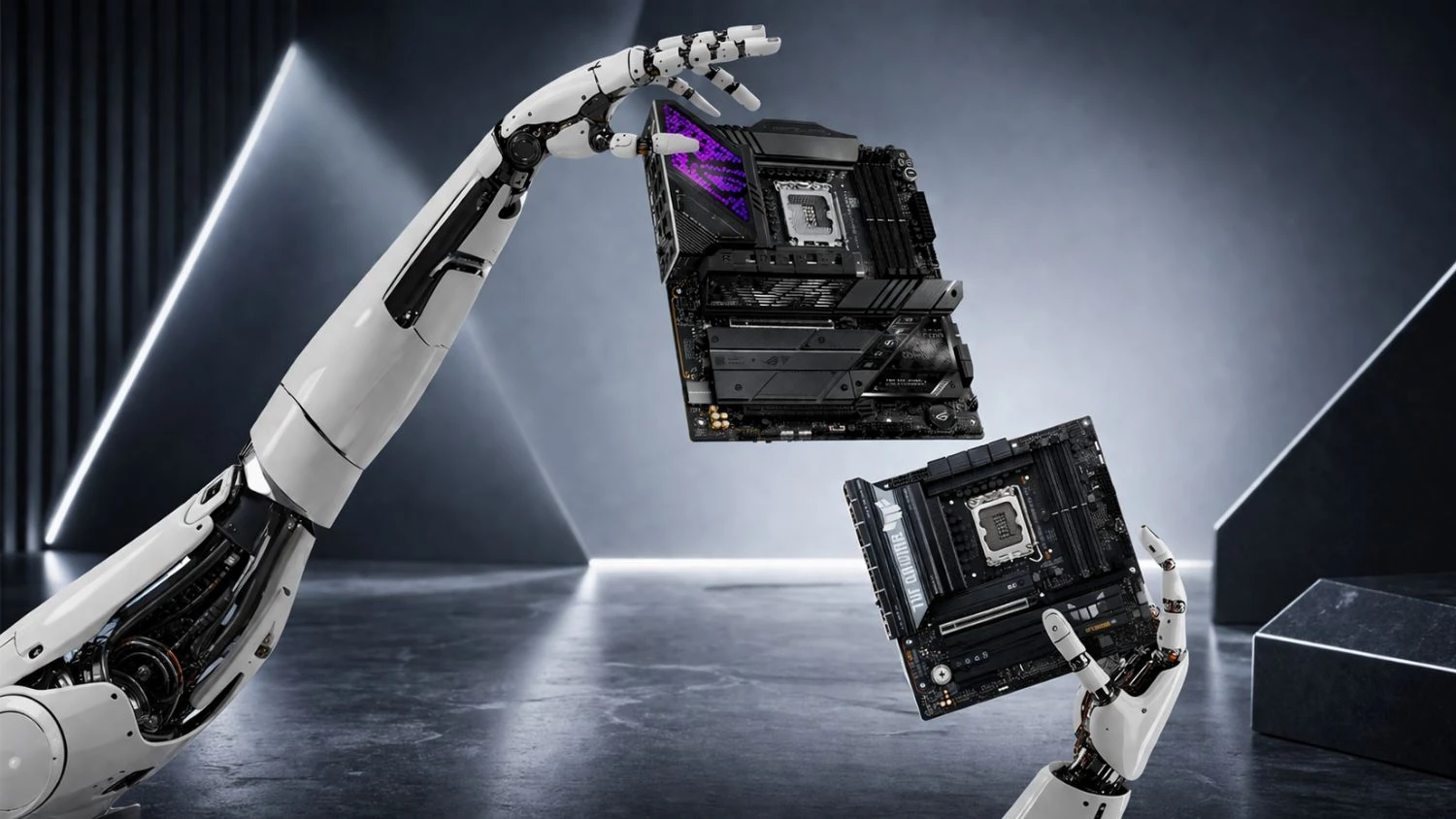
ASUS has confirmed support for 32-bit HUDIMM DDR5 memory on its Intel 800 series motherboards through a beta BIOS update. The rollout covers Z890, B860, Q870, and H810 chipsets, opening a lower-cost path for DDR5 builds without requiring new hardware.
HUDIMM that short for half-channel DIMM, changes how DDR5 modules are built, as explained in New HUDIMM DDR5 Could Make RAM Much Cheaper on Intel PCs. Standard DDR5 memory splits access into two 32-bit sub-channels, but HUDIMM keeps only one active. This reduces the number of DRAM chips on the module by half, which directly lowers manufacturing cost and makes the memory cheaper to produce amid trends covered in Samsung WD SSD price surge global storage costs.
That cost saving comes with a clear downside. With only one channel active, memory bandwidth drops by about 50 percent compared to standard DDR5. This reduction affects workloads that rely on high data throughput, including gaming at lower resolutions, video editing, and other tasks that move large amounts of data. In those scenarios, HUDIMM will not match the performance of traditional DDR5 modules.
For lighter workloads, the difference is less noticeable. Everyday use such as browsing, office work, streaming, and basic multitasking does not depend heavily on peak memory bandwidth. In these cases, the lower price of HUDIMM can be more important than the performance gap, especially for entry-level builds or budget-focused systems.
ASUS is presenting HUDIMM as an additional option rather than a replacement. Builders can still choose standard DDR5 modules for higher performance, while HUDIMM offers a more affordable alternative when cost is the main concern. This flexibility becomes more relevant as memory prices continue to fluctuate, following trends reported in PC price hikes powergpu ssd memory.
Support arrives through BIOS updates instead of new boards. Existing ASUS and ROG Intel 800 series motherboards can run HUDIMM modules after updating, which allows users to try the new memory format without replacing their platform. It also means switching back to standard DDR5 remains possible at any time.
This approach reflects a wider shift in DDR5 development. Some formats, such as CUDIMM, push toward higher speeds and larger capacities highlighted in Micron 24GB GDDR7 36Gbps memory. HUDIMM moves in the opposite direction, focusing on simplicity and lower cost. These two paths highlight a growing divide between performance-focused and budget-oriented memory options.
Availability now depends on memory manufacturers bringing compatible HUDIMM modules to market. ASUS has enabled platform-level support, but actual adoption will depend on supply and pricing from third-party vendors. For now, the feature is limited to beta BIOS releases, with broader availability expected as the ecosystem develops.
HUDIMM introduces a straightforward trade-off. Lower cost comes at the expense of reduced bandwidth, giving builders a new way to balance price and performance depending on their needs.
Source: IThome