
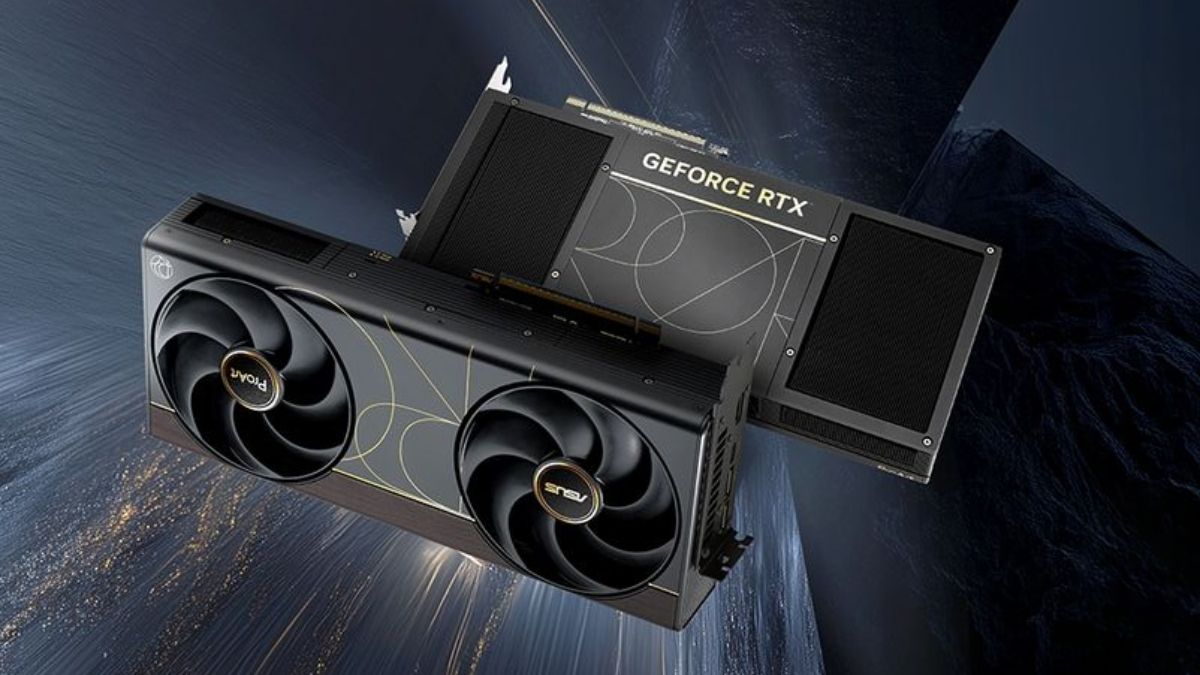
Most GeForce RTX 5090 cards released so far have become extremely large, with many models stretching beyond three or even four slots. ASUS is taking a different direction with the ProArt GeForce RTX 5090 OC Edition, cutting the design down to a slimmer 2.5-slot layout aimed at creator systems, compact workstations, and smaller high-end PC builds.
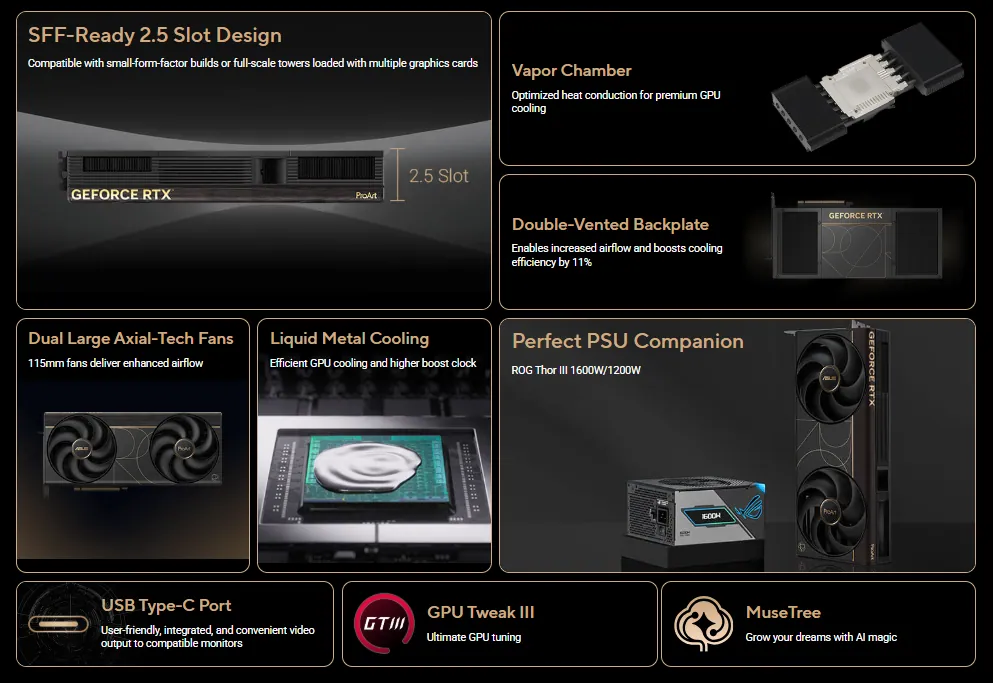
The smaller size is one of the biggest changes in this graphics card. ASUS lists the card as SFF-ready, something that still remains uncommon in the RTX 5090 category. Physical dimensions come in at 304 × 140 × 50 mm, making it noticeably shorter and thinner than many flagship RTX 5090 cards currently on the market.
Cooling hardware has not been scaled back to achieve the smaller footprint. ASUS still uses a vapor chamber cooler, large axial-tech fans, and a double-vented backplate that pushes air through both sides of the heatsink. According to the company, this layout improves airflow efficiency by around 11% while reducing card size by roughly 37% compared to larger triple flow-through designs.
The ProArt model carries NVIDIA’s Blackwell-based RTX 5090 GPU with 32GB of GDDR7 memory running across a 512-bit interface. Memory speed reaches 28 Gbps, while AI performance is rated at up to 3352 TOPS. ASUS also raises boost clocks slightly in OC mode, reaching 2512 MHz instead of the standard 2482 MHz profile.
One of the more unusual additions is the return of USB Type-C on the rear I/O. That connector disappeared from many recent flagship graphics cards, but ASUS is bringing it back for creator-focused setups that rely on portable OLED displays, docking stations, or single-cable monitor connections. The remaining outputs include one HDMI 2.1b port and two DisplayPort 2.1b connectors, with support for up to four displays at resolutions up to 7680 × 4320.
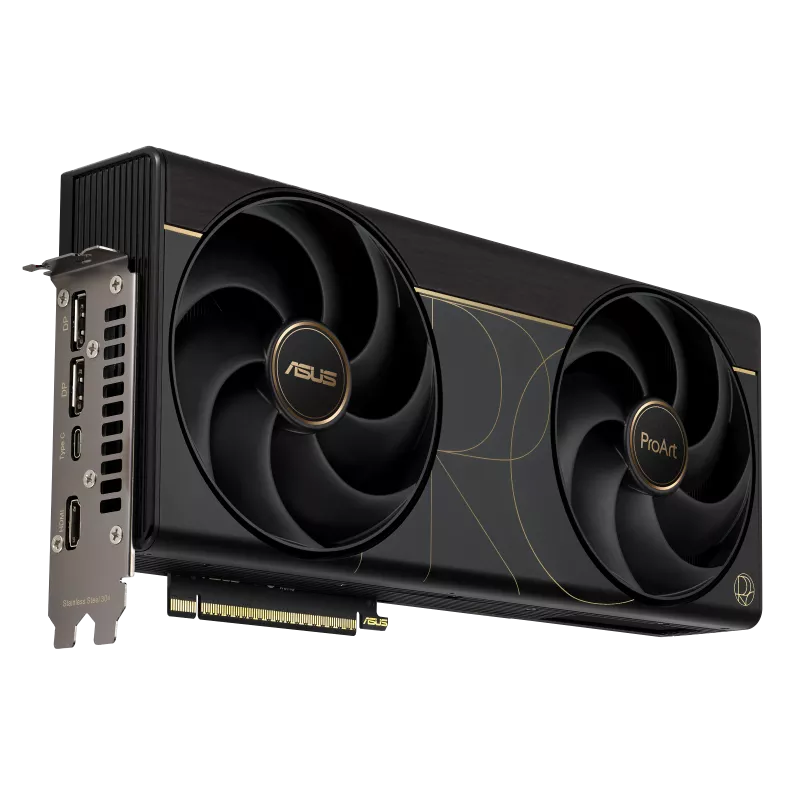
Heat transfer also gets extra attention through the use of liquid metal on the GPU die. ASUS says the redesigned backplate improves ventilation around the rear section of the card while helping maintain stable temperatures during sustained workloads.
The visual design stays closer to workstation hardware than gaming-focused GPUs. Dark colors, bronze accents, and minimal lighting replace the heavier RGB styling commonly found on flagship gaming cards. ASUS is also adding creator-oriented tools through GPU Tweak III, including desktop monitoring, display controls, and workflow-focused management features.
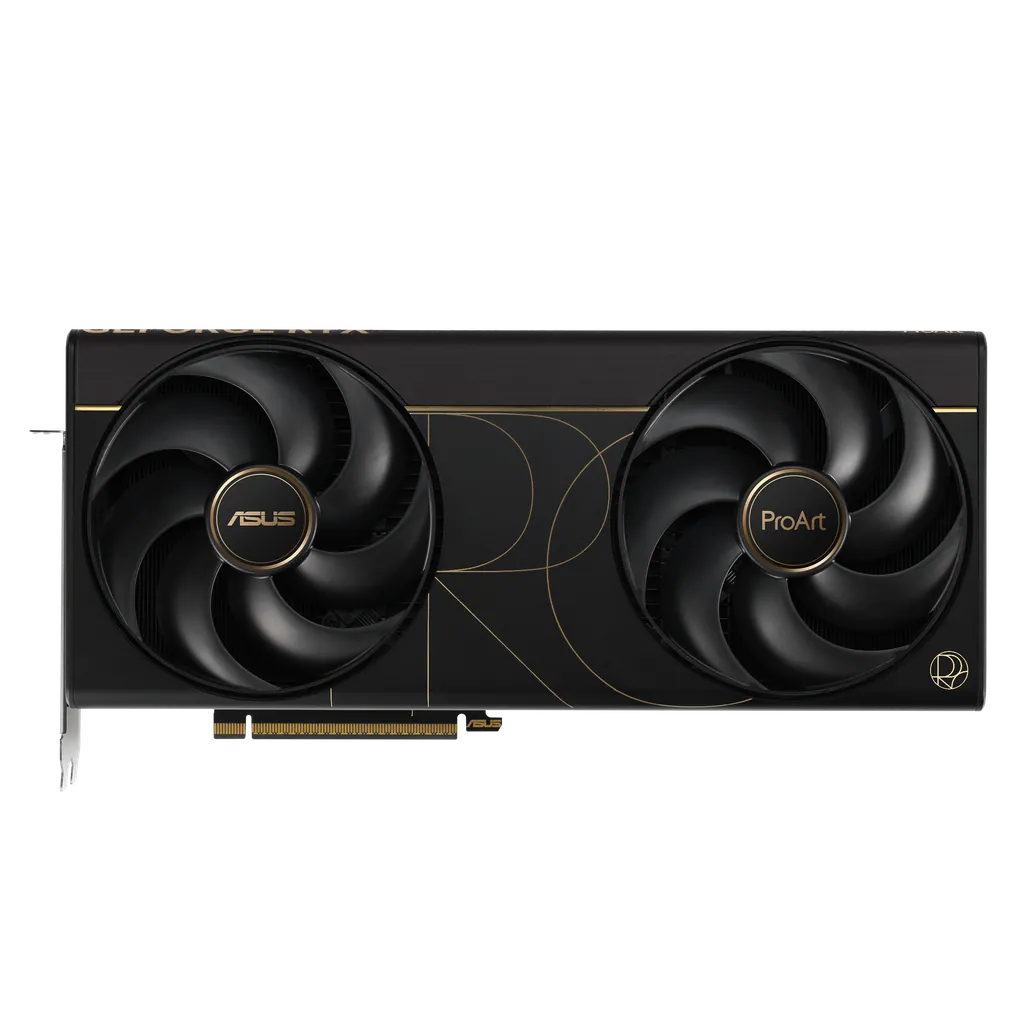
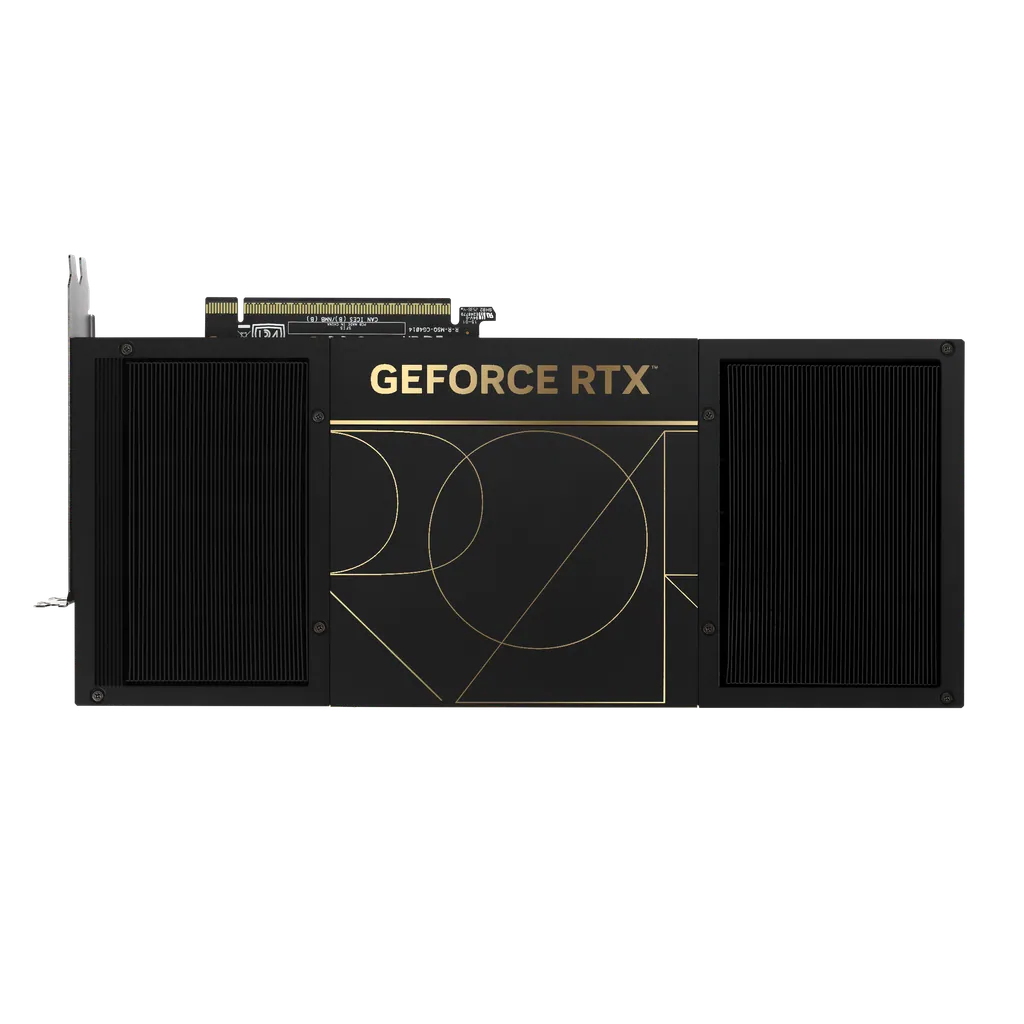
ASUS recommends a 1000W power supply for the ProArt RTX 5090 OC Edition. The retail package includes a GPU support bracket along with a 1-to-4 adapter cable.
With most RTX 5090 cards continuing to grow in size this generation, the ProArt version gives creators and workstation users another option that does not require oversized cases or heavily gaming-focused designs.
Source: ASUS Press