

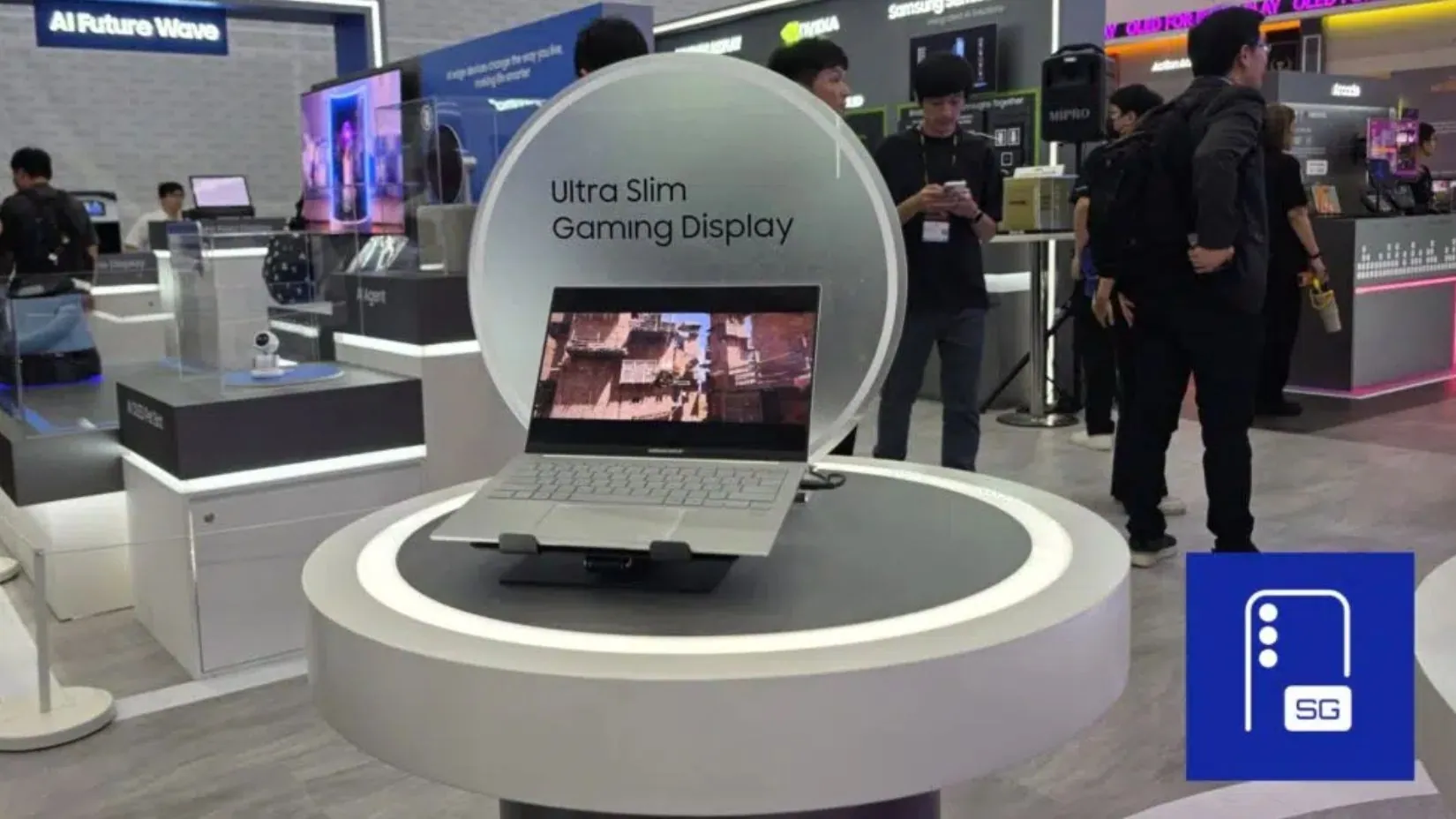
Samsung Display is showing a new Ultra Slim OLED laptop panel at Computex 2026 that reduces outer-edge thickness by more than 20% compared to the company’s current mass-produced OLED laptop displays. The panel is still under development, but the technology offers a glimpse at thinner and lighter notebooks without giving up high refresh rates or OLED image quality.
The thinner design comes from changes to the panel structure itself. Samsung reduced the thickness of both the TFT substrate glass and the encapsulation glass by more than 30% through an advanced etching process. By trimming material from both layers, the company has been able to reduce the overall profile of the display while continuing to target notebook applications.
Ultra-thin panels can become more vulnerable to deformation and durability issues, particularly in laptops that are opened and closed countless times during their lifespan. Samsung states that it has developed manufacturing techniques to help maintain panel stability and reduce the risk of warping despite the thinner construction.
The panel supports the True Black 1000 standard and retains the deep blacks, high contrast levels, and fast response times associated with OLED technology. These characteristics have become increasingly important in premium notebooks used for gaming, content creation, and media consumption.
Samsung is pairing the thinner design with high refresh rates ranging from 165Hz to 240Hz. The upper end of that range matches the fastest OLED laptop panels currently available in mass production. Faster refresh rates help deliver smoother motion and improved responsiveness, particularly in competitive gaming workloads.
The development could give notebook manufacturers additional flexibility when designing future devices. A thinner display module can free up internal space that may be allocated to larger batteries, upgraded cooling hardware, or a slimmer chassis. As laptop makers continue balancing performance and portability, display thickness is becoming a more important part of overall notebook design.
Samsung confirmed that the Ultra Slim OLED panel remains in the development stage. The company has not announced a mass-production schedule, commercial availability date, or specific laptop partners for the technology.
Although there is no timeline for commercial products yet, the Computex demonstration highlights where Samsung’s notebook OLED technology is heading next. Instead of focusing solely on higher resolutions and brighter screens, the company is working to make laptop displays physically thinner while preserving the image quality and refresh rates expected from premium devices.
Source: SammyGuru