
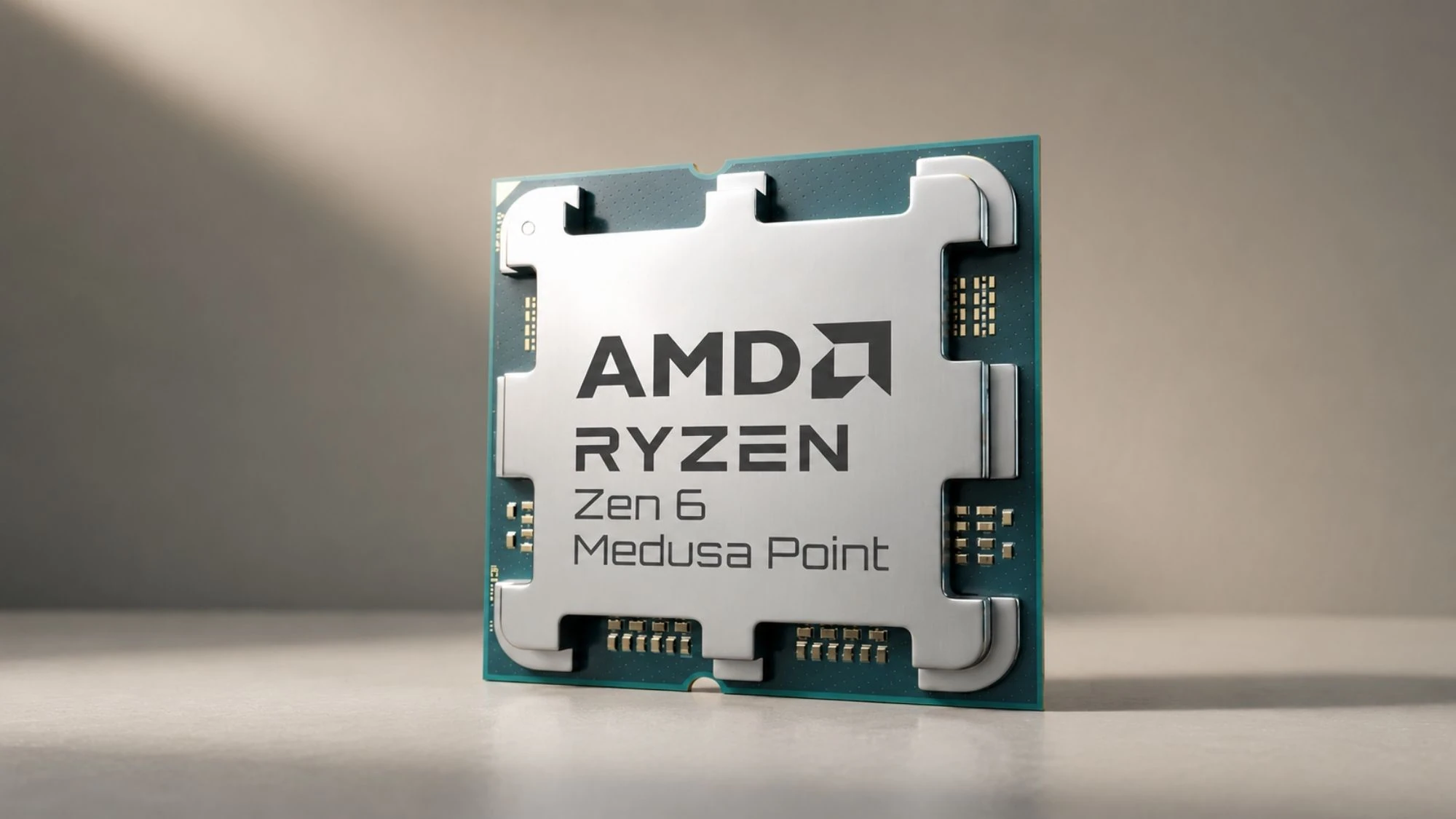
A new Geekbench 6 result lists an AMD Medusa Point engineering sample with stronger benchmark scores than an earlier submission. The database identifies a 10-core, 20-thread processor running on the Plum-MDS1 reference platform with the new FP10 BGA socket. The entry reports a 2.00GHz base frequency and a maximum recorded frequency of 2063MHz, although AMD has not confirmed the processor’s final specifications or operating clocks.
The processor is identified as AMD Eng Sample: 100-000001713-33_N. The benchmark reports a 4+6 core layout, which industry reports associate with a combination of Zen 6 and Zen 6c cores. It lists 10MB of L2 cache and 32MB of L3 cache, although cache values on engineering samples can change before commercial hardware reaches the market.
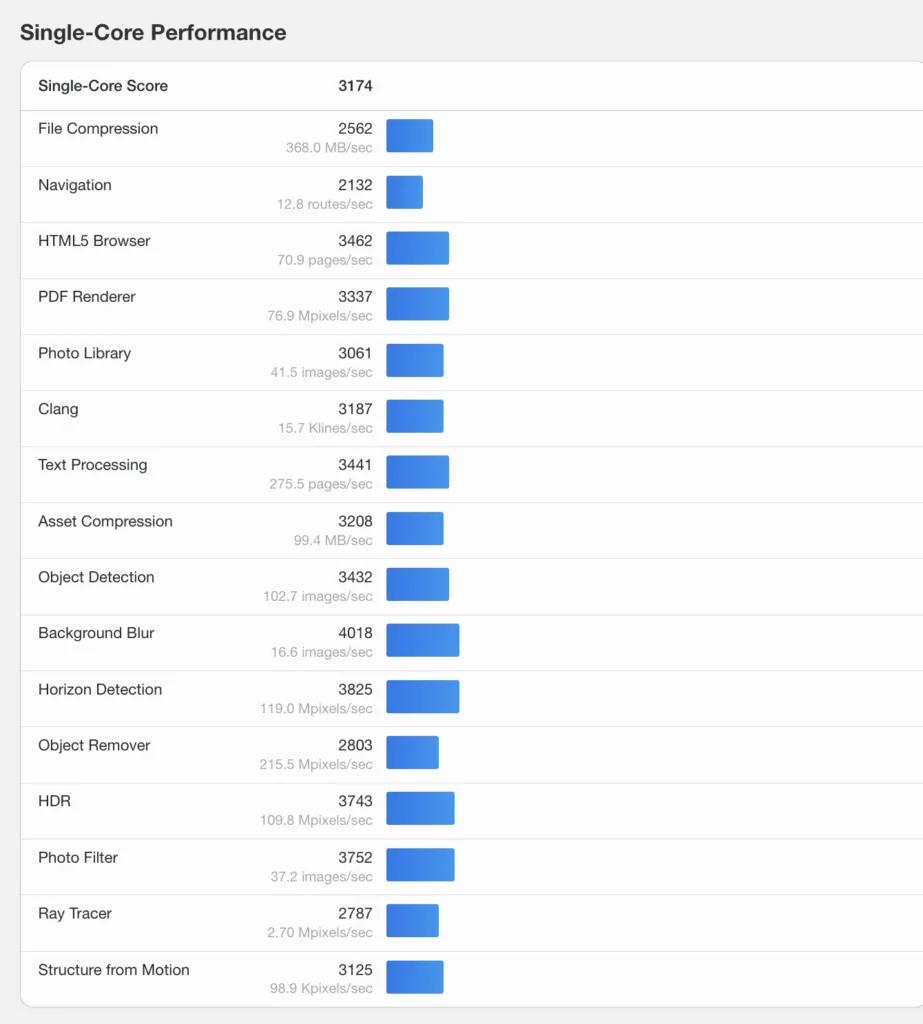
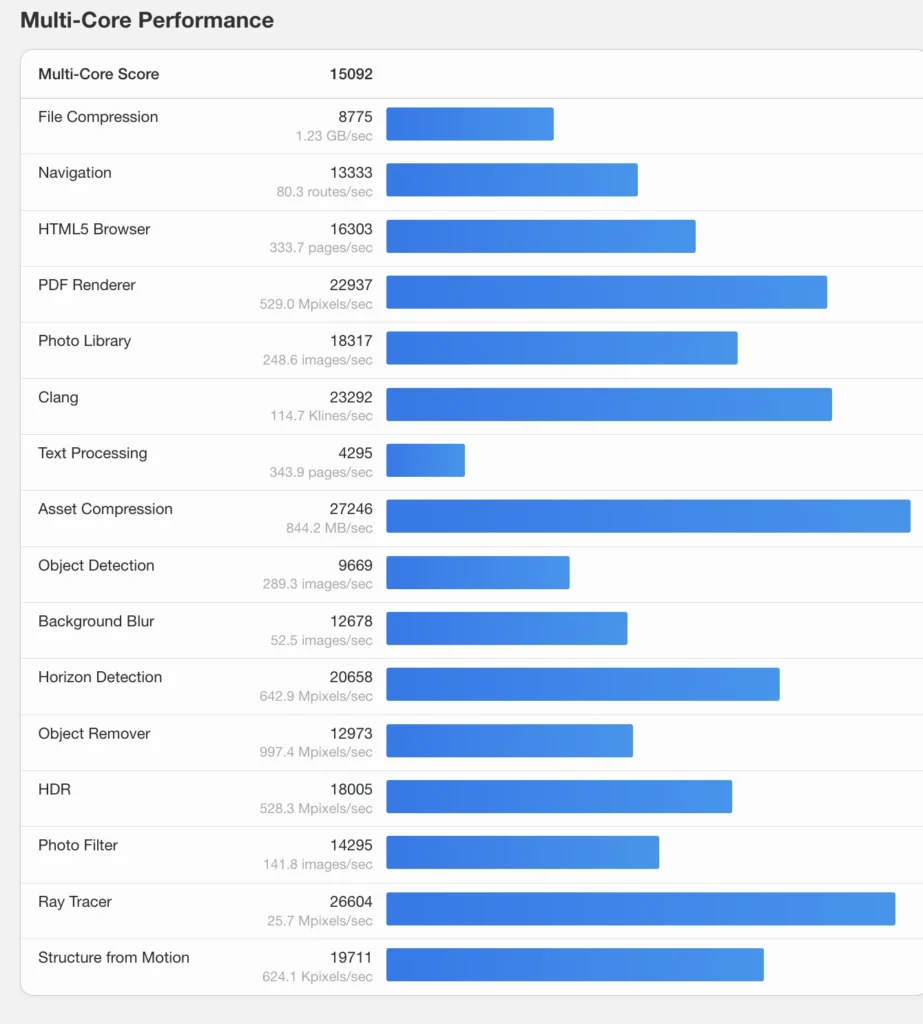
Geekbench records a single-core score of 3,174 and a multi-core score of 15,092. Compared with average Geekbench database results for the Ryzen AI 9 365, the engineering sample scores around 29% higher in single-core testing and about 22% higher in multi-core testing. These figures come from separate Geekbench entries rather than identical test platforms, so they provide a general comparison instead of a direct performance match.
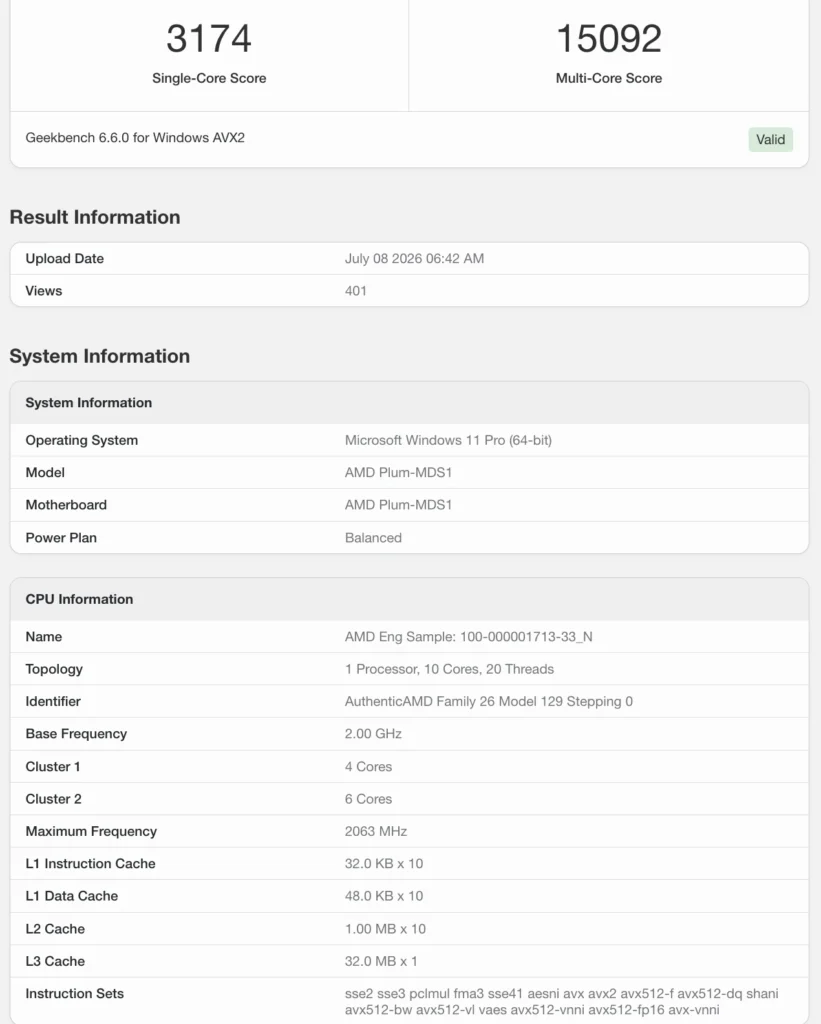
Geekbench reports a 2.00GHz base frequency and a maximum recorded frequency of 2063MHz. Those values are unusually low for a flagship mobile Ryzen processor. Early engineering samples often report incomplete clock information, so the benchmark may not reflect the processor’s final operating frequencies.
The benchmark lists support for AVX512-F, AVX512-FP16, and AVX-VNNI instruction sets. These instructions are commonly used by software for AI inference, machine learning, scientific computing, image processing, and media workloads that rely on half-precision floating-point operations.
Earlier leaks have linked Medusa Point to integrated graphics based on AMD’s RDNA 3.5+ architecture, which some industry reports refer to as RDNA 4m. The same reports mention an integrated GPU with eight compute units, although AMD has not confirmed those graphics specifications.
The benchmark lists the processor on AMD’s Plum-MDS1 reference platform with the FP10 BGA socket. Recent Linux driver updates contain references to FP10 hardware, although AMD has not shared official platform details.
Also Read: What Is Geekbench 6 in PC or Laptop? How It Works Explained
Engineering samples often run with early firmware, beta BIOS versions, and unfinished software. Clock speeds, cache information, power limits, and benchmark scores can change before retail processors become available. AMD has not announced official specifications or a release date for Medusa Point, so this Geekbench entry represents pre-release hardware rather than a finished product.