
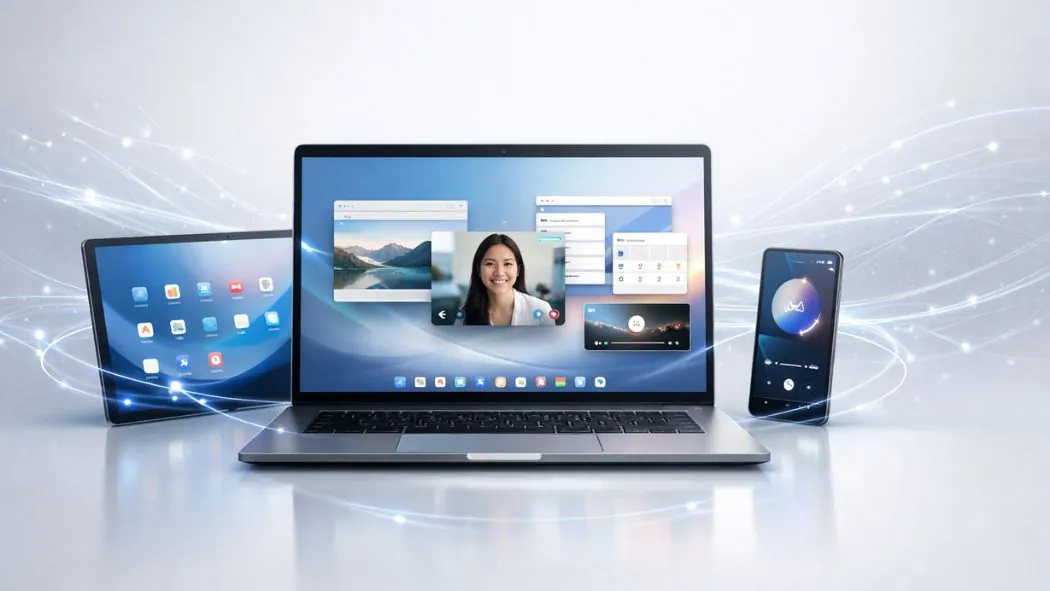
Google Aluminium OS is an upcoming desktop operating system built on Android and designed for laptops, tablets, and compact desktop devices. Confirmed for a 2026 launch, the platform represents Google’s long-term shift toward unifying mobile and desktop computing under a single Android-based foundation, with artificial intelligence integrated directly at the operating system level.
Rather than maintaining separate platforms for mobile and desktop use, Google is consolidating its development efforts around Android, which already powers phones, tablets, TVs, vehicles, and wearables. Aluminium OS extends Android into a full desktop-class environment, aiming to combine efficiency, native app performance, and modern AI-driven workflows.
What Is Google Aluminium OS?
Aluminium OS is a desktop operating system built directly on Android, not a modified version of ChromeOS and not a mobile interface scaled up for larger screens. Google is designing it specifically for productivity-focused devices such as laptops, detachable tablets, and mini PCs.
At its core, Aluminium OS uses the Android Linux kernel while introducing desktop-native capabilities, including windowed multitasking, keyboard and mouse workflows, and improved system-level resource management. Android applications run as first-class desktop apps rather than secondary or compatibility-layer software.
This approach allows Google to expand Android beyond mobile devices without maintaining a separate desktop operating system stack.

Aluminium OS OR Aluminum OS, Confused?
“Aluminium OS” is the internal project name and follows Google’s traditional “-ium” naming pattern, similar to Chromium.
“Aluminum OS” is simply the American spelling and refers to the same operating system.
There are not two different platforms. Both spellings describe the same Android-based desktop operating system, and users may encounter either version in searches or documentation.
Why Google Is Moving Beyond ChromeOS
For over a decade, Google developed Android and ChromeOS in parallel. ChromeOS found success in the education and entry-level laptop markets, but it lagged behind Windows and macOS in the premium and professional segments.
Maintaining two operating systems resulted in duplicated engineering efforts, fragmented app strategies, and slow feature alignment. Meanwhile, Android became Google’s most versatile and widely used platform.
By bringing the ChromeOS experience to Android, Google will be able to focus development on a single operating system while preserving the usability, security, and update model that ChromeOS users have come to expect. Aluminium OS should be understood not as a sudden replacement, but as a strategic consolidation.

Confirmed Facts vs Unconfirmed Reports
Officially Confirmed by Google
- Aluminium OS is an Android-based desktop operating system
- It targets laptops, tablets, detachables, and mini PCs
- Artificial intelligence is integrated at the operating system level
- Google is collaborating with Qualcomm on hardware optimization
- ChromeOS functionality is being transitioned onto Android
These points are supported by Google statements, job listings, and confirmed partnerships.
Reported but Not Publicly Finalized
- Public launch window in 2026
- Likely alignment with Android 17
- Hardware tiers referred to as AL Entry, AL Mass Premium, and AL Premium
- Temporary continuation of ChromeOS branding on some devices
These details are consistent across multiple industry reports but remain subject to change until formally announced.
Aluminium OS Release Date and Availability
Google has confirmed that Aluminium OS will launch in 2026, although no precise release date has been announced. This is common for platforms that are still under active development, especially those involving new hardware categories and ecosystem transitions.
Google I/O 2026 is the most likely venue for a public announcement. However, an announcement doesn’t necessarily mean it will be immediately available to consumers. Hardware partners are expected to gradually roll out Aluminium OS devices after the initial launch.
A phased release is more likely than a simultaneous global launch.
Key Features of Aluminium OS
System-Level AI Integration
In Aluminium OS, artificial intelligence is embedded directly into the operating system rather than being added as a standalone feature. Gemini is expected to assist with file organization, content summarization, system navigation, and context-aware actions based on what the user is currently working on.
On supported hardware, many AI features are designed to run locally, improving responsiveness and reducing reliance on cloud processing.

Desktop-First Multitasking and Window Management
Aluminium OS supports native windowed applications that can be resized, arranged, and managed like traditional desktop software. The interface prioritizes keyboard and mouse input, with touch support treated as secondary rather than primary.
This design enables real multitasking and complex workflows, addressing long-standing limitations of Android on large displays.
Native Android App Execution
Because Aluminium OS is built on Android, applications from the Google Play Store run natively without heavy emulation or compatibility layers. This provides immediate access to a large app ecosystem while allowing developers to optimize applications for desktop environments.
Over time, this native execution model is expected to deliver better performance and usability than Android app support on ChromeOS.
Aluminium OS Hardware Tiers
| Tier | Target Users | Typical Devices | Key Focus |
|---|---|---|---|
| AL Entry | Students, basic users | Affordable laptops | Battery life, simplicity |
| AL Mass Premium | Professionals | Thin & light laptops | Performance + portability |
| AL Premium | Power users | High-end laptops | AI, premium build |
Google is positioning Aluminium OS across three general hardware segments.
- AL Entry devices focus on affordability, efficiency, and education use cases
- AL Mass Premium targets thin-and-light laptops for mainstream productivity users
- AL Premium is aimed at high-end laptops designed to compete with premium Windows PCs and MacBooks
This tiered strategy indicates that Aluminium OS is intended to scale across the full PC market rather than remain limited to budget devices.
Supported Devices and Processors
Aluminium OS is being developed to support multiple processor architectures.
Particular attention is being paid to Qualcomm Snapdragon processors due to their efficiency, long battery life, and AI acceleration capabilities. Intel processors ensure compatibility with traditional PC hardware, while MediaTek chipsets are expected to support lower-cost devices, especially in the education market.
This operating system is designed for laptops, tablets, detachable systems, and compact desktop devices.
Aluminium OS vs ChromeOS
| Aspect | ChromeOS (Current) | Aluminium OS (Upcoming) |
|---|---|---|
| Core Base | Chrome browser + Linux | Android (Linux kernel) |
| Primary Apps | Web apps, PWAs | Native Android apps |
| AI Integration | Limited, cloud-based | System-level Gemini AI |
| Windowing | Basic desktop | Full desktop multitasking |
| Hardware Focus | Education, budget | Entry to premium devices |
| Long-term Direction | Maintenance mode | Primary future platform |
ChromeOS is based on web applications and cloud-based workflows, with Android apps added later as a supplementary feature. Aluminium OS reverses this model, making Android the core platform and treating desktop features as native capabilities.
Aluminium OS also places a greater emphasis on AI integration, premium hardware support, and native application performance. These differences explain why Google considers it a long-term successor rather than just an update.
Will Existing Chromebooks Receive Aluminium OS?
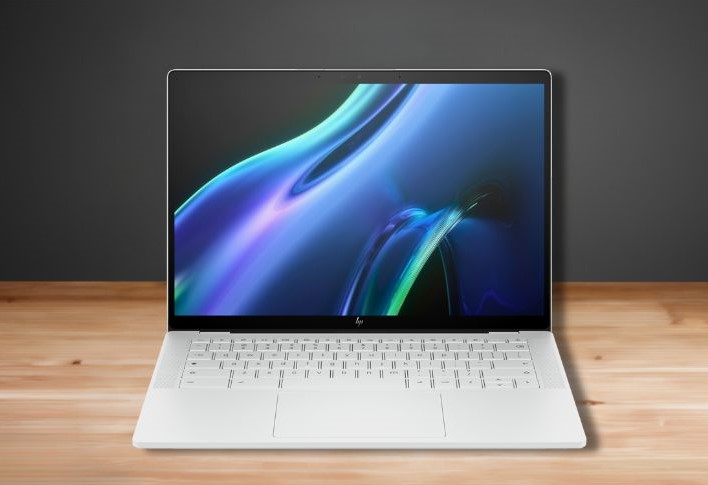
Not all existing Chromebooks are expected to support Aluminium OS. Devices with newer processors and sufficient performance headroom may be eligible for optional upgrades, while older models will remain on ChromeOS.
Google is expected to continue providing security updates for ChromeOS devices until their official end-of-support dates. There are no indications of forced upgrades.
How to Download Google Aluminium OS
Google Aluminium OS is not available for public download yet. Google has not released any installer, ISO file, or beta version for users, and there is currently no official way to install the operating system manually.
Any website claiming to offer a downloadable version of Aluminium OS before Google’s official release should be treated as unofficial and unsafe.
Current Availability
- Aluminium OS is still under development
- No public beta or preview program has been announced
- The operating system is limited to internal testing and hardware partners
- No consumer device currently ships with Aluminium OS
Until Google makes a formal announcement, downloading or installing Aluminium OS is not possible.
How Aluminium OS Will Be Available
Instead of open downloads, Aluminium OS is expected to reach users through official device-based distribution.
Preinstalled on new devices: The first consumer access is expected on new laptops and tablets that ship with Aluminium OS out of the box.
Optional upgrades on select Chromebooks: Some newer Chromebooks may receive Aluminium OS as an optional system update, depending on hardware support.
Older devices are expected to remain on ChromeOS with continued security updates.
Will There Be a Manual Installer?
At this stage, there is no indication that Google plans to release a standalone installer or ISO file for Aluminium OS. Google typically delivers operating systems through managed updates and manufacturer-supported rollouts rather than manual installations.
What You Can Do Now
While waiting for the official release:
- Follow Google I/O and Android platform announcements
- Avoid unofficial downloads or leaked system files
- Check whether future devices ship with Aluminium OS
- Developers can prepare by optimizing Android apps for large screens and desktop use
Linux Support on Aluminium OS
Android is built on the Linux kernel, and Linux support remains important for developers and technical users. ChromeOS currently supports Linux applications through container-based environments, and there is no evidence that Google plans to remove this capability.
Linux-based workflows are expected to remain part of the Aluminium OS ecosystem, though the implementation may evolve over time.
What Aluminium OS Means for Developers
For developers, Aluminium OS simplifies Google’s platform strategy. Instead of targeting separate Android and ChromeOS environments, developers can focus on a single Android-based operating system that scales across device types.
This reduces fragmentation while encouraging better optimization for large screens, keyboard input, and multitasking. Improvements made for Aluminium OS are also likely to benefit Android tablets and other large-screen devices.
Aluminium OS Compared With Windows, macOS, and Linux
| OS | Strengths | Limitations |
|---|---|---|
| Aluminium OS | Android apps, AI-first, efficient | New platform, unproven |
| Windows | Software compatibility, gaming | Heavy, complex |
| macOS | Performance, polish | Locked hardware |
| Linux | Control, customization | Learning curve |
Windows excels in legacy software compatibility and PC gaming, but often compromises efficiency for flexibility. macOS offers good performance and ecosystem integration, but is limited to Apple hardware.
Linux provides extensive customization and control, but requires technical expertise. Aluminium OS carves out its own niche among these platforms, combining efficiency, ease of use, and a large native app ecosystem without locking users into a single hardware vendor.
Who Aluminium OS Is Not Designed For
Aluminium OS is not aimed at every use case at launch. Users dependent on legacy Windows-only enterprise software, advanced PC gaming, or unrestricted system-level customization may find other platforms more suitable.
These limitations reflect the platform’s current focus rather than permanent constraints.
Should You Wait for Aluminium OS?
If you need a device immediately should make a purchase based on their current needs rather than waiting for an unreleased platform. ChromeOS devices will continue to be supported, and Windows and macOS will continue to operate in their respective markets.
For users planning to upgrade in 2026 or later, considering Aluminium OS might be beneficial, especially for those interested in Android-based workflows and AI-driven productivity.
| User Type | Recommendation |
|---|---|
| Students | ChromeOS is still fine |
| Developers | Worth watching closely |
| Premium buyers | Consider waiting |
| Enterprises | Observe adoption first |
Frequently Asked Questions
Is ChromeOS being discontinued?
No. ChromeOS will continue receiving updates for supported devices while Aluminium OS is introduced on new hardware.
Is Aluminium OS free?
It is expected to be bundled with devices, similar to Android and ChromeOS.
Will Android apps run natively on Aluminium OS?
Yes. Native Android app execution is a core design principle.
Is Aluminium OS replacing Windows or macOS?
No. It is an alternative platform competing in specific segments of the PC market.
Conclusion
Aluminium OS will be Google’s biggest operating system change in years. By unifying desktop and mobile computing around Android and embedding AI at the system level, Google is laying the foundation for a unified and scalable platform.
Its success will depend on execution, developer adoption, and hardware quality, but the direction is clear. As the 2026 launch approaches, the Aluminium Operating System reveals how Google envisions the future of personal computing.