
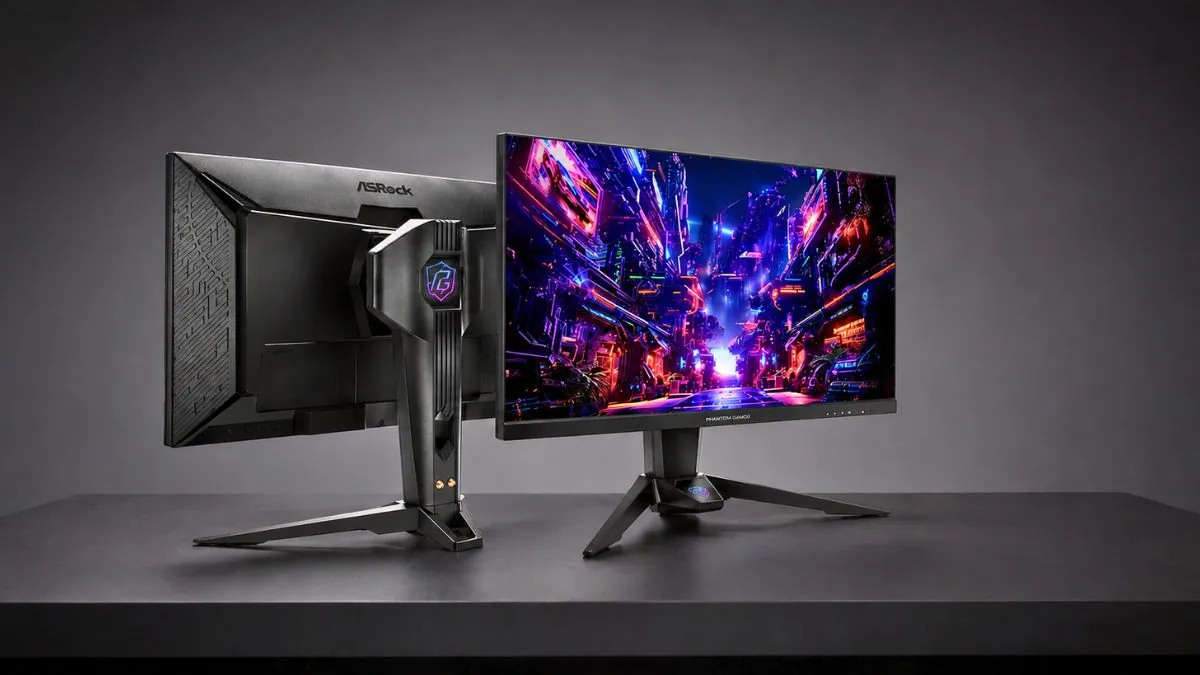
ASRock has added two new models to its Phantom Gaming display lineup, centered on a 400Hz QHD panel at 27 inches and a larger 32-inch alternative with a lower refresh target. The announcement was published through the company’s official Phantom Gaming channel on April 28, 2026.
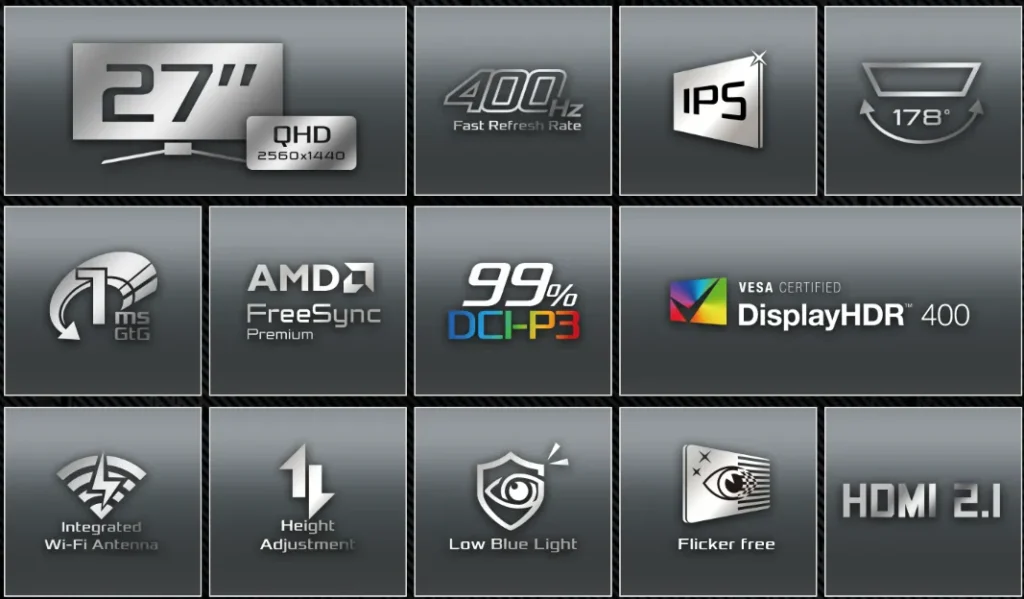
The PG27QFW2A stands out for combining a 2560 × 1440 resolution with a 400Hz refresh rate on a Fast IPS panel. At this level, most competing displays still rely on TN technology, which typically trades color quality for speed. The IPS approach keeps wider viewing angles and more consistent color while still reaching very high refresh output.
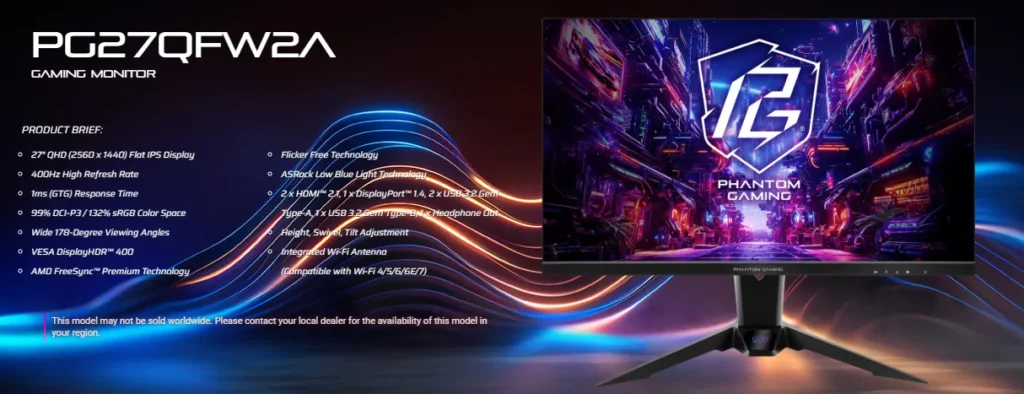
Color coverage is listed at 99% DCI-P3, with VESA DisplayHDR 400 certification noted in the official material. The panel is rated at 1 ms (GTG) and supports AMD FreeSync Premium for adaptive sync during gameplay.
The stand includes an integrated Wi-Fi antenna designed to improve signal reception in setups where the system unit is positioned below the desk or partially obstructed. ASRock indicates that this design can help stabilize wireless connectivity and reduce signal loss in typical gaming environments.
Port selection on the 27-inch model includes dual HDMI 2.1 inputs, DisplayPort 1.4, USB connectivity, and a headphone output. Eye-care features such as low blue light filtering and flicker reduction are also listed, along with adjustable stand ergonomics.
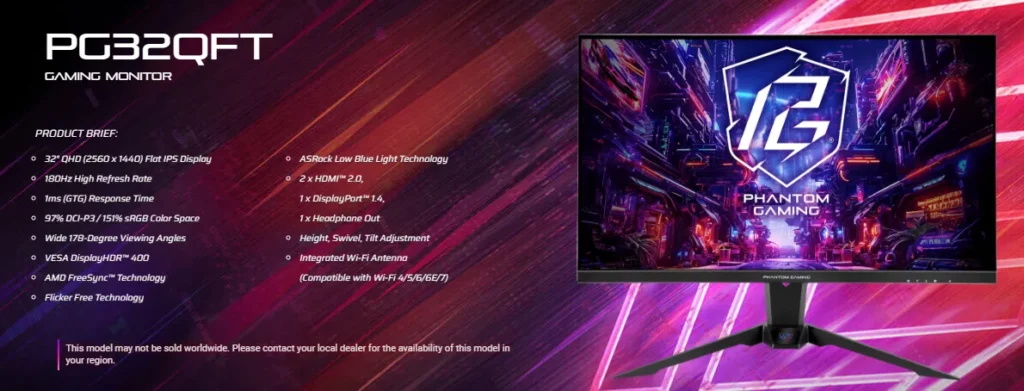
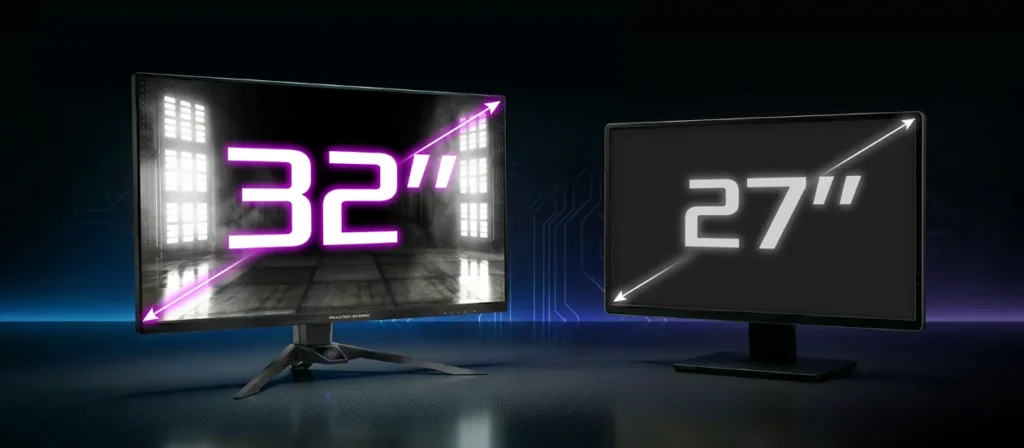
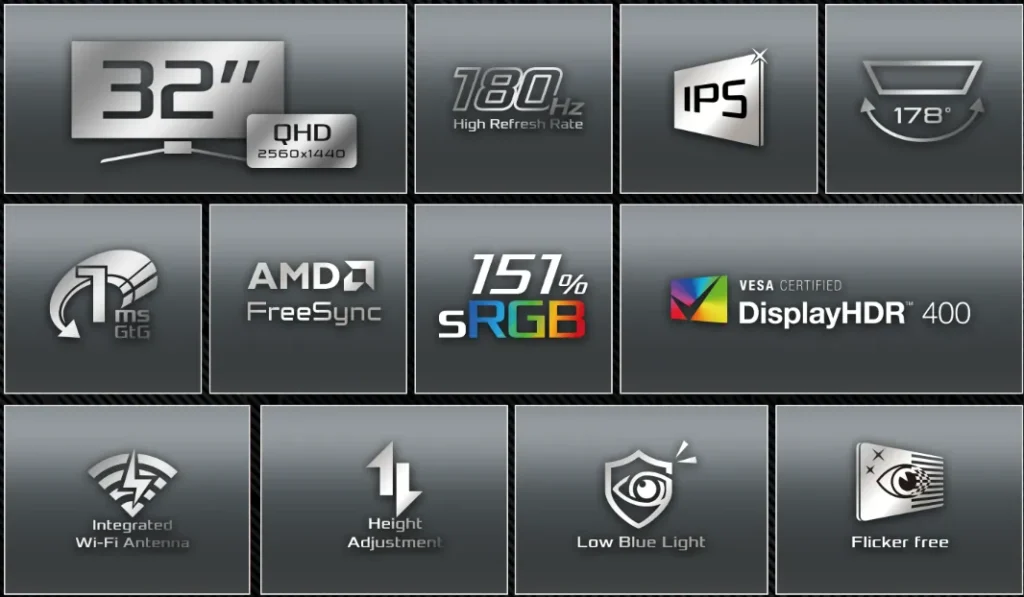
A second model, the PG32QFT, shifts the focus toward screen size. The panel measures 32 inches with the same QHD resolution but runs at 180Hz. This places it closer to general gaming use rather than competitive esports scenarios.
The larger display carries 97% DCI-P3 coverage and additional Adobe RGB support, with DisplayHDR 400 certification and a 1 ms response time. Adaptive sync remains present through AMD FreeSync, maintaining consistent frame delivery across different workloads.
The same antenna-integrated stand design appears here as well, along with anti-glare coating, dark boost controls, and preset display modes. Connectivity remains standard for this class, with HDMI and DisplayPort support for both PC and console setups.
The distinction between the two models is straightforward. The 27-inch version is built around refresh rate priority, while the 32-inch model favors a larger viewing area with a more balanced specification set. Both extend ASRock’s Phantom Gaming monitors into segments that typically separate high-speed esports panels from larger general-use displays.
Pricing and release timelines have not been confirmed.
Source: ASRock Press