
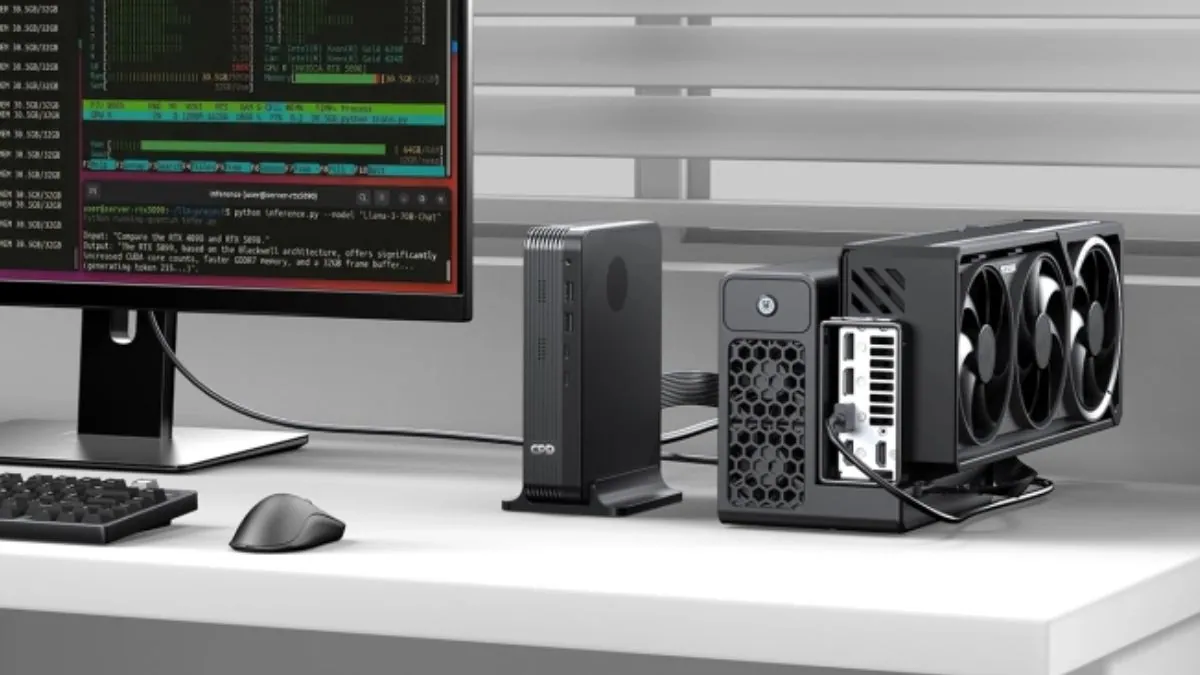
GPD is taking a different approach to external graphics with its new BOX mini PC and G2 eGPU dock, introducing an MCIO 8i interface that exposes a direct PCIe connection outside the system. Running at PCIe 5.0 ×8, the link reaches up to 512 Gbps of bidirectional bandwidth, far beyond what USB4 or Thunderbolt-based eGPU setups currently offer.
This is one of the first times MCIO, typically seen in server hardware, is being used in a compact consumer system. The higher bandwidth directly addresses a long-standing limitation of external GPUs, where restricted data transfer often leads to noticeable performance loss.
GPD’s internal testing reflects that shift. When paired with the G2 dock and a desktop GPU such as an RTX 4090, performance loss is reported at around 2% compared to a native PCIe slot, a level that is significantly lower than conventional eGPU connections.
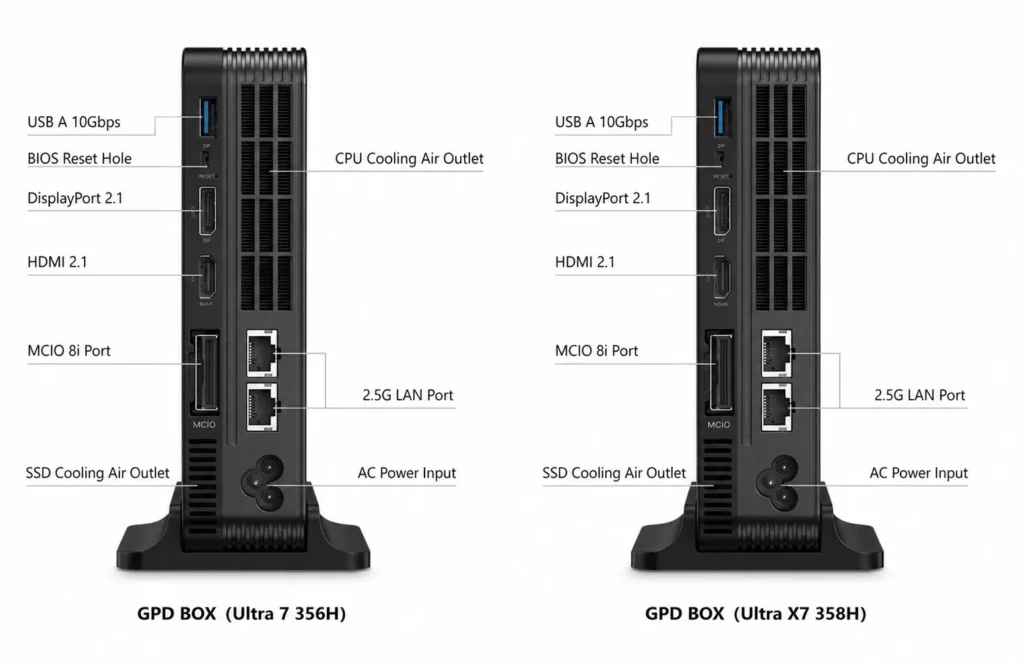
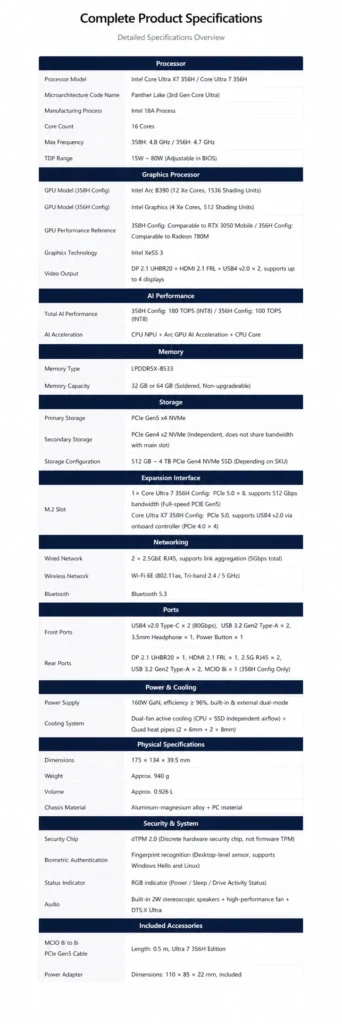
The BOX itself is built on Intel’s Panther Lake platform using the 18A process. Two configurations are planned. A Core Ultra 7 356H version includes the MCIO 8i port, while a Core Ultra X7 358H variant drops the connector due to limited PCIe lane availability. The difference comes down to platform design, with the Ultra 7 offering enough lanes to expose a PCIe 5.0 ×8 connection externally.
Both configurations scale up to 16 CPU cores, while integrated graphics differ between models. The higher-tier version includes an Arc B390 iGPU with 12 Xe3 cores, while the Ultra 7 model uses a smaller configuration. Total AI performance is rated at up to 180 TOPS across CPU, GPU, and NPU resources.
GPD also highlights performance gains compared to competing mobile platforms. Internal figures point to up to 73% higher frame rates versus systems based on Ryzen AI 9 HX 370 under similar conditions.
Beyond graphics, the MCIO interface can be used for high-speed storage expansion. With appropriate adapters, the system can connect to enterprise NVMe drives, allowing capacity to scale into tens of terabytes, which adds flexibility for data-heavy workflows.
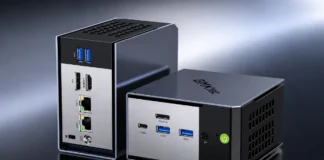
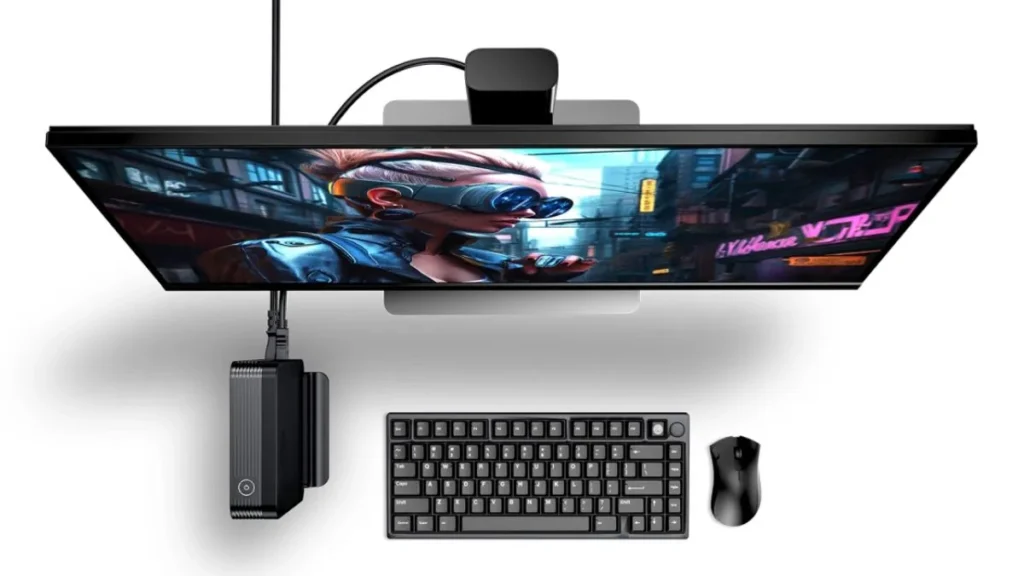
The chassis remains compact at 175 × 134 × 39.5 mm, with a total volume of 0.926 liters and weight around 2.07 lbs (940 g). Cooling is split between dedicated fans for the processor and storage, supported by heat pipes and a built-in 160W GaN power supply.
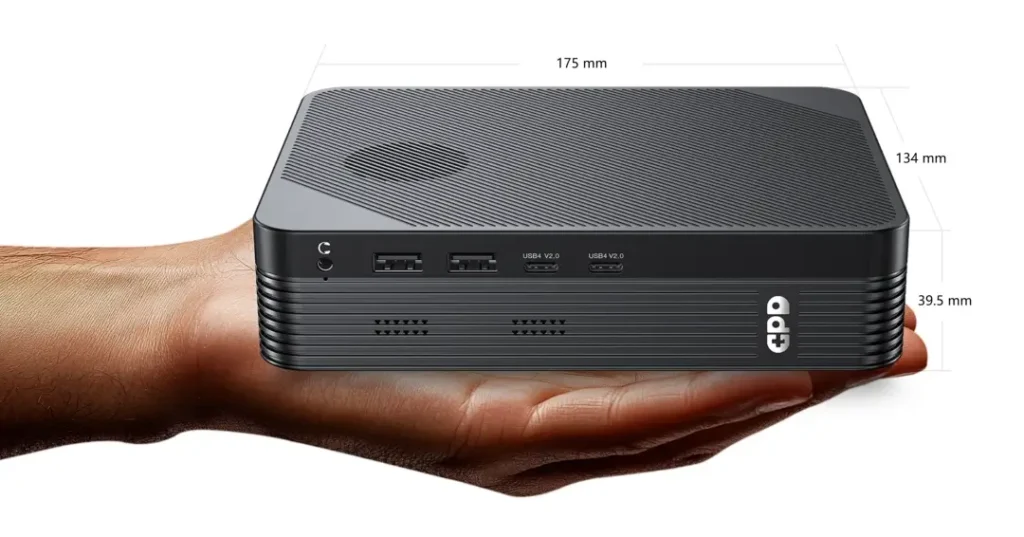
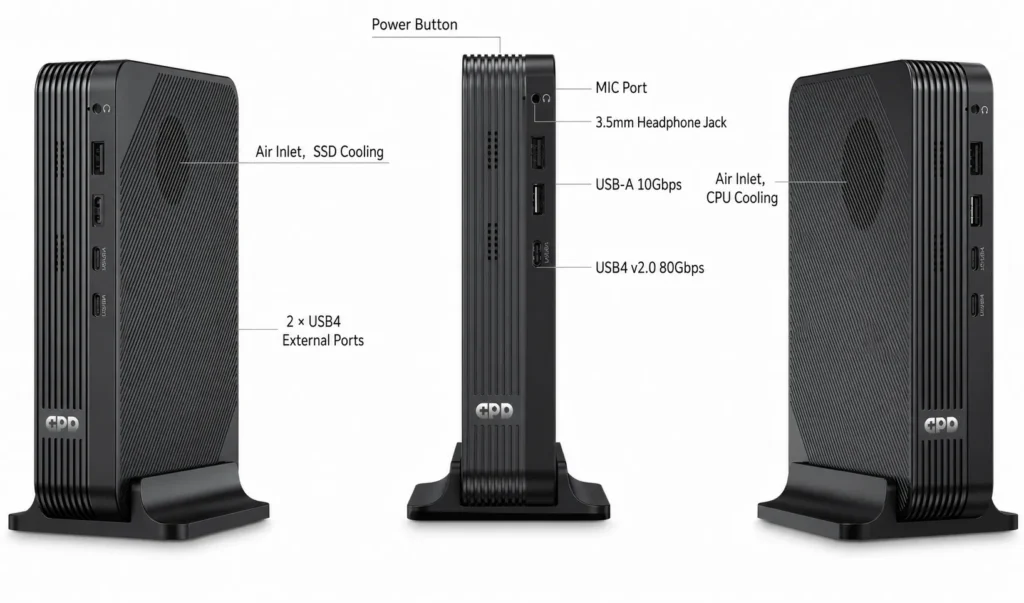
Front I/O includes two USB4 v2 ports capable of up to 80 Gbps, along with USB-A ports, audio jacks, and integrated speakers. The rear panel adds DisplayPort 2.1, HDMI 2.1, dual 2.5Gb Ethernet, and the MCIO 8i connector on supported configurations.
Memory configurations reach up to 64GB LPDDR5X, paired with dual M.2 slots, including a PCIe 5.0 ×4 primary slot and a secondary PCIe 4.0 ×2 slot for additional storage. Security features include a dedicated dTPM 2.0 module for hardware-level encryption.
The G2 dock complements the system with support for both MCIO 8i and USB4 v2 connections, a full-size PCIe slot for desktop GPUs, and its own power delivery system. This allows it to work not only with the BOX but also with other compatible devices.
If MCIO adoption expands beyond niche systems, it could reduce the gap between external GPUs and desktop configurations. Traditional eGPU setups have been limited by bandwidth constraints, but a PCIe 5.0 ×8 external link changes that balance, especially for high-end GPUs.
Pricing has not been announced, with availability expected later in 2026.
Source: GPD on Weibo