
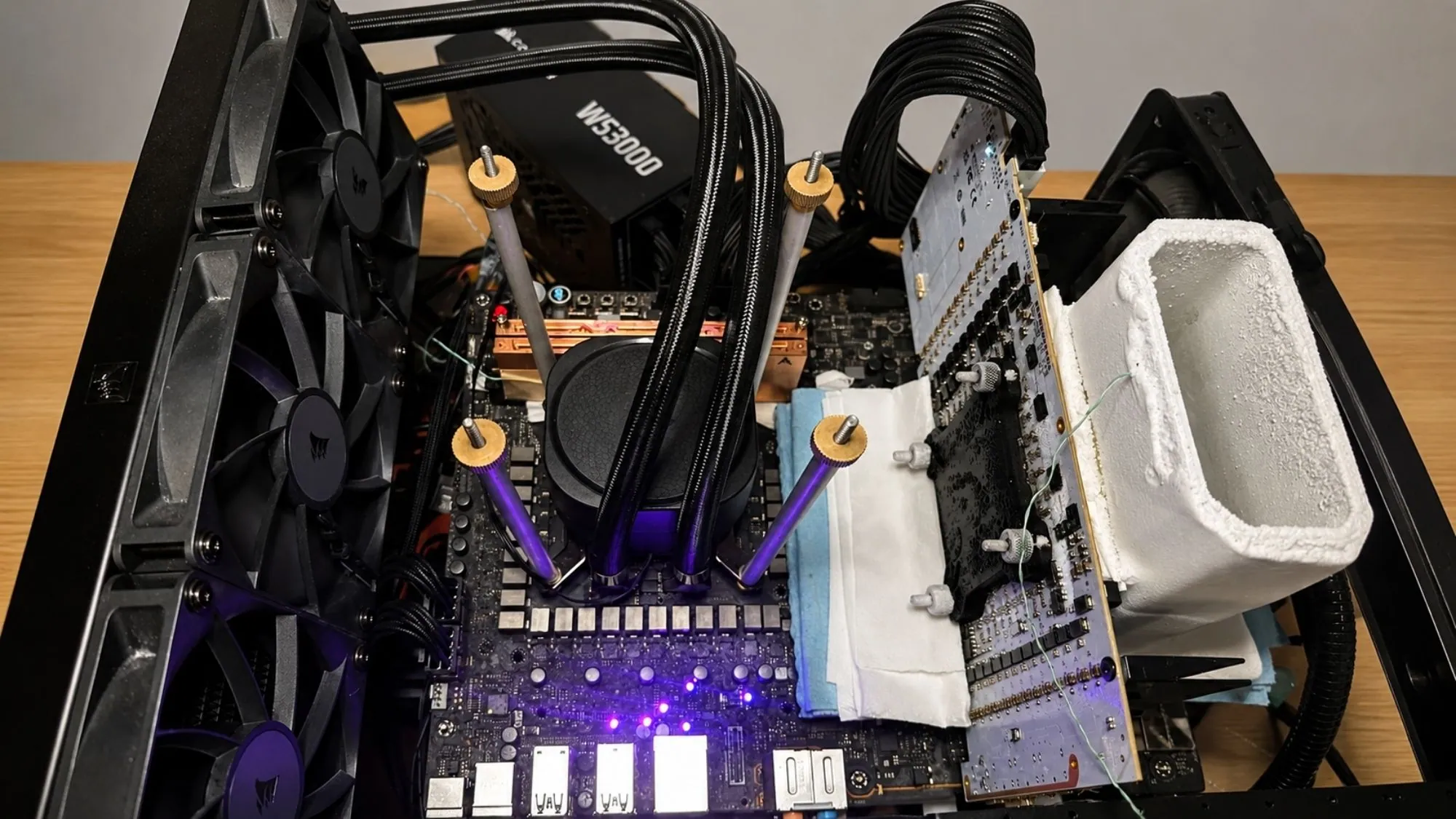
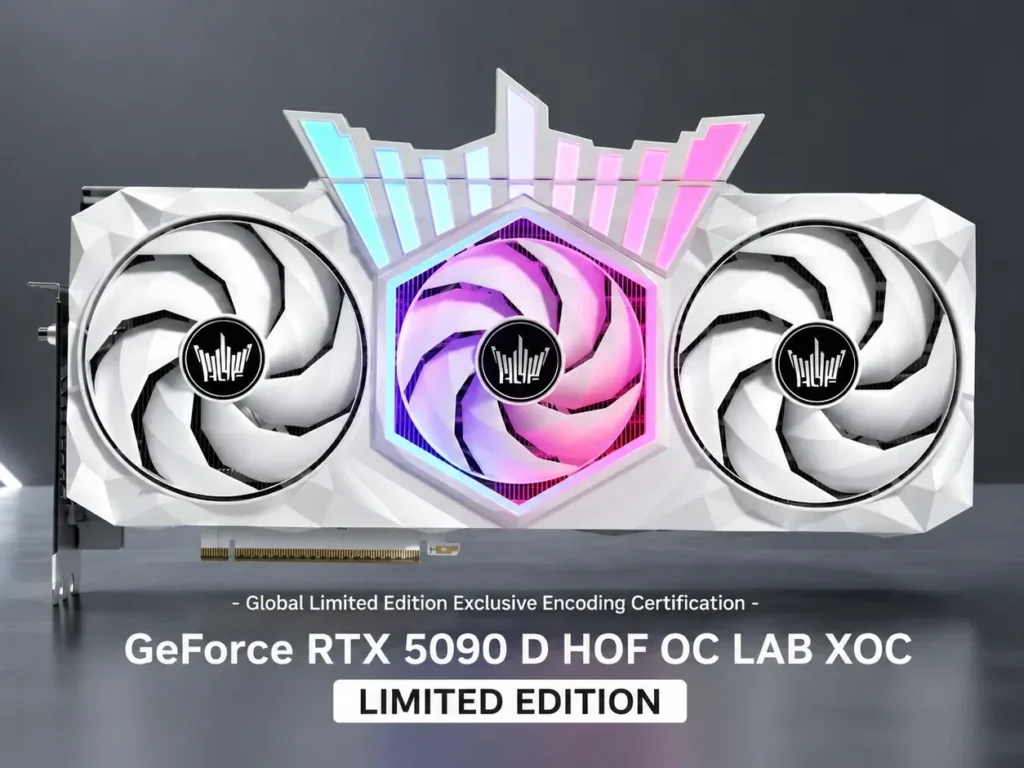
Team OGS has pushed the Galax HOF OC LAB GeForce RTX 5090D to a GPU core clock of 4,002MHz, making it the first graphics card based on NVIDIA’s Blackwell architecture to cross the 4GHz mark. The benchmark result has already been submitted to HWBOT, where it currently leads the GPUPI v3.3-32B ranking.
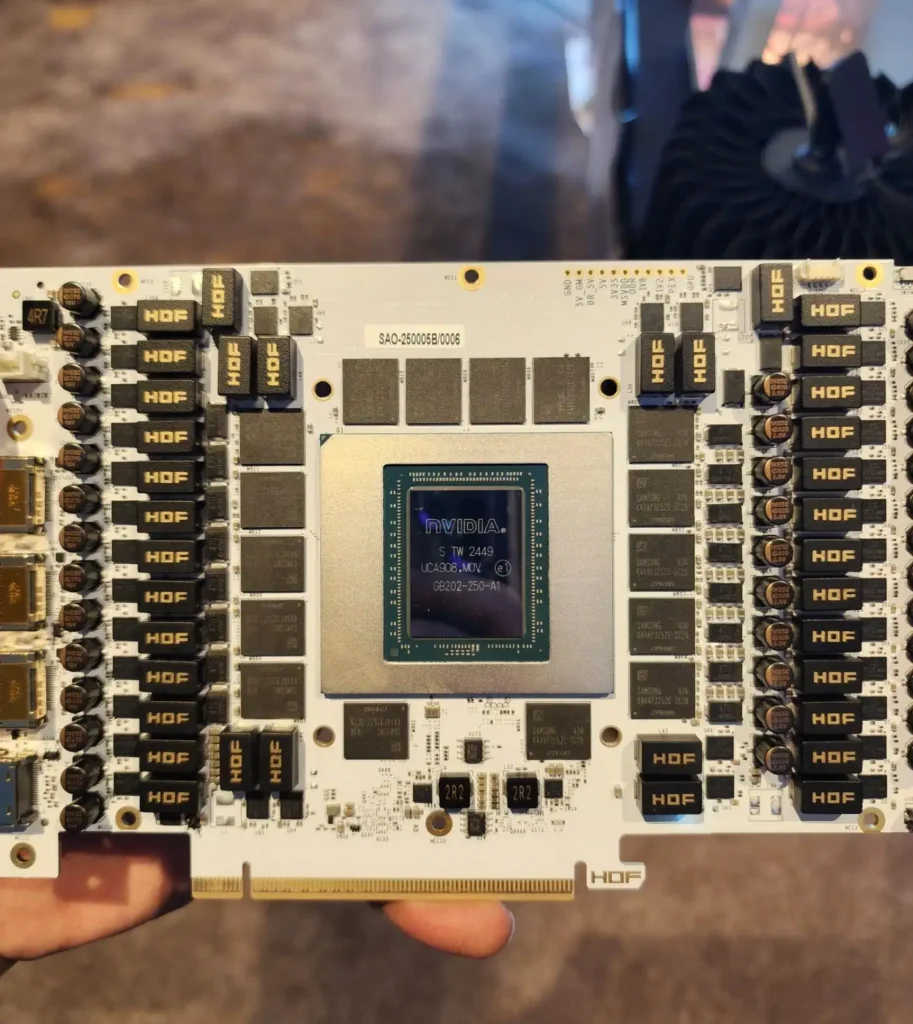
The benchmark was completed with the original Galax HOF OC LAB RTX 5090D instead of the newer RTX 5090D V2. The original version carries the same GPU configuration as the standard GeForce RTX 5090, while the V2 model ships with a reduced configuration. The card further features dual 16-pin power connectors and a 36-phase power design intended for competitive overclocking.
Reaching 4GHz involved more than liquid nitrogen cooling. Team OGS removed the graphics card’s 27MHz crystal oscillator and replaced it with an Elmor External Clock Board (ECB). The modification increased the reference clock to 28.7MHz, about 6.3% above the default value. Because the reference clock influences several operating frequencies, the GPU core and GDDR7 memory clocks increased together instead of adjusting only the core frequency.
Memory frequency start from 1,750MHz to 1,860MHz, which is close to 30Gbps effective speed. Team OGS added that the same ECB hardware has reached even higher GDDR7 frequencies during other overclocking sessions, although those speeds were not part of this benchmark submission.
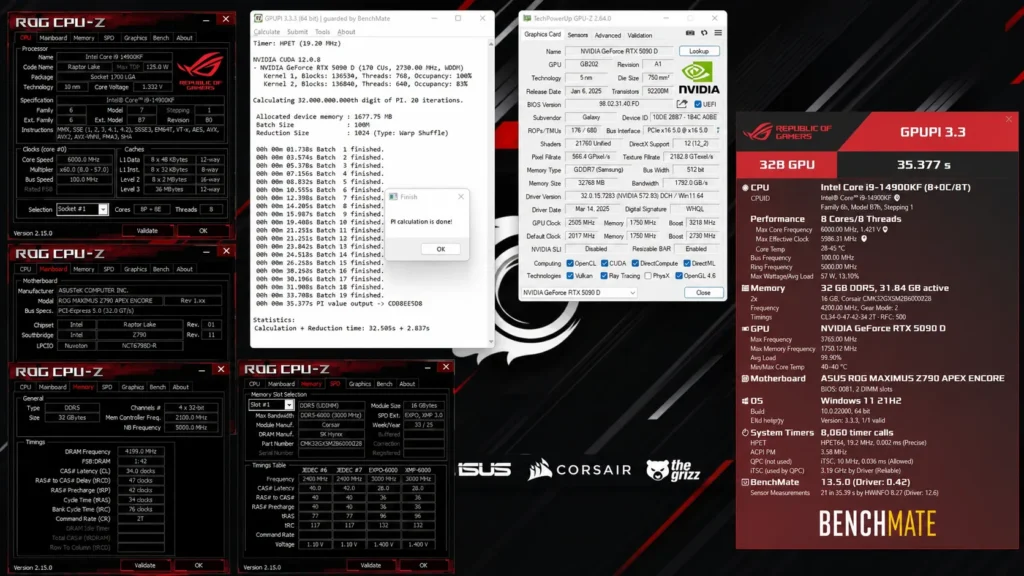
For cooling, the graphics card was comes with a Bitspower Strata LN2 GPU pot filled with liquid nitrogen and paired with Thermal Grizzly Kryonaut Extreme thermal paste. With that setup, the RTX 5090D completed the GPUPI v3.3-32B benchmark in 35.377 seconds while maintaining the 4,002MHz core clock. The score finished more than one second ahead of the previous top result in the same category.
Before this submission, the highest recorded Blackwell GPU frequency belonged to overclocker Splave, whose RTX 5090 reached around 3.88GHz. Team OGS is now the first to move beyond the 4GHz mark with NVIDIA’s latest GPU architecture.
The overall GPU frequency record remains with AMD. Earlier this year, an Radeon RX 9060 XT reached 4.769GHz during an extreme overclocking session. That result still stands as the highest GPU clock ever recorded, while the RTX 5090D now holds the highest frequency achieved by a Blackwell graphics card.
This benchmark was achieved with hardware modifications and liquid nitrogen cooling, making it an extreme overclocking result rather than a frequency that can be reached on a standard retail graphics card. The run shows what specialized hardware and advanced cooling can achieve when conventional operating limits are removed.
Source: Galax