
Phison has announced a partnership with Intel to help smaller office computers run larger smart programs without relying on the cloud. The two companies are combining Intel Core Ultra Series 3 chips with Phison’s new memory-extending technology to unblock systems that do not have enough standard memory.
Normally, running very large AI software requires a computer to have a lot of expensive DRAM. If the system does not have enough memory, the software simply will not load or will run very slowly. This memory limit is a major problem for businesses that want to process private documents locally.
To solve this problem, Phison developed a new extension system called Pascari aiDAPTIV. This system extends the working memory of the computer by sharing the load between standard DRAM and fast, high-end NAND flash storage. By using the storage drive as extra memory, the computer can handle much heavier tasks.
Also read: Dell Deskside Agentic AI Series
During internal tests, Phison showed that the aiDAPTIV software allowed a 26-billion parameter AI model to run on a computer with only 16 GB of DRAM. Normally, that same setup would require at least 32 GB of DRAM to open the model. This memory approach allows systems to run heavy models that normally require expensive developer platform hardware with larger memory pools.
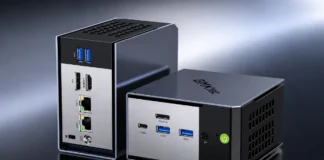
This new technology is designed to work on the latest Intel Core Ultra processors, which also power setups like the Minisforum EliteMini M2. It includes support for Intel’s OpenVINO toolkit, which helps programmers tune their smart applications to run much faster on local hardware.
At the Computex event, Phison is demonstrating the memory extension system in action. Visitors can see a local chat screen running a Mixture-of-Experts (MoE) model that usually exceeds standard desktop memory. They will also show off a local routing application built on OpenClaw, which is an open-source AI agent system.
Many AI software creators are supporting this new approach. Partners like Ollama and LLMWare are working with Phison and Intel to test these local workflows. Other hardware brands like Asus, Acer, and MSI are also collaborating to build computers that use this memory technology. This will help businesses run smart tools faster and keep their private data secure at a much lower cost.
Source: Business Wire