
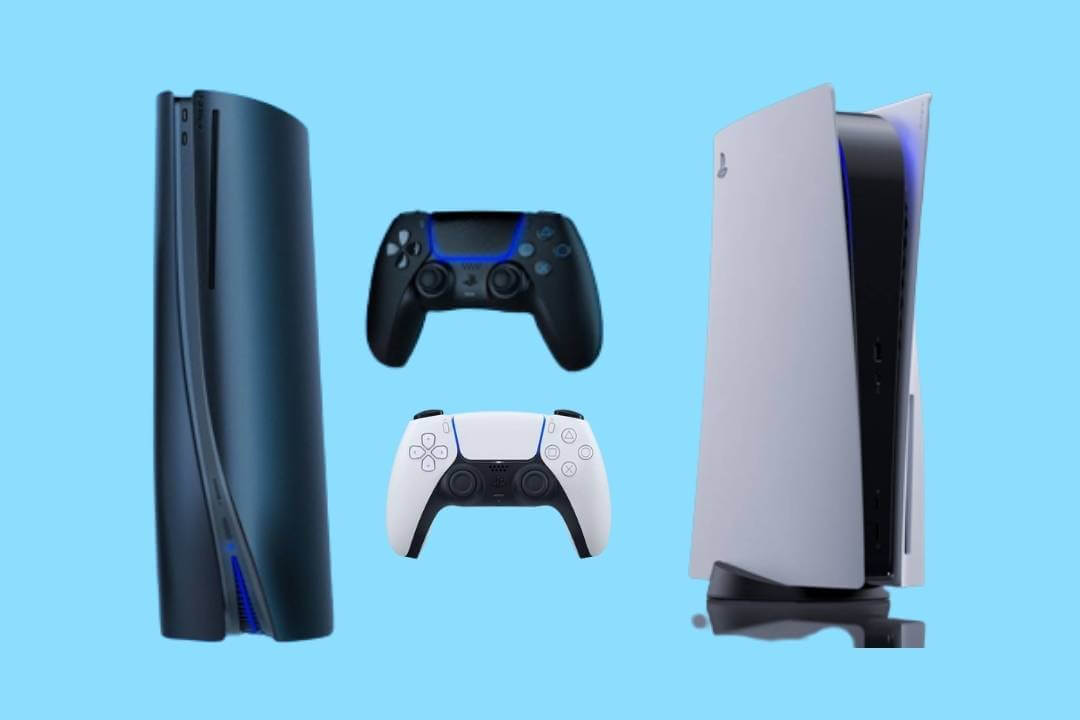
The PlayStation 6 (PS6) is expected to become Sony’s next-generation gaming console, although the company has not officially revealed it yet.
As the PlayStation 5 generation continues to mature, attention is gradually shifting toward what comes next. Industry reports, analyst predictions, and public information have fueled growing interest in the PS6, even though many details remain unknown.
In this guide, we’ll separate official announcements, credible industry reports, and rumors to explain everything currently known about the PlayStation 6, including its expected release date, price, specifications, features, backward compatibility, and more.
Last Updated: 03 July, 2026
This guide is reviewed regularly and updated whenever Sony announces new information or credible industry reports emerge.
PS6 at a Glance
| Official Status | Not officially announced |
| Expected Release Window | 2027–2028 (Industry estimates) |
| Expected Reveal | Before launch (Not confirmed) |
| Expected Price | $499–$699 (Estimated) |
| Expected Processor | Custom AMD x86 processor |
| Expected Graphics | Custom AMD GPU with improved ray tracing and AI upscaling |
| Memory | 24–32GB GDDR7 |
| Storage | 2TB SSD |
| Disc Drive | Unknown |
| Backward Compatibility | PS5 games are widely expected to be supported |
| Current PlayStation Generation | PS5 and PS5 Pro |
PS6 Release Date Expected
Current industry estimates suggest the PlayStation 6 could launch between late 2027 and 2028. While Sony has not shared an official timeline, this release window is widely cited by analysts covering the gaming industry.
Earlier predictions favored a 2027 launch. More recent reports, however, suggest Sony could extend the PlayStation 5 generation and introduce the PS6 closer to the end of 2028. Rising hardware costs and the continued success of the PS5 ecosystem are among the reasons behind these revised expectations.
At the moment, there is no confirmed announcement date for the PS6. Sony is expected to reveal more information only after the company is ready to begin its next console generation.
Why Analysts Expect the PS6 to Launch in 2027 or 2028
The expected 2027–2028 launch window is based on several independent signals rather than a single leak.
One of the strongest public clues came from Microsoft’s court filings during the FTC’s review of its Activision Blizzard acquisition. The documents indicated that Microsoft expected the next generation of PlayStation and Xbox consoles to begin around 2028, making it one of the earliest public references to a potential PS6 launch window.
It’s current hardware strategy also supports a longer console cycle. The PlayStation 5 Pro launched in November 2024, extending the life of the PS5 family and reducing the need for an immediate successor.
More recently, Sony announced that new PlayStation titles will transition away from physical game releases beginning in 2028. Although Sony never connected this decision to the PS6, several industry analysts believe it aligns with the company’s next console generation.
Taken together, these developments make late 2027 or 2028 the most widely expected launch window.
PlayStation Console Release History
Sony has generally introduced a new PlayStation generation every six to seven years. While past launches don’t guarantee the PS6 timeline, they provide useful context for current expectations.
| Console | Release Date | Gap |
| PlayStation | December 1994 | — |
| PlayStation 2 | March 2000 | 6 Years |
| PlayStation 3 | November 2006 | 6 Years |
| PlayStation 4 | November 2013 | 7 Years |
| PlayStation 5 | November 2020 | 7 Years |
| PlayStation 5 Pro | November 2024 | Mid-generation refresh |
| PlayStation 6 (Expected) | 2027–2028 | 7–8 Years (Estimated) |
The PS5 remains Sony’s primary gaming platform, while the PS5 Pro serves as a mid-generation upgrade. If Sony follows a similar release pattern, the PS6 would arrive roughly seven to eight years after the original PS5 launch.
PS6 Specifications (Expected)
Sony has not officially revealed the PlayStation 6 hardware. The comparison below combines the official PS5 specifications with current industry expectations for the PS6, making it easier to understand how the next generation could evolve.
| Component | PlayStation 5 | PlayStation 5 Pro | PlayStation 6 (Expected) |
| CPU | AMD Zen 2, 8-core @ 3.5GHz | AMD Zen 2, enhanced | AMD Zen 6, 8-core |
| GPU | AMD RDNA 2, 10.28 TFLOPS | Upgraded RDNA GPU (67 TFLOPS AI) | Next-generation AMD Radeon |
| AI Upscaling | No | PSSR | Next-generation PSSR |
| System Memory | 16GB GDDR6 | 16GB GDDR6 + 2GB DDR5 | 24–32GB GDDR7 |
| Internal Storage | 825GB SSD | 2TB SSD | 2TB SSD |
| Storage Speed | 5.5 GB/s | 5.5 GB/s | Faster custom SSD |
| Ray Tracing | Hardware RT | Enhanced RT | Advanced RT / Path Tracing |
| Display Output | Up to 4K 120Hz, 8K output | Higher RT performance | 4K 120 FPS target, improved 8K support |
| Optical Drive | Optional | Optional | Unknown |
| Backward Compatibility | PS4 games | PS4 & PS5 games | PS5 support expected |
1. PS6 Processor (CPU)
Sony is widely expected to continue its long-standing partnership with AMD for the PlayStation 6 processor. While the company hasn’t confirmed the hardware, multiple industry reports point to a custom x86 processor based on AMD’s upcoming Zen 6 architecture.
Compared to the Zen 2 CPU found in the PlayStation 5 and PS5 Pro, Zen 6 is expected to deliver higher instructions per clock (IPC), better multi-core performance, and improved power efficiency. These improvements would provide developers with more processing headroom for future games.
Sticking with AMD’s x86 architecture would also simplify game development and improve the chances of maintaining backward compatibility with PlayStation 5 titles.
Processor Comparison
| Specification | PlayStation 5 | PlayStation 5 Pro | PlayStation 6 (Expected) |
| CPU | AMD Zen 2, 8-Core | AMD Zen 2, Enhanced | AMD Zen 6, 8-Core* |
| Architecture | x86-64 | x86-64 | x86-64* |
| Manufacturing Process | 7nm | 4nm | 2nm–3nm* |
2. Graphics (GPU)
Graphics performance is expected to receive one of the biggest upgrades in the PlayStation 6.
Industry reports suggest Sony will continue using a custom AMD Radeon GPU built on AMD’s next-generation graphics architecture. The company is also expected to expand its collaboration with AMD to improve graphics efficiency and support more advanced rendering techniques.
Compared to the PlayStation 5 family, the next-generation GPU is expected to deliver significantly higher compute performance and better hardware acceleration for modern graphics workloads.
Graphics Comparison
| Specification | PlayStation 5 | PlayStation 5 Pro | PlayStation 6 (Expected) |
| GPU | AMD RDNA 2 | Enhanced RDNA | Next-generation AMD Radeon* |
| Compute Performance | 10.28 TFLOPS | Higher than PS5 | Not Confirmed |
| AI Hardware | No | First-generation PSSR | Next-generation AI Hardware* |
| Ray-Tracing Hardware | First Generation | Improved | Next Generation* |
3. Memory and Storage
Memory and storage are expected to evolve alongside the processor and graphics hardware.
They could adopt GDDR7 memory to provide higher bandwidth than the GDDR6 memory used in the PS5 generation. However, the final capacity remains unknown.
Storage is also expected to improve. While the PS5 introduced a custom SSD to reduce loading times, the PS6 could move to a larger and faster storage solution capable of handling increasingly complex game assets.
Expected Memory & Storage Comparison
| Specification | PlayStation 5 | PlayStation 5 Pro | PlayStation 6 (Expected) |
| System Memory | 16GB GDDR6 | 16GB GDDR6 + 2GB DDR5 | 24–32GB GDDR7* |
| Internal Storage | 825GB SSD | 2TB SSD | 2TB SSD* |
| SSD Speed | 5.5 GB/s | 5.5 GB/s | Faster Custom SSD* |
Expected PS6 Features
The PlayStation 6 is expected to introduce more than just faster hardware. Sony is also likely to focus on improving the overall gaming experience through smarter graphics technologies, better immersion, and faster game loading.
While none of these features have been officially confirmed, they reflect the direction Sony and the gaming industry are moving toward.
1. AI-Powered Graphics
Artificial intelligence is expected to play a much larger role in future PlayStation games.
Building on the PlayStation 5 Pro’s PSSR technology, the PS6 could use more advanced AI upscaling to improve image quality while maintaining high frame rates. This would allow games to look sharper without placing as much demand on the graphics processor.
2. Faster Loading and World Streaming
Future games continue to grow in size and complexity.
With a faster storage system, the PS6 could reduce loading screens even further while allowing developers to stream larger environments more efficiently. This could create smoother transitions between locations and support more detailed open-world games.
3. More Realistic Lighting and Visual Effects
Modern games increasingly rely on realistic lighting, reflections, and shadows to improve immersion.
The PlayStation 6 is expected to deliver more advanced lighting techniques that make environments appear more natural while maintaining stable performance in demanding games.
PS6 Design
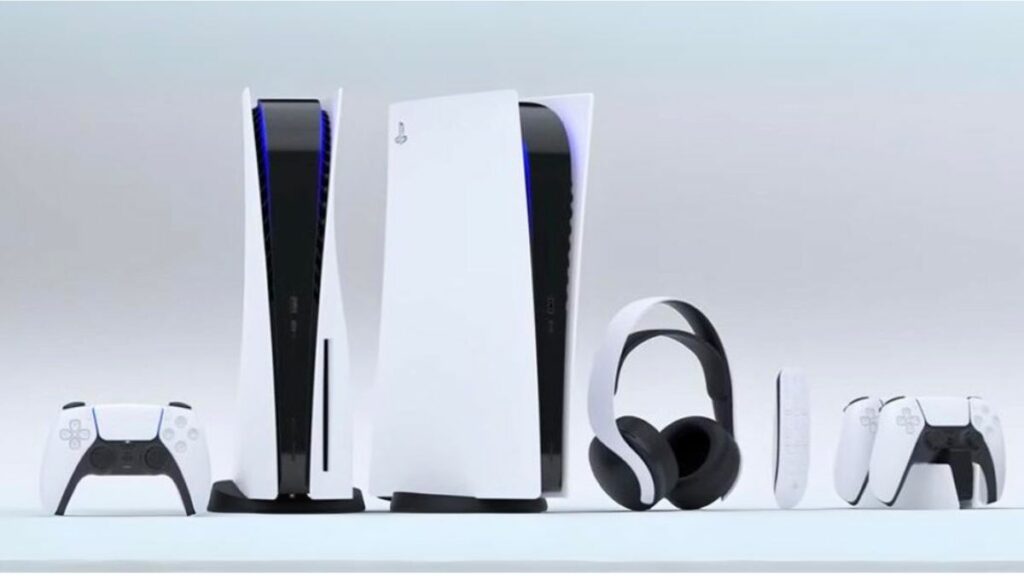
The PlayStation 5 introduced a bold vertical design, while the PS5 Slim reduced its overall size without changing the core design language. The PS5 Pro continued that evolution with improved cooling and a refined appearance.
Rather than making the console significantly larger, Sony is expected to focus on a more compact design, quieter operation, and improved thermal efficiency.
| Feature | Current Expectation |
| Console Size | Smaller than PS5 |
| Cooling | Improved thermal system |
| Noise | Quieter operation |
| Orientation | Vertical & Horizontal |
| USB Ports | USB-C expected |
| Disc Drive | Unknown |
| Digital Edition | Possible |
Expected PS6 Price
The PlayStation 5 launched at $399 for the Digital Edition and $499 for the standard model. Four years later, Sony introduced the PlayStation 5 Pro at $699, reflecting higher hardware costs and more powerful components.
As next-generation processors, graphics hardware, and memory become more expensive, many analysts expect the PS6 to launch at a higher price than the original PS5.
PlayStation Launch Price History
| Console | Launch Price (US) |
| PlayStation | $299 |
| PlayStation 2 | $299 |
| PlayStation 3 | $499 / $599 |
| PlayStation 4 | $399 |
| PlayStation 5 Digital | $399 |
| PlayStation 5 | $499 |
| PlayStation 5 Pro | $699 |
| PlayStation 6 (Expected) | $599–$699* |
Also Read: PS6 Delay May Not Cut Costs as Price Estimate Climbs Toward $1000
PS5 vs PS5 Pro vs PS6: What’s the Difference?
Many players wondering whether to wait for the PS6 already own a PlayStation 5 or are considering a PlayStation 5 Pro. The current industry reports suggest the next console will introduce a full generational upgrade rather than another mid-cycle refresh.
The comparison below highlights the biggest expected differences based on official PS5 specifications and current PS6 expectations.
| Feature | PlayStation 5 | PlayStation 5 Pro | PlayStation 6 (Expected) |
| Launch Year | 2020 | 2024 | 2027–2028* |
| CPU | AMD Zen 2 (8-core) | Enhanced AMD Zen 2 | AMD Zen 6 (Rumored) |
| GPU | AMD RDNA 2 | Enhanced RDNA | Next-generation AMD Radeon |
| AI Upscaling | No | PSSR | Next-generation PSSR |
| Memory | 16GB GDDR6 | 16GB GDDR6 + 2GB DDR5 | 24–32GB GDDR7 (Rumored) |
| Storage | 825GB SSD | 2TB SSD | 2TB SSD (Rumored) |
| Ray Tracing | Hardware RT | Improved RT | Next-generation RT |
| Display | Up to 4K 120Hz | Better 4K performance | Improved 4K, possible 8K support |
| Architecture | Zen 2 / RDNA 2 | Enhanced Zen 2 | Zen 6 + Next-Gen Radeon |
| Backward Compatibility | PS4 | PS4 & PS5 | PS5 Expected |
Will the PS6 Support Backward Compatibility?
Backward compatibility has become an important part of console strategy. The PlayStation 5 supports thousands of PlayStation 4 games, making it easier for players to upgrade without leaving their existing game libraries behind.
Sony hasn’t confirmed whether the PlayStation 6 will support older games. However, most industry analysts expect the console to run PlayStation 5 titles because Sony is likely to continue using AMD’s x86 architecture. Maintaining compatibility would also help preserve players’ digital purchases, cloud saves, and PlayStation Plus libraries.
Support for earlier PlayStation generations is less certain. Rather than offering full native compatibility, Sony currently delivers many classic PlayStation, PS2, and PS3 titles through the PlayStation Plus Premium catalog and cloud streaming services. The company could continue using the same approach on the PS6.
| Platform | Expected Support | Confidence |
| PlayStation 5 Games | Native support expected | High |
| PlayStation 4 Games | Possible | Low |
| PlayStation 3 Games | Unlikely (Native) | Medium |
| PlayStation 2 Classics | Through PlayStation Plus | Medium |
| Original PlayStation Classics | Through PlayStation Plus | Medium |
| Digital Purchases | Expected to carry forward | Medium |
| Cloud Saves | Expected | Medium |
Expected PS6 Games
Sony hasn’t announced any PlayStation 6 launch games, but the company’s first-party studios are already working on several projects that could eventually showcase the next generation of PlayStation hardware.
Rather than revealing launch titles years in advance, Sony typically introduces new games closer to a console’s official unveiling. The PlayStation 5 followed the same strategy, with major exclusives announced during dedicated hardware showcase events.
Studios That Could Lead the PS6 Launch Lineup
| PlayStation Studio | Recent Major Release | Possible Future Project* |
| Naughty Dog | The Last of Us Part II | New IP or sequel |
| Insomniac Games | Marvel’s Spider-Man 2 | Marvel’s Wolverine or new exclusive |
| Santa Monica Studio | God of War Ragnarök | New AAA project |
| Guerrilla Games | Horizon Forbidden West | Next Horizon title or new IP |
| Sucker Punch Productions | Ghost of Tsushima / Ghost of Yōtei | Future Ghost franchise |
| Housemarque | Returnal | New sci-fi action game |
| Bluepoint Games | Demon’s Souls Remake | Remake or original AAA title |
What Could the PS6 Launch Lineup Look Like?
Based on previous PlayStation launches, Sony is likely to combine first-party exclusives with major third-party releases. A typical launch lineup could include:
- A flagship action-adventure exclusive
- A racing game from PlayStation Studios
- One or more multiplayer titles
- Major third-party AAA games from publishers such as Ubisoft, Electronic Arts, Capcom, Square Enix, and Activision
The final lineup will depend on the PS6 launch schedule and Sony’s first-party development roadmap.
Should You Wait for the PS6?
Whether you should wait for the PlayStation 6 depends on your current console, gaming needs, and upgrade plans.
If you already own a PlayStation 5 or PlayStation 5 Pro, waiting could make sense. The PS6 is expected to introduce a new hardware generation, giving you a longer upgrade cycle and access to future PlayStation exclusives.
However, if you’re still using a PlayStation 4 or an older console, upgrading to the PS5 today is likely the better choice. Sony continues to release major first-party games for the PS5, and the PlayStation 6 is still expected to be several years away.
Should You Buy a PS5 or Wait?
| Your Situation | Recommendation |
| You own a PlayStation 5 | Keep your current console and wait for official PS6 news |
| You own a PlayStation 5 Pro | No immediate reason to upgrade |
| You own a PlayStation 4 | Upgrading to a PS5 now offers the biggest improvement |
| You’re buying your first PlayStation | The PS5 remains the best choice for current games |
| You plan to upgrade in 2027 or later | Waiting for the PS6 may be worthwhile |
| You mainly play new PlayStation exclusives | Buy a PS5 now rather than waiting several years |
The PlayStation 5 remains Sony’s flagship gaming platform, with strong first-party support and a growing game library. Unless Sony officially announces the PS6 in the near future, buying a PS5 today is still the most practical option for most players.
Frequently Asked Questions
Will the PS6 support PlayStation VR2?
Sony hasn’t confirmed whether PlayStation VR2 will work with the PS6. However, because PS VR2 was designed for the PlayStation 5, many analysts expect Sony to maintain support if the next console remains compatible with PS5 games.
Will the PS6 require a PlayStation Plus subscription?
No. Buying the console won’t require a PlayStation Plus subscription. However, PlayStation Plus will likely remain necessary for online multiplayer in most paid games, cloud saves, monthly game downloads, and Premium catalog features.
Can I transfer my PS5 save data to the PS6?
Sony hasn’t confirmed save-data migration for the PS6. If the console supports PS5 backward compatibility, cloud saves and account synchronization through PlayStation Network could make transferring game progress much easier.
Will the PS6 launch worldwide at the same time?
Previous PlayStation consoles launched in multiple regions over several weeks, although more recent hardware has seen increasingly synchronized global releases.
Will the PS6 support external SSDs?
Given that both the PS5 and PS5 Pro support compatible M.2 SSD upgrades, similar functionality is widely expected for the PS6.
Will the PS6 be the last PlayStation console?
The company continues to invest heavily in gaming hardware, cloud services, and first-party studios, indicating a long-term commitment to the PlayStation platform.
How We Evaluated the PS6 Information
Since Sony hasn’t officially announced the PlayStation 6, much of the information currently available comes from industry reports rather than confirmed specifications.
Throughout this guide, we’ve separated information into three categories:
| Information Type | Meaning |
| Official | Announced directly by Sony. |
| Industry Reports | Information reported by established gaming and technology publications or supported by public documents. |
| Rumors | Unconfirmed claims from leaks or insider reports that should be treated with caution. |
Whenever Sony announces new details about the PS6, this guide will be updated to reflect the latest official information.