
Banana Pi has introduced the BPI-SM10, a compact RISC-V edge computing platform built around the SpacemiT K3 chip. It brings up to 60 TOPS of AI performance and is designed to run large models locally without relying on cloud processing.
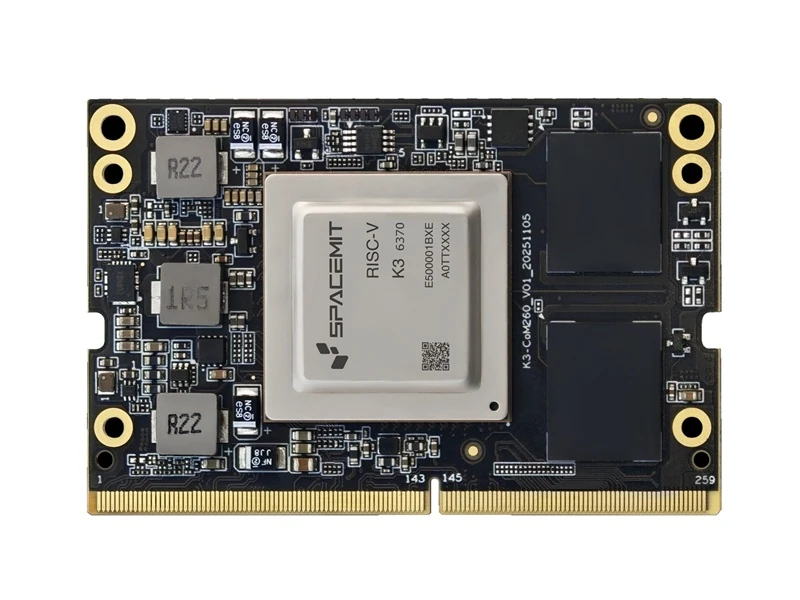
This SpacemiT K3 processor, featuring eight X100 64-bit RISC-V CPU cores clocked up to 2.4GHz, reflects ongoing development in alternative CPU platforms covered in Intel Nova Lake CPU. The CPU offers two clusters with shared cache for balanced performance. Alongside it are eight A100 AI CPU cores built for accelerating inference workloads, delivering up to 60 TOPS. Real-world figures show the platform can handle 30-billion-parameter models at more than 10 tokens per second, which is a key step for running large models on-device.
The chip also includes an integrated GPU with support for Vulkan, OpenCL, and OpenGL ES, matching modern API support discussed in Intel Xe3P graphics. Video capabilities cover 4K60 encoding, 4K120 decoding, and multiple 1080p streams, allowing the board to handle camera input, media processing, and AI vision workloads at the same time.
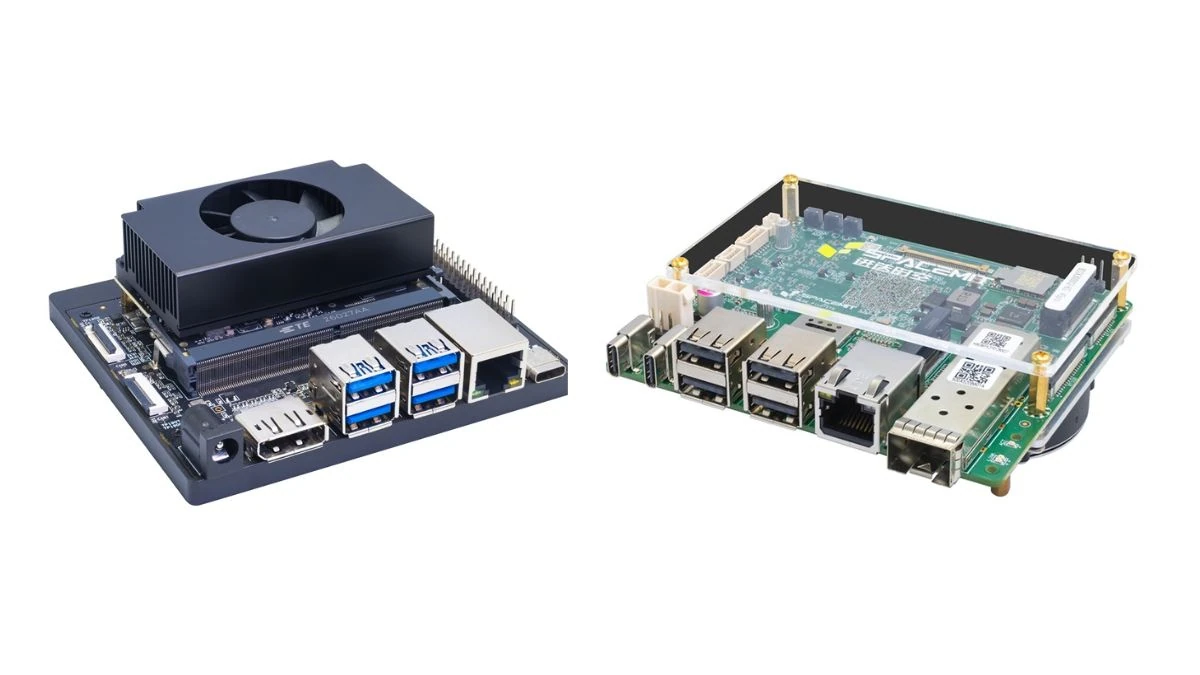
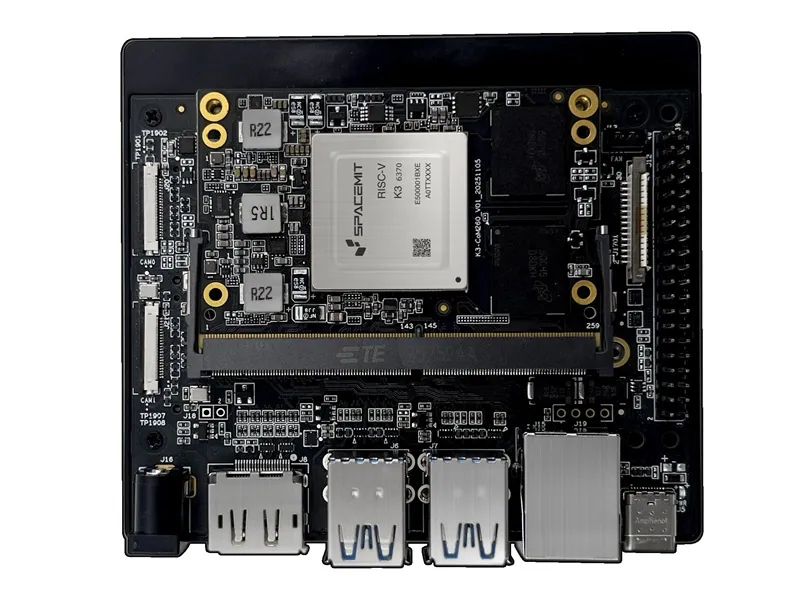
The BPI-SM10 comes a two-part design with a compute module and a carrier board. The compute module contains the processor and LPDDR5 memory, available in 8GB, 16GB, and 32GB configurations at 6400MT/s. The carrier board provides I/O and expansion and follows a layout similar to NVIDIA Jetson Orin Nano platforms, making it easier to reuse existing hardware designs and accessories.
Expansion is paired with M.2 slots and standard headers. The carrier board includes two M.2 connections, one running at PCIe x4 and another at a lower lane configuration for additional devices. It also supports NVMe storage, UFS, and SD cards depending on configuration. A 40-pin GPIO header is included for embedded projects.
Connectivity includes four USB 3.2 Gen2 Type-A ports, one USB Type-C port, DisplayPort 1.2 output, and Gigabit Ethernet, reflecting port configurations found in Minisforum M1 Lite mini PC. For camera-based work, there are two MIPI-CSI connectors. These features make the board suitable for robotics, machine vision, and edge AI applications.
Power consumption ranges from 18W to 35W depending on workload, allowing the board to run high-performance tasks while staying within the limits of compact cooling setups.
The full unit measures 103 × 90.5 × 35 mm, including the compute module, carrier board, and cooling assembly. The footprint is close to existing developer kits, making integration into current projects straightforward.
Banana Pi is also preparing a Pico-ITX version based on the same K3 chip, a form factor direction explored in ASUS TUF B850I WiFi Neo mini ITX board. This version moves to a single-board layout and adds features such as 10Gb Ethernet, additional display outputs, and more expansion options.
Pricing has not been announced, and availability details are still limited.
Sources: Banana Pi (1) & Banana Pi (2)