
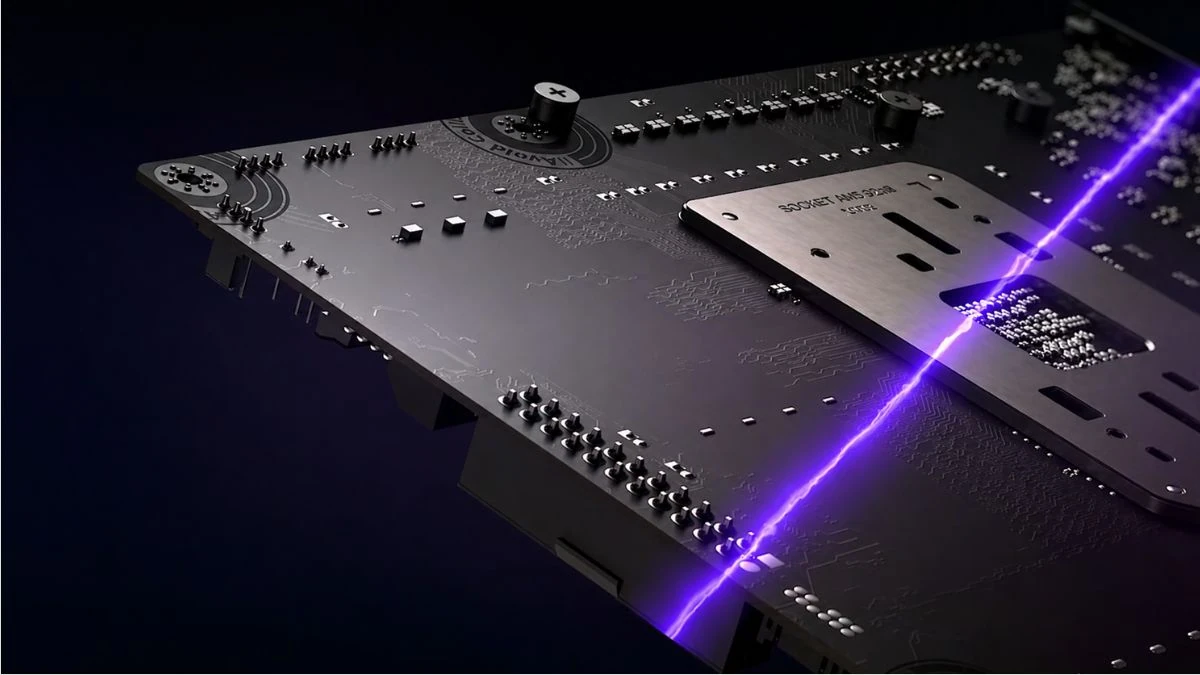
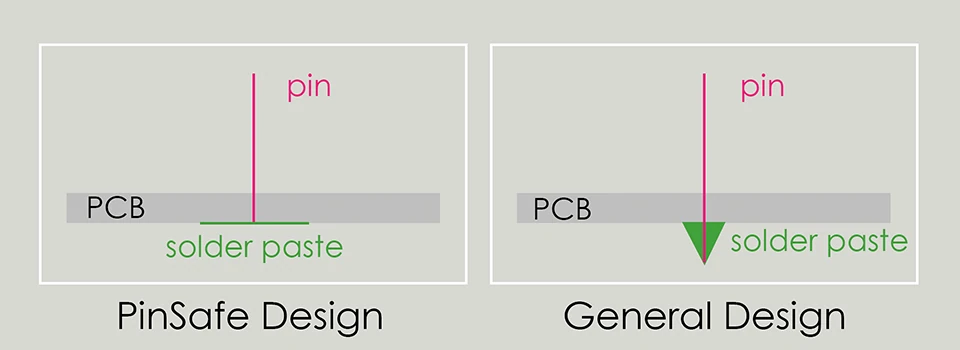
MSI has introduced PinSafe, a patented motherboard design that smooths out the back of the PCB to help prevent finger cuts during PC building. Instead of the usual sharp solder points found on traditional boards, PinSafe flattens these joints, making handling safer when installing or upgrading hardware.
On most motherboards, the rear side exposes tiny solder tips that can easily scratch or cut skin, especially when working inside tight cases, a design still present in boards like the ASUS TUF B850I WiFi Neo Mini-ITX board. PinSafe changes this by reshaping those joints into a flatter surface and reducing the amount of exposed metal across the PCB. The result is a cleaner, smoother back that is easier to handle during assembly.
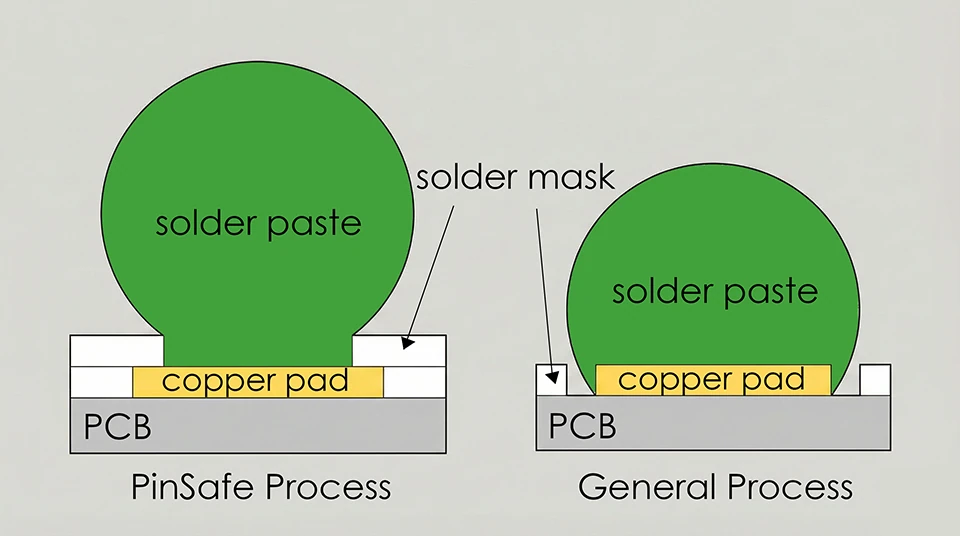
The change comes from a revised manufacturing approach, similar process refinements highlighted in Gigabyte Z890 Tachyon Duo X Ice. MSI offers reflow soldering with tighter control over solder paste, creating more uniform joints with fewer voids. It also adds enclosed pads combined with a solder mask layer, which helps limit oxidation and keeps electrical pathways stable over time.
Durability is also improved through the production process, an area closely tied to advancements in Advantech DDR5-7200 industrial memory. PinSafe boards go through fewer high-temperature solder cycles compared to older methods, reducing stress on the PCB layers. MSI pairs this with high-temperature-resistant components that maintain their shape and performance under long-term heat exposure.
MSI states that performance remains unchanged despite the structural redesign, maintaining standards expected in platforms covered in Intel Core Ultra 200S Plus desktop CPUs. PinSafe boards have passed electromagnetic compatibility testing, keeping signal quality and grounding behavior in line with standard layouts. Connectors such as power inputs, USB ports, and headers have also gone through mechanical retention testing to ensure long-term reliability.
The first model to feature this design is the MPG X870E CARBON MAX WIFI, an AMD AM5 motherboard. It includes PCIe 5.0 support, a 64MB BIOS chip, and Wi-Fi 7 connectivity. MSI also adds Steel Armor II reinforcement on the PCIe slot, using extra solder points and structural support to handle the weight of modern high-end graphics cards.
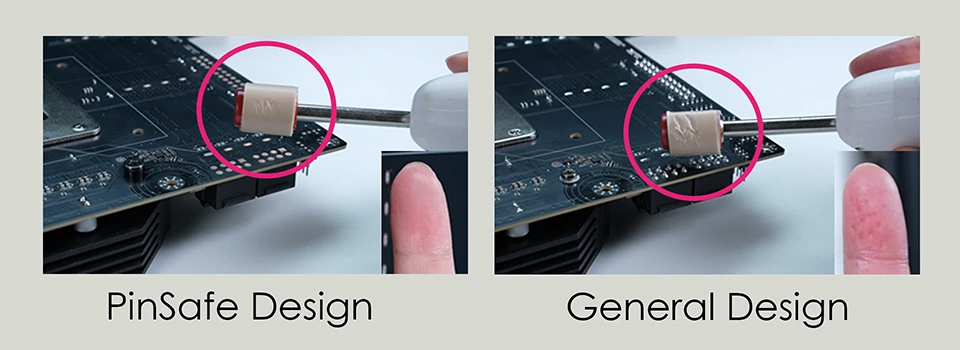
PinSafe is expected to roll out across more premium MSI motherboards over time, following trends seen in launches like MSI Z890-S WiFi6E motherboard. While the change focuses on a small part of the board, it directly improves the building experience, especially for users who frequently install or swap components.
MSI has not shared pricing details specific to PinSafe. It is currently limited to select high-end models.
Source: MSI