

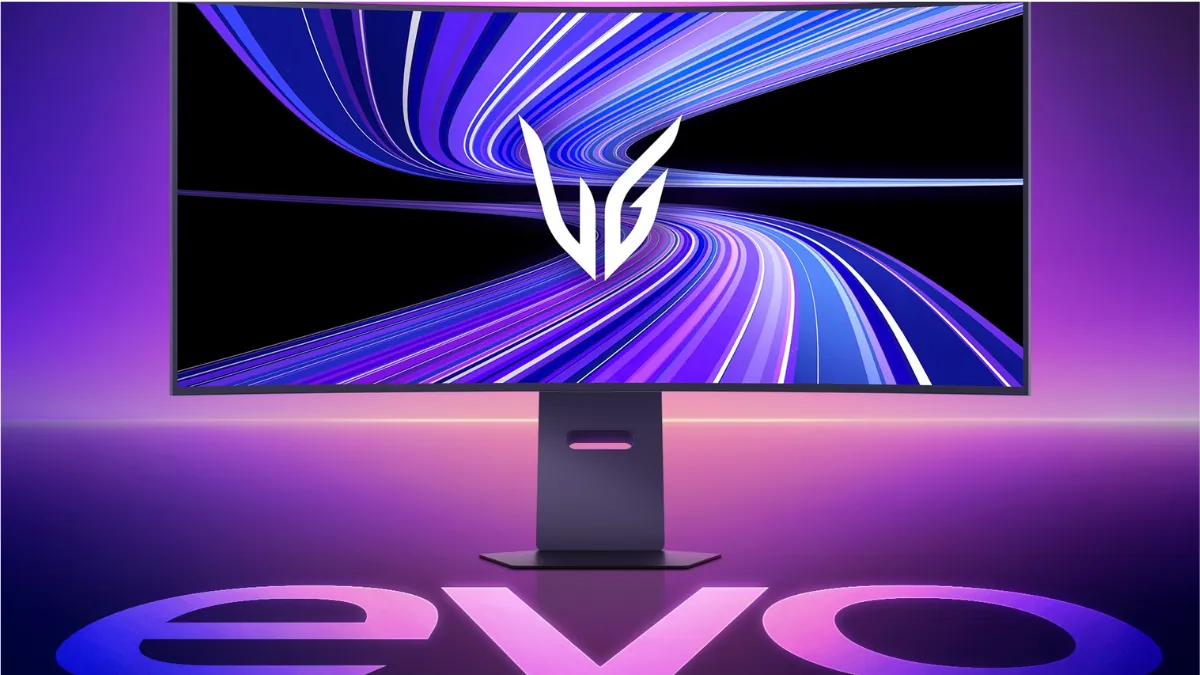
LG has officially introduced the UltraGear Evo 45GX950B, a flagship 45-inch OLED gaming monitor that brings together a 5K2K ultrawide resolution, dual-mode refresh rates, and AI-powered upscaling, expanding on earlier models, such as the LG 39GX950B 5K2K OLED 330Hz monitor. Aimed at high-end gamers and creators, it focuses on delivering both immersive visuals and strong performance, placing it firmly in the premium OLED gaming monitor segment.
The UltraGear Evo 45GX950B features a 5120 × 2160 (5K2K) resolution, positioning it among the highest-resolution ultrawide gaming monitors currently available. The panel is built on OLED technology with a micro-lens array (MLA), a design aimed at improving brightness efficiency while maintaining the deep blacks and contrast OLED displays are known for, similar to implementations in the Philips Evnia 27M2G5800 5K 180Hz 330Hz monitor. Peak HDR brightness can reach up to around 1,300 nits in highlight scenarios, helping the display deliver a strong visual impact across both games and HDR content.
LG’s integrated AI processor, which permits real-time AI upscaling, is a significant addition. The technology improves clarity in games, streaming material, and productivity applications by analysing incoming video signals and enhancing lower-resolution content to near-native 5K2K quality. In order to provide a crisper and more engaging listening experience, the monitor also has AI-assisted sound processing that separates speech, background sounds, and effects.
This monitor uses a dual-mode refresh system, so you can switch between better visuals or faster performance depending on your needs, a feature also present in the AOC Agon Pro AGP277QK 1000Hz dual-mode monitor. At full 5K2K resolution, it runs at 165Hz. Drop the resolution, and it can push up to 330Hz. That flexibility makes it work well for both immersive, story-driven games and fast-paced competitive play.
The 45-inch curved screen uses an 800R curve, which is meant to feel more natural to your field of view and cut down on how much your eyes have to move across the display. Colour performance is also solid, with around 98.5% DCI-P3 coverage and VESA DisplayHDR True Black certification for more accurate colours and better HDR. Response times go as low as 0.03ms, helping keep motion blur and ghosting to a minimum during fast gameplay.
The UltraGear Evo 45GX950B is compatible with both NVIDIA G-SYNC and AMD FreeSync Premium Pro for adaptive sync support, which helps provide smoother gameplay on a variety of platforms. To improve gaming responsiveness and viewing pleasure over extended sessions, extra features including Dynamic Action Sync, Black Stabiliser, and low blue light modes are provided.


Connectivity options include HDMI, DisplayPort 2.1, and USB-C with power delivery, making the monitor compatible with modern gaming PCs, consoles, and multi-device setups. The inclusion of DisplayPort 2.1 is particularly relevant for handling high bandwidth requirements at 5K2K resolutions and high refresh rates. The monitor also supports ergonomic adjustments, including height, tilt, and swivel, allowing users to fine-tune their setup.
In Japan, LG has set the UltraGear Evo 45GX950B’s price at roughly 329,800 yen, with discount pricing bringing it closer to 259,800 yen. This puts the display in the premium category, roughly corresponding to the $2,000 class in the US market, where it is anticipated to contend with expensive OLED gaming monitors from companies like Alienware and Samsung. Although the specifics of the global rollout have not yet been verified, availability is anticipated to start in mid-June.
The launch also shows how the display market is evolving, with a clear push toward bigger OLED panels, higher refresh rates, and AI-based features, as reflected in panels like the TCL CSOT 640Hz dual-mode panel Q3 2026. With its 5K2K resolution, dual-mode refresh up to 330Hz, and AI upscaling, the UltraGear Evo 45GX950B comes across as one of the most advanced gaming monitors announced so far, built for users who want both top-level performance and next-gen visual quality.