
After several months as a China-only model, the Radeon RX 9070 GRE is getting a wider release. AMD has confirmed that the card will reach global markets on June 2 with a suggested retail price of $549, placing it between the Radeon RX 9060 XT and Radeon RX 9070 in the company’s RDNA 4 lineup.
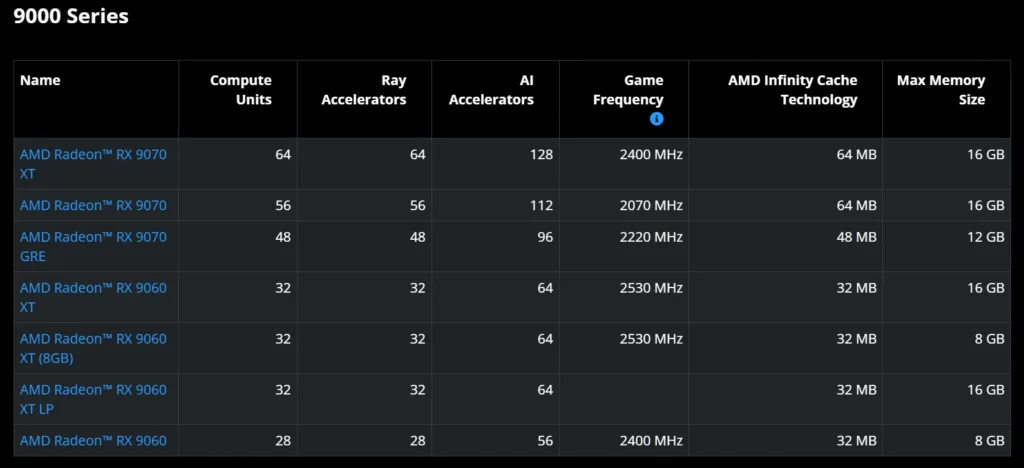
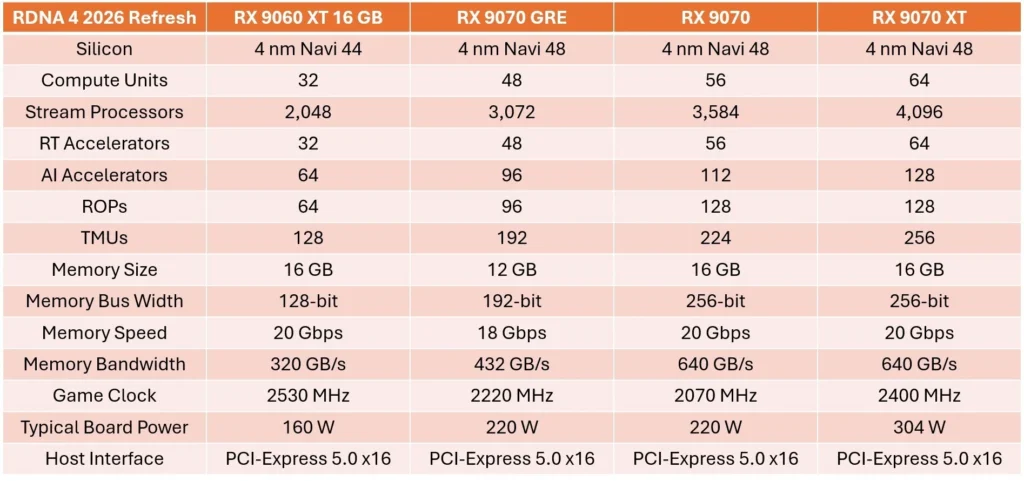
The RX 9070 GRE sits directly below the standard RX 9070, but both cards share the same Navi 48 GPU. To create some separation between the two models, AMD trims the GRE version down to 48 Compute Units and 3,072 stream processors. The RX 9070 carries 56 Compute Units, while the RX 9070 XT pushes that number to 64.
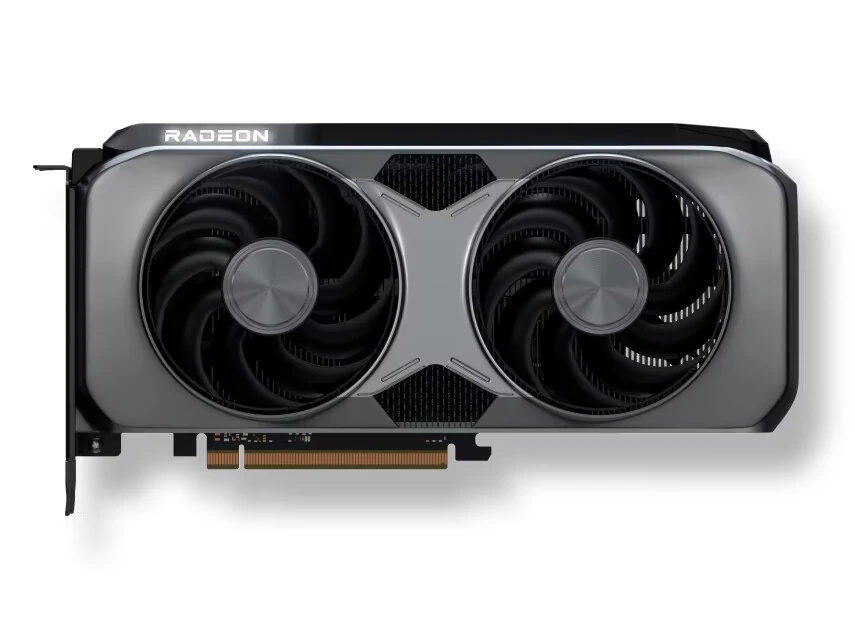
Radeon RX 9070 GRE Specifications
| Specification | Radeon RX 9070 GRE |
|---|---|
| Architecture | RDNA 4 |
| GPU | Navi 48 |
| Compute Units | 48 |
| Stream Processors | 3,072 |
| Memory | 12GB GDDR6 |
| Memory Bus | 192-bit |
| Memory Speed | 18 Gbps |
| Memory Bandwidth | 432 GB/s |
| Game Clock | 2.20 GHz |
| Boost Clock | Up to 2.79 GHz |
| Infinity Cache | 48MB |
| Total Board Power | 220W |
| MSRP | $549 |
| Availability | June 2, 2026 |
AMD also reduces memory to 12GB of GDDR6 on a 192-bit bus. The RX 9070 and RX 9070 XT both ship with 16GB and a wider 256-bit interface. Even with the smaller memory configuration, bandwidth still reaches 432 GB/s.
Power draw, however, stays unchanged. The RX 9070 GRE carries the same 220W board power rating as the standard RX 9070 despite having fewer Compute Units and less memory.
AMD sees the card as a 1440p gaming solution and claims an average performance lead of roughly 21% over NVIDIA’s GeForce RTX 5060 Ti 16GB across more than 40 tested games at 1440p. Those results were recorded on a Ryzen 7 9800X3D-based system using AMD’s internal test suite.
Reviews published following the Chinese launch generally placed the RX 9070 GRE ahead of the RTX 5060 Ti 16GB in traditional rasterized gaming workloads. The card still lands below both the RTX 5070 and the standard RX 9070, which is expected given its reduced hardware configuration.
The biggest difference may end up being price. The card arrives with a $549 MSRP, while many RX 9070 models currently sell closer to the $599 range at retail. For buyers who do not need 16GB of VRAM or the additional Compute Units offered by the RX 9070, the GRE fills the gap between AMD’s mainstream and upper-midrange offerings.
AMD hasn’t stripped away any of the core RDNA 4 technologies. The RX 9070 GRE still supports third-generation ray tracing accelerators, second-generation AI accelerators, FidelityFX Super Resolution, HYPR-RX, AV1 media support, and DisplayPort 2.1.
AMD’s board partners are expected to launch custom versions starting June 2. Sapphire, PowerColor, XFX, ASUS, ASRock, Gigabyte, and other partners are likely to offer their own cooler designs and factory-overclocked variants shortly after launch.
The wider release gives AMD another product in one of the most active price segments of the graphics card market, where buyers are balancing GPU performance, VRAM capacity, and increasingly aggressive pricing from both AMD and NVIDIA.
Source: AMD