
Windows 12 has become one of Microsoft’s most talked-about upcoming products, as the Windows platform is rapidly evolving. With Microsoft expanding artificial intelligence across Windows, cloud services, and next-generation PCs, many users are eager to understand what the next version of Windows will offer.
Since the release of Windows 11 in 2021, Microsoft has focused on continuous improvements rather than frequent version changes. These updates have introduced new system capabilities, performance enhancements, and better integration with modern hardware, fundamentally changing how Windows evolves over time.
This guide provides a structured and up-to-date overview of Windows 12, covering its official status, expected release timeframe, potential features, hardware requirements, and how it differs from Windows 11.
Table of Contents
Has Windows 12 been Officially Confirmed?
Microsoft has not yet officially confirmed for upcoming Windows OS. There has been no announcement, launch event, or published roadmap identifying Windows 12 as the next standalone Windows release.
However, Microsoft traditionally develops future Windows platforms years in advance. Ongoing platform planning, internal references, and long-term product direction suggest that work is likely underway on the next generation of the Windows experience after Windows 11.
Microsoft has not clarified how this next version will be branded or delivered. Instead of a clear release under the name “Windows 12,” Microsoft might present the next phase of Windows as a major platform update built upon Windows 11.
| Category | Details |
|---|---|
| Release Date | No official confirmation from Microsoft (Expected to be released in 2026) |
| Features | – AI-Driven System Assistance – Enhanced Microsoft Copilot Experience – Improved Multitasking and Productivity Tools – Performance and Efficiency Improvements – Smarter Update Management – UI enhancements – Better Android app support – Increased reliance on the Settings app |
| Pricing | – Likely to be a free upgrade for Windows 11 users |
Windows 12 Expected Release Date
Microsoft has not announced a release date for Windows 12, but based on Microsoft’s past Windows release cycles and the pace of platform development, we can estimate a potential timeframe.
Major versions of Windows have traditionally been released several years apart. Windows 10 was released in 2015, followed by Windows 11 in 2021, creating a six-year gap between the two generations. This timeframe illustrates the amount of time Microsoft typically allocates for architectural changes, testing, and long-term hardware alignment.
Applying this release interval, the next major generation of Windows would likely arrive several years after Windows 11. This aligns with Microsoft’s recent pattern of gradual improvements through updates rather than accelerating full version launches.
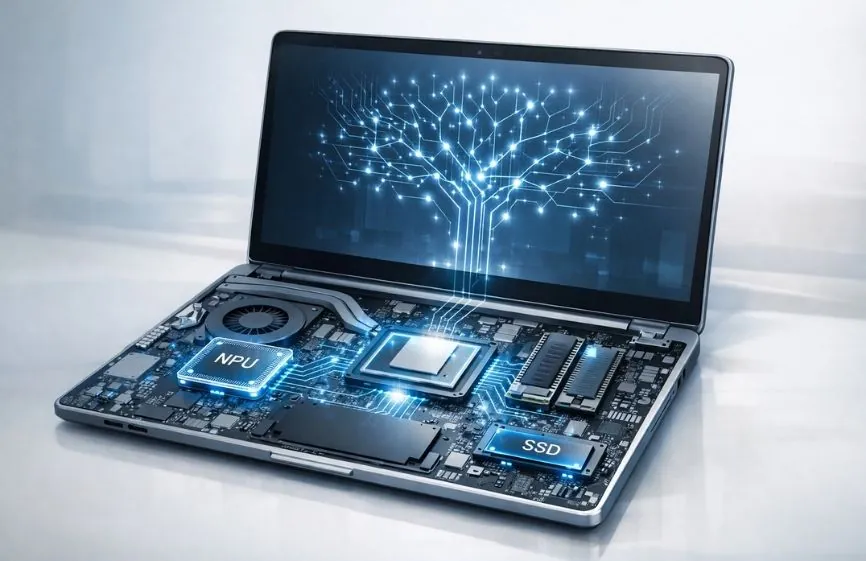
Another timing factor is hardware maturity. Microsoft’s next Windows generation is expected to coincide with increased adoption of AI-focused PCs, particularly systems with neural processing units. Major platform transitions are typically timed to coincide with necessary hardware advancements rather than arbitrary calendar dates.
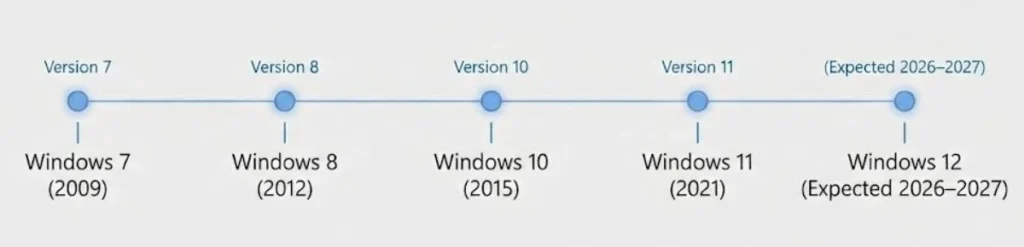
Credit: PCVenus Team
Why Microsoft May Be Changing Its Windows Release Strategy
Microsoft is no longer treating Windows as a product that only changes with major version numbers. Instead, it is positioning Windows as an evolving platform that improves continuously.
With Windows 11, Microsoft began delivering substantial updates more frequently, including AI tools, interface refinements, and system-level improvements. This reduces the need for disruptive version jumps while allowing Microsoft to deploy features faster.
Artificial intelligence also plays a major role in this shift. Many new Windows features rely on cloud-based AI models that can be updated independently of the operating system. This makes continuous updates more practical than traditional releases.
From a business perspective, this approach helps Microsoft:
- Maintain stronger security standards
- Support new hardware more quickly
- Keep users within the Windows ecosystem without forcing major upgrades
As a result, Windows 12 may represent a platform evolution rather than a clean break from Windows 11.
Also Read: How to Delete old Windows Update Files?
Expected Features of Upcoming Windows 12 OS
We hope and expect that Microsoft will introduce changes that focus on improving how the operating system works and assists users, rather than just a complete visual redesign. While no features have been officially confirmed, several capabilities are widely anticipated based on Microsoft’s current Windows development direction.
1. AI-Driven System Assistance
Windows 12 is expected to integrate artificial intelligence more deeply into everyday system tasks. This could include smart system search, context-aware suggestions, and background performance optimizations that adapt to user behavior.
2. Enhanced Microsoft Copilot Experience
Copilot is likely to play a more central role in Windows 12. Instead of functioning as a separate tool, it could be integrated directly into the operating system to assist with system navigation, productivity workflows, and app interactions.
3. Improved Multitasking and Productivity Tools
Windows 12 may enhance window management, task switching, and workspace organization to improve efficiency, especially for users who work with multiple applications simultaneously.
4. Performance and Efficiency Improvements
System-level optimizations are expected to improve responsiveness, battery efficiency, and overall stability, particularly on newer hardware designed for modern workloads.
5. Smarter Update Management
Windows 12 updates are expected to be less disruptive, with improved background installations and fewer interruptions to system use during active work.
Also Read: What is Windows Hello? Everything You Need to Know
Credit: PCVenus Team
Windows 12 System (Hardware) Requirements
Microsoft has not confirmed hardware requirements for Windows 12, but based on Windows 11 and current platform direction, the following is likely.
| Component | Expected Requirement |
| Processor | 64-bit x86 or ARM |
| RAM | Minimum 4 GB (8 GB recommended) |
| Storage | 64 GB or more |
| Security | TPM 2.0, Secure Boot |
| Display | HD (720p) minimum |
| AI Hardware | Optional NPU for advanced AI features |
Devices with newer CPUs and AI hardware will be better positioned to access advanced Windows 12 features.
Windows 12 vs Windows 11
This section focuses only on comparison, without repeating release dates, features, or strategy already covered earlier.
| Feature | Windows 11 | Windows 12 (Expected) |
| Release Status | Officially released | Not officially announced |
| Update Model | Periodic feature updates | Continuous platform-level updates |
| AI Integration | Copilot available as an added feature | AI expected to be more deeply integrated |
| Hardware Focus | Traditional x86 PCs | AI PCs, ARM processors, NPUs |
| Performance Optimization | General system optimization | AI-assisted performance tuning |
| User Interface | Modern redesigned UI | Refined UI with intelligent assistance |
| Upgrade Approach | Major version upgrade | Platform evolution rather than a clean break |
Who should care most about Windows 12?
Windows 12 will be most relevant to users planning to upgrade their hardware in the coming years, rather than those who are already happy with their current systems.
Users considering purchasing a new laptop or desktop, especially AI-enabled devices, are likely to benefit most from Windows 12, as future features may be optimized for newer hardware architectures.
Professionals and power users who rely on productivity tools, creative software, or multitasking workflows may also find Windows 12 essential, as upcoming system improvements are expected to focus on efficiency and intelligent assistance.
Developers and IT teams should pay attention to Windows 12, as future platform changes could impact application compatibility, deployment strategies, and long-term system planning.
Casual users whose systems run Windows 11 smoothly may not need to do anything immediately regarding Windows 12, as Windows 11 is expected to be supported for several more years.
Frequently Asked Questions
Has Microsoft officially announced Windows 12?
No. Microsoft has not yet officially announced Windows 12, nor has it confirmed it as the next standalone Windows release.
When is Windows 12 expected to be released?
Based on previous release cycles, Windows 12 is most likely to arrive between 2026 and 2027.
Will Windows 12 be a free upgrade?
Microsoft has not yet confirmed pricing or upgrade terms. If it is released, it is expected to follow the free-upgrade model for eligible systems, similar to recent Windows versions.
Will Windows 12 immediately replace Windows 11?
No. Windows 11 is expected to remain supported for several years alongside any future Windows releases.
Will Windows 12 require new hardware?
Basic functionality may work on compatible systems, but advanced features are expected to perform best on newer hardware, especially AI-capable devices.
Should users wait for Windows 12 instead of upgrading to Windows 11?
For most users, upgrading to Windows 11 is the practical option. Waiting is primarily advisable for those planning to purchase new hardware in the near future.
Final Words
Windows 12 is expected to be the next step in the evolution of Windows, with a greater focus on intelligence, efficiency, and modern hardware support. While details are scarce at the moment, the direction suggests gradual improvements rather than a sudden overhaul.
For now, Windows 11 remains a reliable option for most users, and there’s no immediate need to wait. Windows 12 will become more relevant when new hardware becomes commonplace and Microsoft shares its official plans.
Until then, keeping your system updated and understanding future compatibility requirements is the most practical approach.
Reference: When will windows 12 be out