

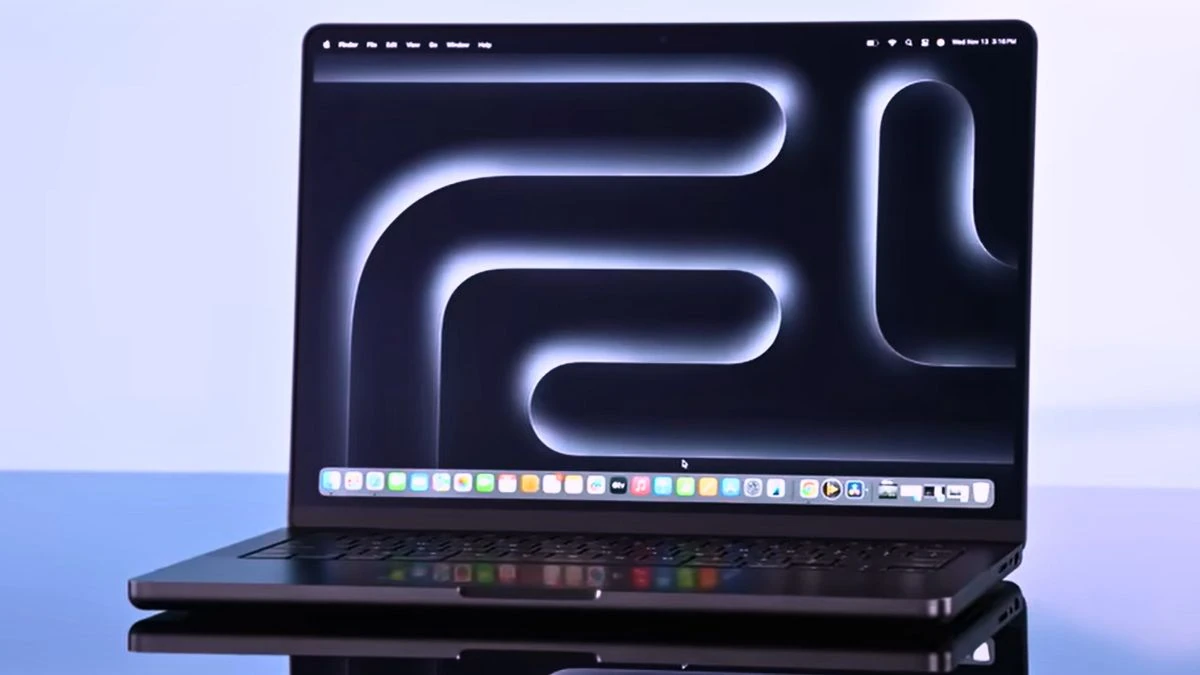
A laptop that feels fast during basic coding can slow down quickly once real data science work begins. Opening a large dataset in Pandas, running multiple notebooks, or experimenting with models often pushes memory and system limits much earlier than expected.
In many cases, the issue is not raw processing power but how the system handles sustained workloads. Limited RAM leads to slowdowns when working with larger datasets, while slower storage increases load times during repeated experiments. Laptops that appear powerful on paper can still struggle once these tasks run continuously.
Different types of data science work place different demands on hardware. Analysis and visualization rely more on memory and storage speed, while machine learning introduces additional pressure on GPU and compute resources. Understanding these differences is more useful than comparing specifications alone.
The focus here is on how laptops behave during actual data science workflows, including where limitations appear and what configurations remain stable during longer sessions.
What to look for in a Laptop for Data Science?
Many laptops feel fast during basic coding, but slow down once datasets grow or multiple notebooks are running at the same time. These workloads quickly expose limits in memory, storage speed, and sometimes GPU capability.
CPU: Handles Data Processing and Workflow
The CPU supports data preprocessing, calculations, and running code across notebooks and scripts.
- Intel Core i7, i9, or Core Ultra 7/9 processors are sufficient for most workflows
- AMD Ryzen 7 and Ryzen 9 offer similar performance for data-heavy tasks
CPU limitations usually appear during data preparation or when running multiple processes at once. During model training, other components tend to have a greater impact.
Dedicated Graphics Card (GPU)
Most laptops have built-in graphics that work fine for regular tasks. But when dealing with massive datasets running complex machine learning, or deep learning tasks on lots of data, you’ll need a special graphics card.
Not all data science jobs need this dedicated graphics card, but it can make machine learning much faster.
People often like the latest NVIDIA graphics cards, like the ones in the latest GeForce or RTX series with at least 4GB VRAM.
Also Read: What to Look for in a Graphics Card? Everything You Need to Know
Sufficient RAM
Data analysis and machine learning can be memory-intensive, especially with noisy, structured, unstructured data.
Choosing a laptop with a minimum of 16GB of RAM is a good idea. Look for RAM that is both the latest and fastest (measured in MHz).
For handling large datasets and complex calculations, 32GB or more is ideal.
Fast and Enough Storage
Data scientists require laptops with fast storage drives to manage and process large datasets efficiently and to train machine learning models that demand rapid data access.
Look for a computer with a minimum of 256GB solid-state drive (SSD) for speedy data access, and 512GB+ will be ideal. For large datasets, consider external storage or cloud solutions for additional space.
Also Read: 13 Best SSD Laptops [Every Budget]
Great Display Quality
A high-quality display is essential for data scientists because it enhances accuracy, efficiency, and comfort while working with data.
When choosing a laptop, look for features like high resolution, wide viewing angles, accurate colors, and low blue light emission to ensure a productive and comfortable work experience.
Look for at least a 13-inch Full HD (1920×1080) or higher-resolution, 60Hz refresh rate screen.
Many laptops come with a standard 15.6-inch display, but if you prefer a larger screen, options are available for data science.
Data Science Laptop Requirements
| Specs | Minimum | Recommended |
|---|---|---|
| Screen | Full HD (1920 x 1080) | Full HD+ (1920 x 1200) or more |
| CPU | 12th Gen Intel Core i3 or equivalent AMD Ryzen 3 | 12th-14th Gen Intel Core i5, i7, Ultra 5, 7, 9 or equivalent AMD Ryzen 5,7, 9 |
| GPU | Intel UHD or equivalent AMD Radeon Vega graphics | NVIDIA GeForce RTX or equivalent AMD Radeon RX series graphics |
| Memory | 4GB | 16GB or more |
| Storage | 128GB SSD | 512GB SSD or more |
| Battery | 2 Hour | 4 hours or more |
| Operating system (OS) | Windows 10 | Windows 11, macOS, or Linux |
What is the best laptop for data science?
Choosing the best laptop depends on your budget and specific needs.
All the laptops we reviewed for running data science algorithms are excellent choices.
In this table, we’ve listed some of the most expensive laptops at the top and more affordable options at the bottom, so if you’re on a budget, consider the more affordable options at the bottom first and work your way up to the most expensive and powerful laptops at the top, and choose accordingly.
| Image | Product | Feature | Price |
|---|---|---|---|
TOP Pick
 |
Apple MacBook Pro M5 |
| Check Price |
Best Overall
 |
Alienware 18 Area-51 |
| Check Price |
 |
ASUS ROG Strix G16 |
| Check Price |
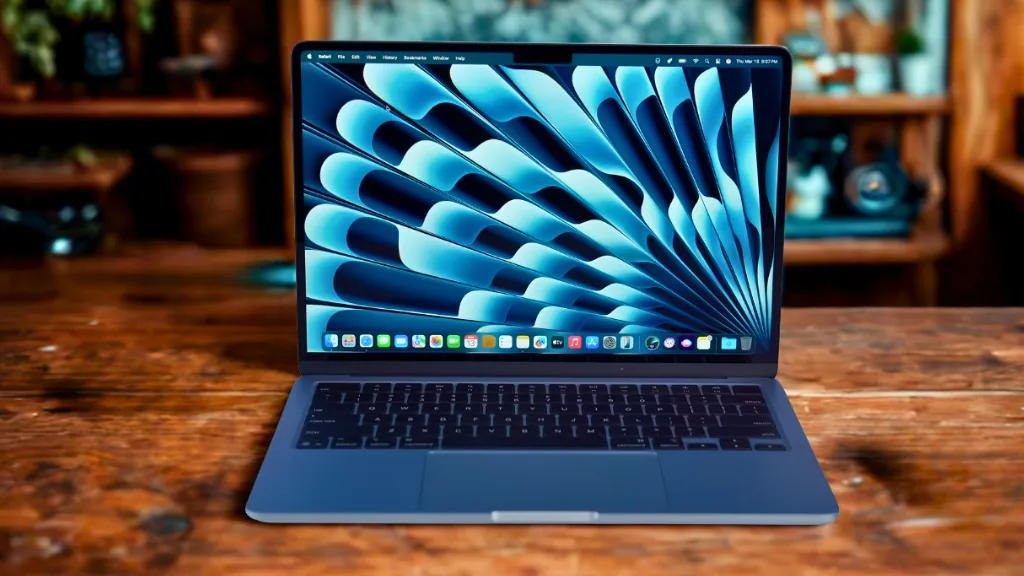 |
Apple MacBook Air M4 |
| Check Price |
 |
Dell Precision 5490 |
| Check Price |
 |
Acer Nitro V |
| Check Price |
 |
Lenovo ThinkPad P14s Gen6 |
| Check Price |
 |
HP ZBook Studio 16 G11 |
| Check Price |
 |
MSI Vector 16 HX AI |
| Check Price |
Built for Professionals Who Push Limits


1. Apple MacBook Pro M5
Key Specs
| Processor | Apple M5 (10-Core) |
| Graphics | Apple M5 (10-Core) |
| Memory | 16GB LPDDR5X |
| Storage | 1TB SSD |
| Display | 14.2 inches, 3024 × 1964 pixels, 120Hz |
| Weight | 3.42 lbs (1.55 kg) |
Check Current Pricing
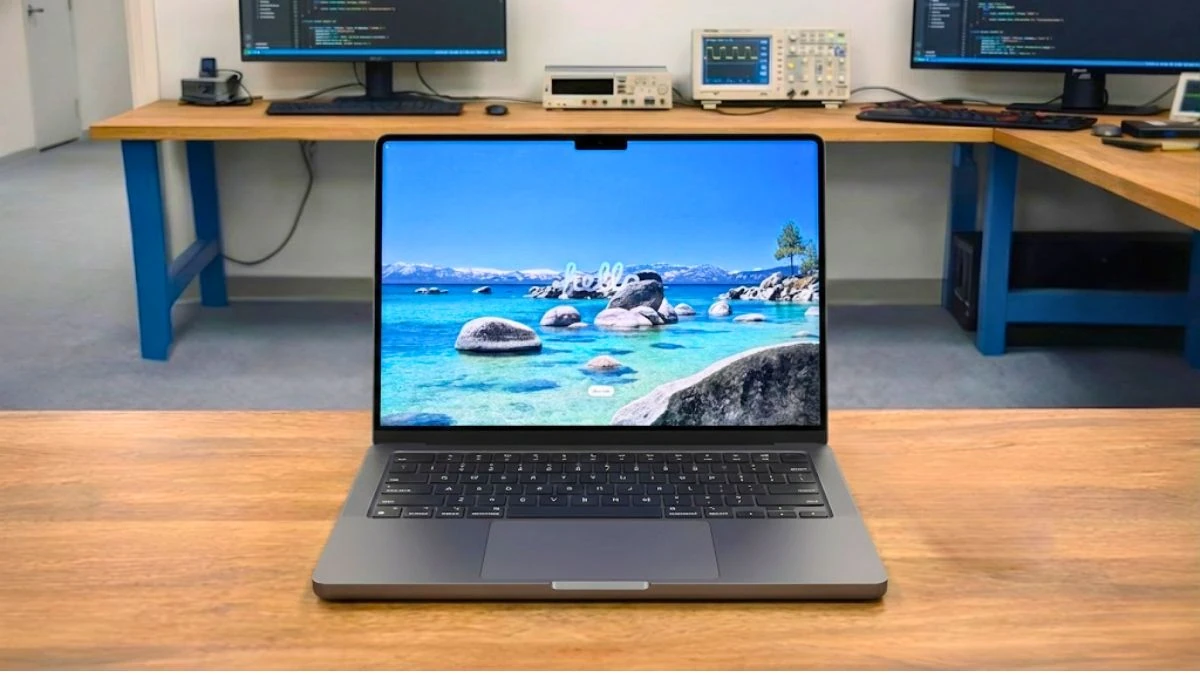
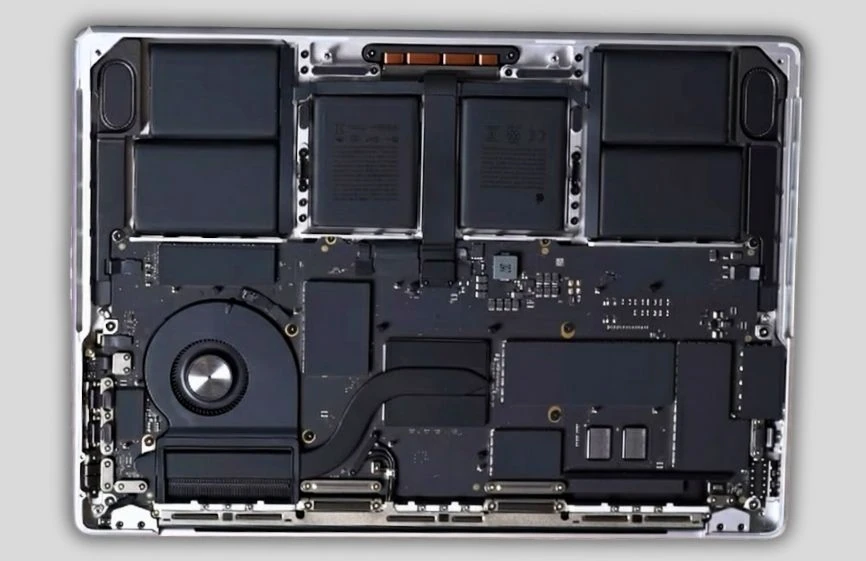
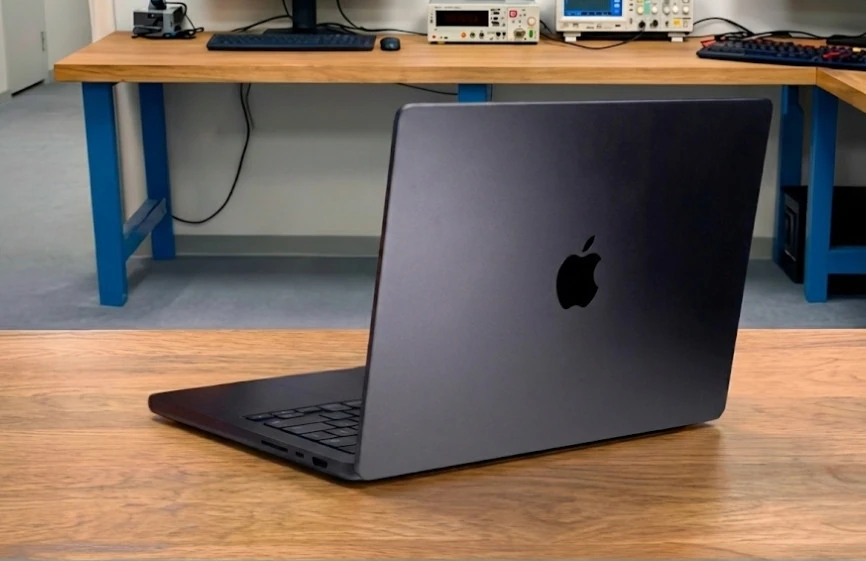
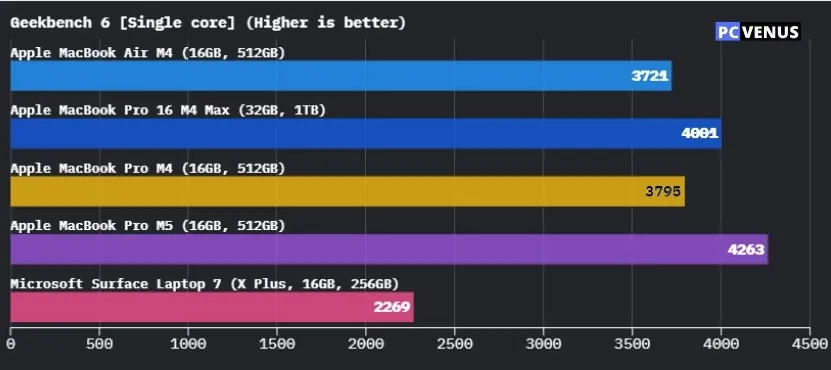
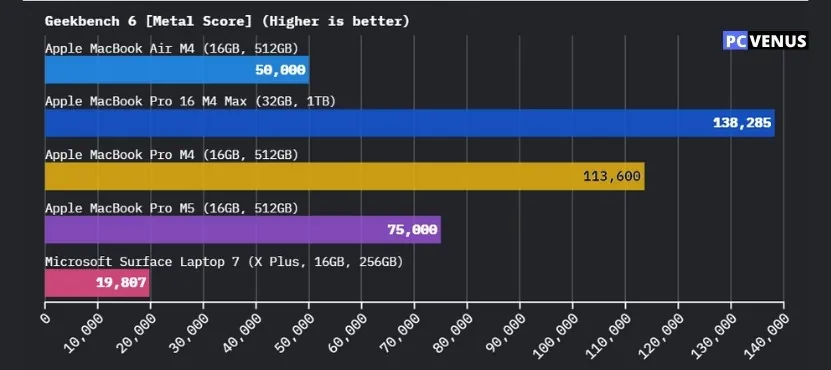
Apple offers one of the best laptops for Data Science students and professionals, known for its strong performance, reliability, and efficient multitasking.
This sleek MacBook comes with powerful, modern specifications, powered by the latest Apple M5 chip, which is designed for professional workloads and AI-assisted tasks.
This high-performance laptop features a 10-core CPU that delivers fast and consistent processing for demanding applications, along with a 10-core GPU that provides smooth graphics performance for data visualization, simulations, and creative workloads. The 16-core Neural Engine significantly improves machine learning and AI-related tasks, making it suitable for modern data science workflows.
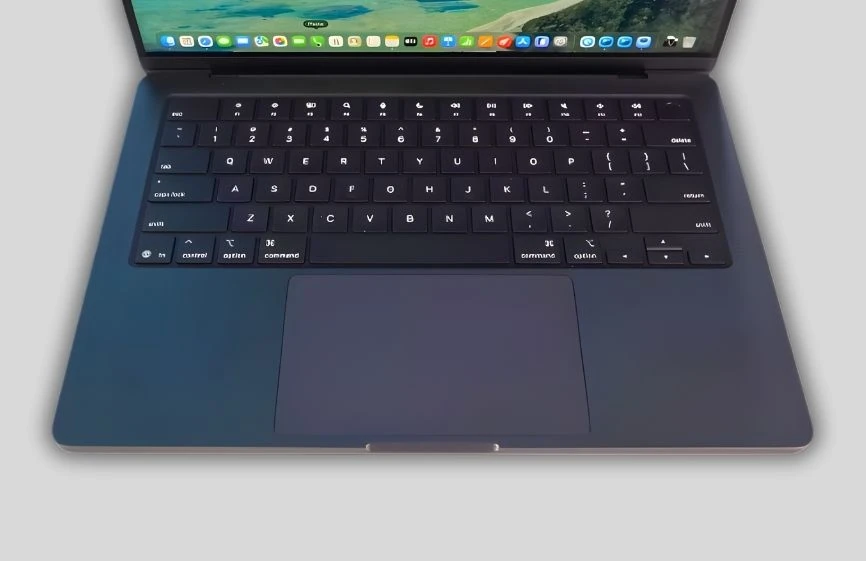
The 14.2-inch Liquid Retina XDR display with ProMotion 120Hz refresh rate, up to 1600 nits peak brightness, and True Tone support delivers accurate colors and sharp visuals, while the responsive and quiet Magic Keyboard enhances the overall typing experience during long coding or research sessions.
Running advanced data science tasks, such as training machine learning models or handling large datasets, requires sustained performance. To support this, the MacBook Pro includes an active cooling system that maintains high performance under load, making it a strong choice for Data Science students and professionals.
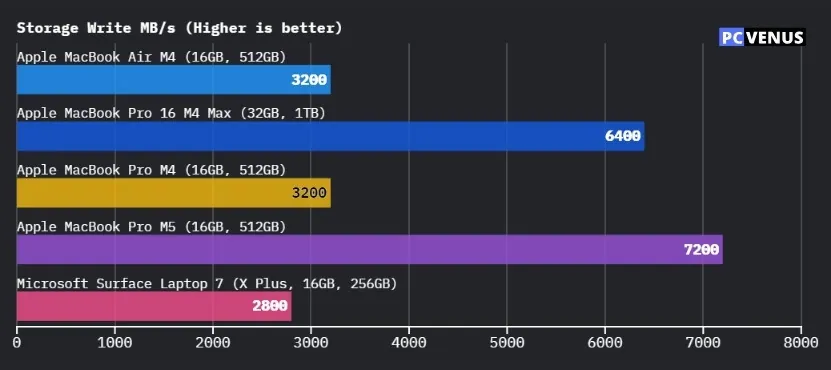
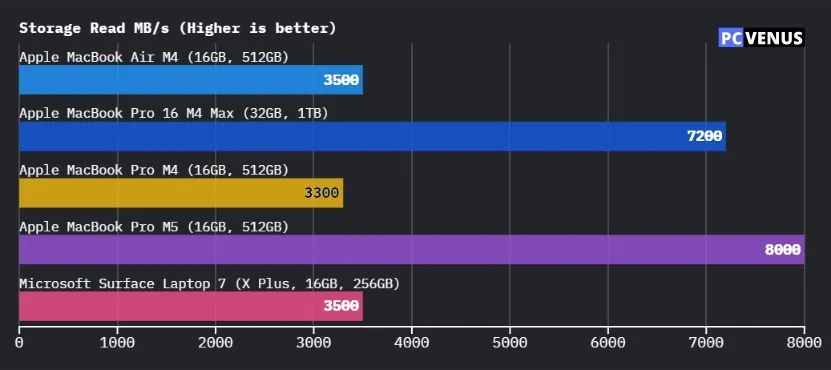
Its fast 1TB SSD storage and 16GB of unified memory ensure smooth multitasking and quick data access. Higher memory and storage configurations are available at the time of purchase for users who need additional capacity for large projects and datasets.
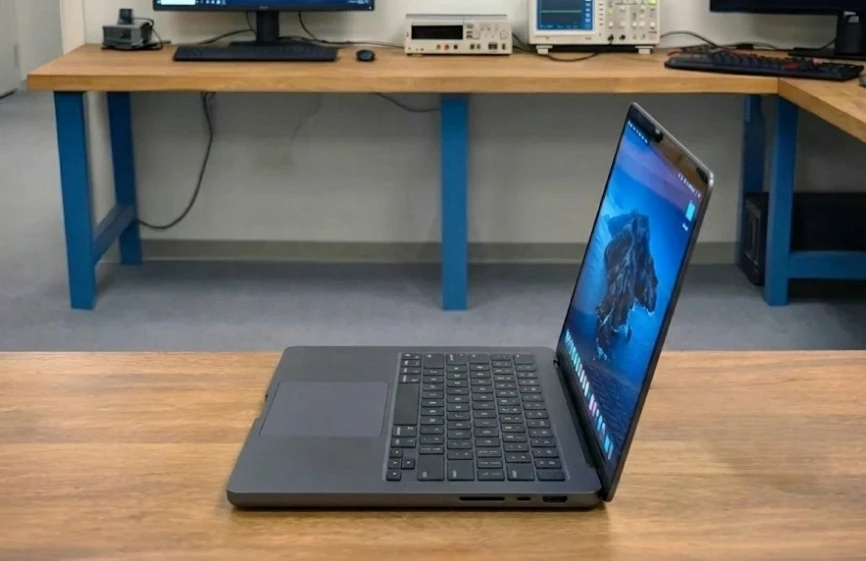
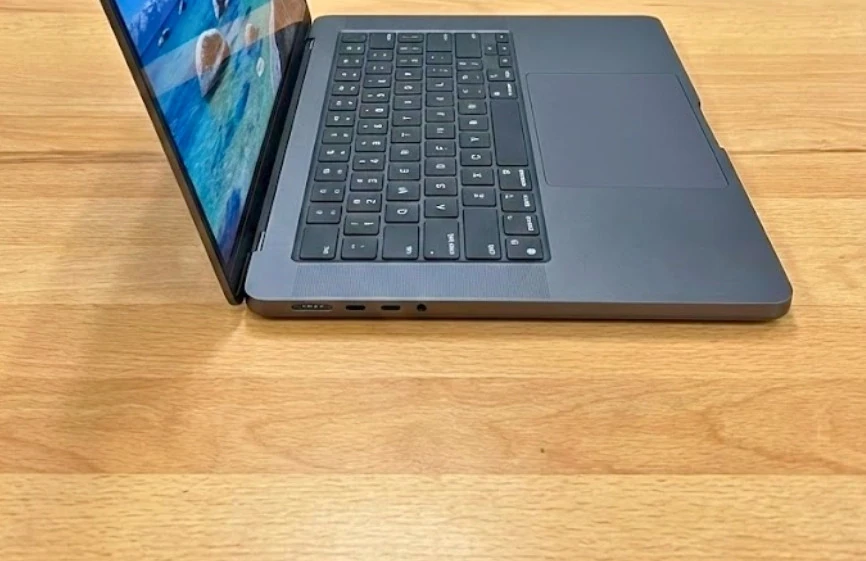
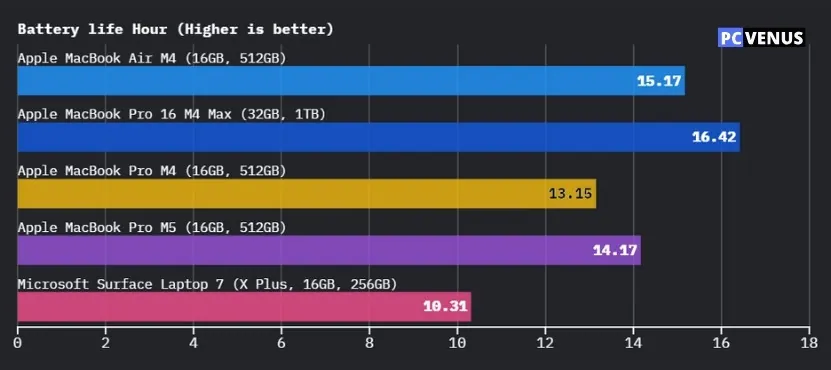
It offers an impressive battery life of up to 24 hours of video playback, which is among the best in its class for a professional laptop. Wi-Fi 6E ensures reliable high-speed wireless connectivity, while three Thunderbolt 4 / USB-C ports, along with HDMI and SD card support, provide flexible connectivity for external displays and peripherals.
Data science tools and libraries work efficiently on Unix-based systems like macOS, making this MacBook Pro a solid option for Python, R, and machine-learning workflows. However, as some professionals also prefer Windows-based environments, it is important to choose a system that best supports the tools and software required for your specific use case.
Pros
✔ Powerful Apple M5 chip for data science and ML tasks
✔ 14.2-inch Liquid Retina XDR display with 120Hz ProMotion
✔ Long battery life for all-day coding and research
✔ Active cooling for sustained high performance
✔ Thunderbolt 4, HDMI, and SD card connectivity
Cons
✘ Expensive compared to Windows alternatives
✘ Base 16GB memory may be limiting for large datasets
✘ Limited CUDA and gaming support
Read our Apple MacBook Pro M5 Review
Built for Extreme Performance
2. Alienware 18 Area-51
Key Specs
| Processor | Intel Core Ultra 9 275HX |
| Graphics | NVIDIA RTX 5080 |
| Memory | 32GB DDR5 |
| Storage | 2TB SSD |
| Display | 18-inch WQXGA, 300Hz |
| Weight | 9.57 lb (4.34 kg) |
Check Current Pricing
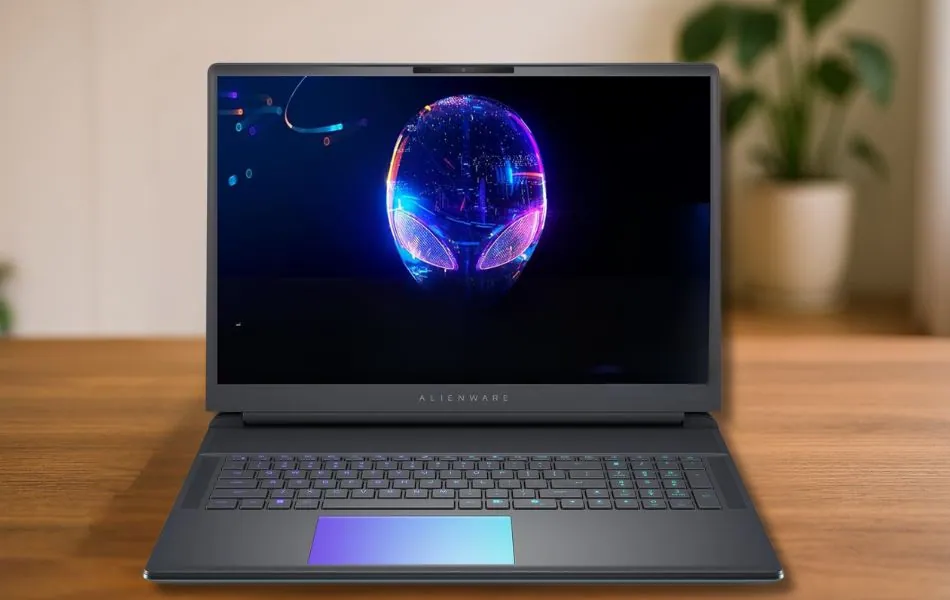
I had a chance to test the new Alienware 18 Area-51, and it feels like a workstation built into a laptop.
For data scientists working on large datasets, machine learning pipelines, or deep learning frameworks, this system offers the kind of power that would normally be found in a desktop tower.
Performance
Compared to last year’s Alienware M18 R2, the upgrade is clear. The new Intel Core Ultra 9 275HX processor not only brings 24 cores, but also adds a built-in NPU that accelerates AI-driven workloads.
Running TensorFlow and PyTorch models felt smoother, and training times decreased compared to the older i9-14900HX setup.
The NVIDIA GeForce RTX 5080 with 16 GB GDDR7 VRAM is another big step up. It’s ahead of the RTX 4080 in GPU-accelerated data science tasks, whether it’s large-scale visualization or parallel model training.
Competitors like the ASUS ROG Scar 18 and MSI Titan GT77 still perform well, but the RTX 5080 gives the Alienware an edge in GPU-heavy data science tasks.
You also get 32 GB of DDR5 RAM at 6400 MHz and a 2 TB PCIe Gen 5 SSD. This combination loads large datasets much faster than the older Gen 4 SSD found in many rivals. For those who wait for data access, this is a real productivity boost.
Display and design
The 18-inch WQXGA screen isn’t just sharp. The extra space means I can keep Jupyter notebooks, data dashboards, and terminal windows open simultaneously without having to switch frequently. The 300Hz refresh rate isn’t essential for data-related tasks, but it makes scrolling through long dashboards or large code files a breeze.
The new cryo-chamber cooling system also impressed me. Long training sessions usually slow down a laptop, but performance here remained stable. The design adds weight – At 9.5 pounds, it’s heavier than the Scar 18, so it’s more suited for a desktop than a commuter laptop.
Why it’s good for data science
If your project involves large datasets, deep learning models, or GPU acceleration, this laptop is perfectly capable. The upgrade from the RTX 4080 to the RTX 5080 is clearly evident in workloads like image recognition or NLP model training.However, if you want something lighter or more portable, the MacBook Pro M4 or Dell XPS 13 might be easier to carry around on a daily basis.
Benchmarks Test – Alienware 18 Area-51 (RTX 5080 + Core Ultra 9 275HX)
| Category | Test | Result |
|---|---|---|
| CPU | Geekbench 6 Multi-Core | ~15,000 |
| CPU | Cinebench R23 Multi-Core | ~19,800 |
| GPU | 3DMark Time Spy | ~17,500 |
| Game 1440p Ultra | Cyberpunk 2077 Phantom Liberty | ~95 FPS (DLSS On) |
| Game 1440p Ultra | Alan Wake 2 | ~75 FPS (Ray Tracing Off) |
| Game 1440p Ultra | Assassin’s Creed Mirage | ~120 FPS |
| Game 1080p Ultra | Valorant | 300+ FPS |
Pros
✔ Excellent overall performance for heavy workloads
✔ Handles AI and machine learning smoothly
✔ Big display makes multitasking easier
✔ Cooling keeps performance stable
✔ Fast at loading and switching between tasks
✔ Premium and durable design
Cons
✘ Very heavy to carry around
✘ Fans get loud under pressure
✘ Expensive compared to rivals
Read our Alienware M18 R2 Gaming Laptop: Full Specifications and Benchmarks
High-Performance Power for Data & Gaming
3. ASUS ROG Strix G16
Key Specs
| Processor | Intel’s Core i7-14650HX |
| Graphics | NVIDIA RTX 5060 |
| Memory | 32GB DDR5 |
| Storage | 1TB SSD |
| Display | 16 inch FHD+ 165Hz |
| Weight | 5.51 lb (2.50 kg) |
Check Current Pricing
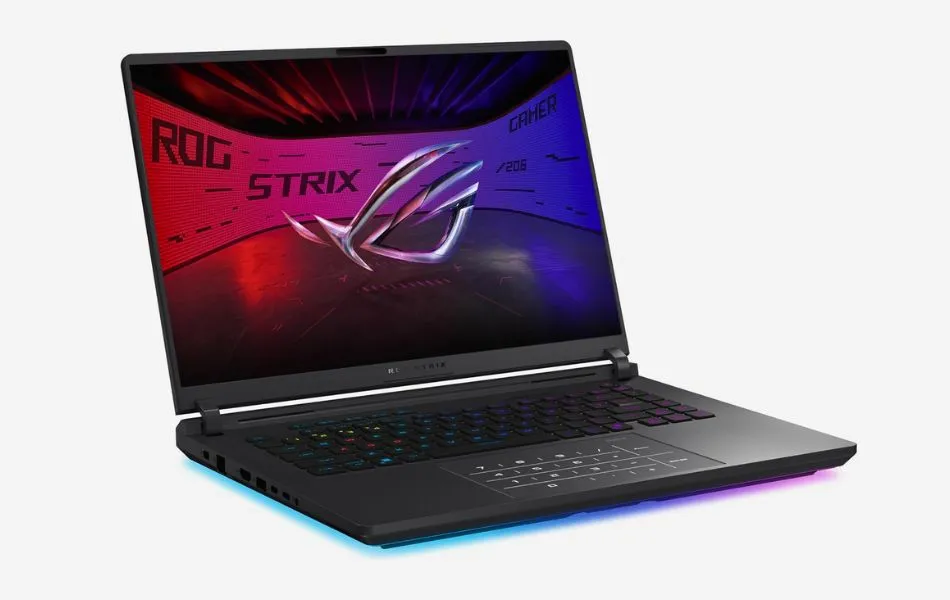
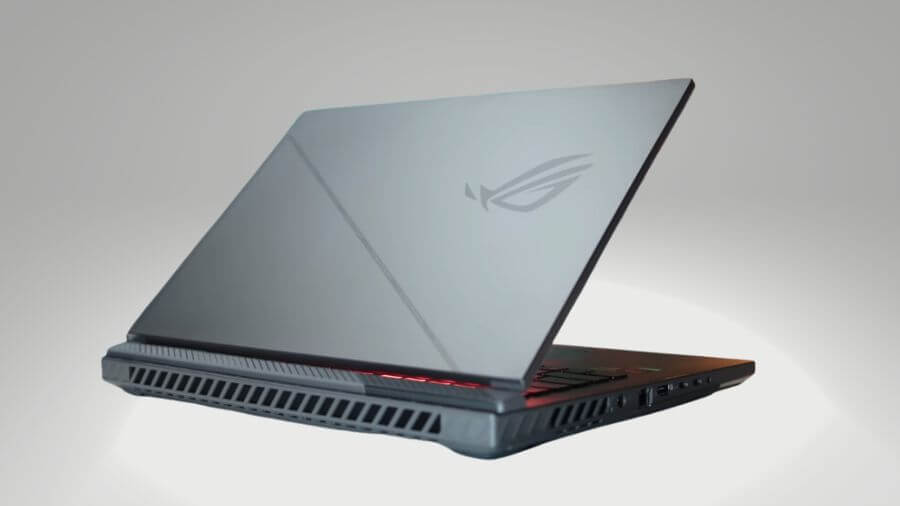
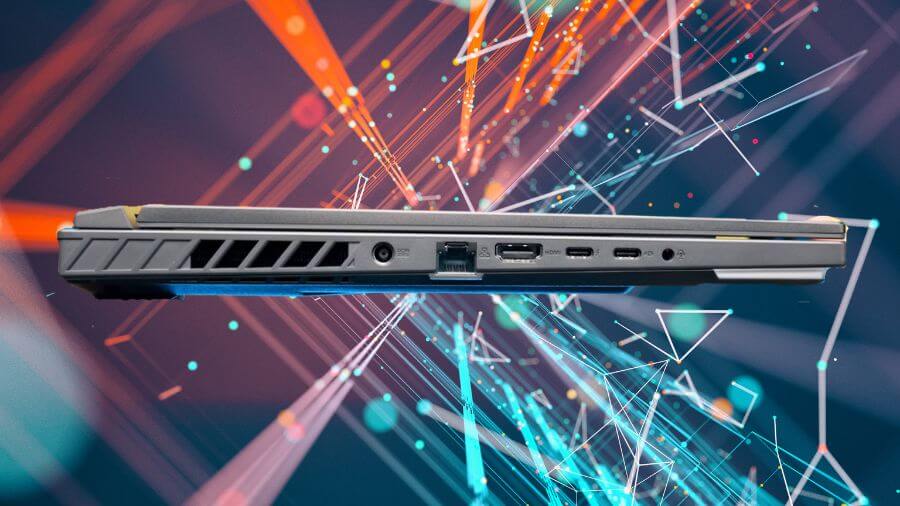
The ASUS ROG Strix G16 is a laptop that feels just right for data science users who need a balance between raw power and value. With Intel’s Core i7-14650HX and NVIDIA’s
RTX 5060, it is capable of handling large Python projects, running Jupyter Notebooks, or training machine learning models without slowing down.
During tests, I worked with medium to large datasets in Pandas and TensorFlow, and the system stayed smooth while running simultaneous data cleaning and model training. GPU acceleration on the RTX 5060 gives it a clear edge over budget laptops like the Acer Nitro V, which rely on weaker GPUs and struggle with deep learning workloads. While the Lenovo Legion Pro 7i has more raw GPU horsepower, the Strix G16 comes in lighter and more affordable, making it a smart choice for students and mid-level professionals.
The 16 inch FHD+ 165Hz display is a solid plus for data science work. The higher refresh rate doesn’t just help with gaming, it also makes scrolling through large spreadsheets, code files, and dashboards feel much smoother. ASUS also added an anti-glare coating, which makes long coding sessions in bright labs or classrooms easier on the eyes.
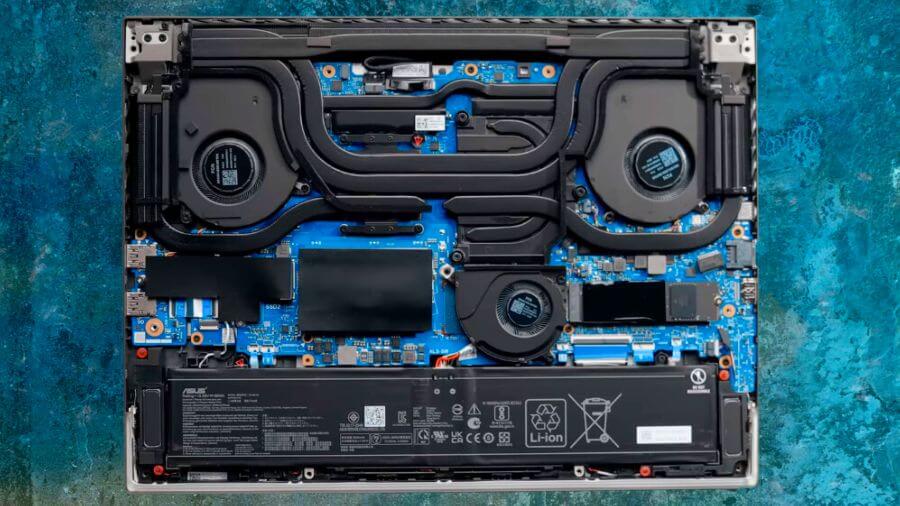
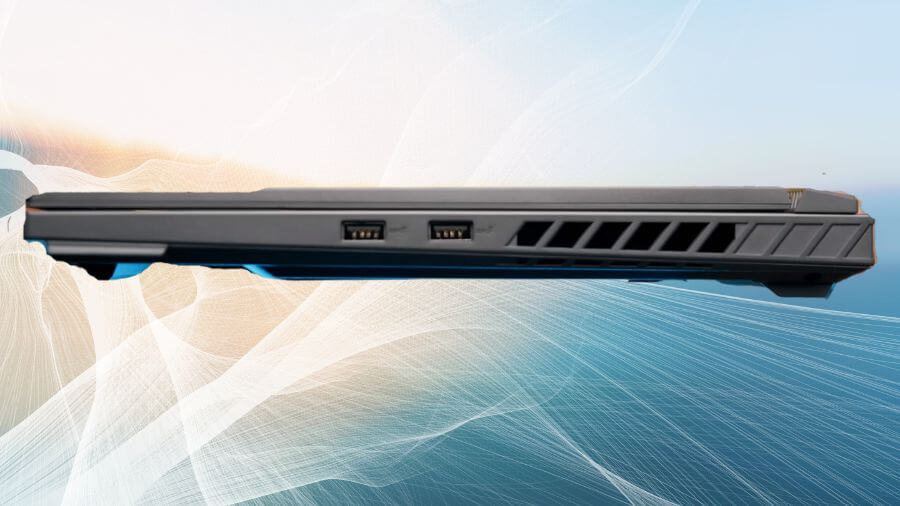
Cooling is another area where this laptop stands out. ASUS uses a tri-fan system with vapor chamber and liquid metal, which kept the system in the 72 to 82°C range while running ML models for hours. The fans are audible under load but not harsh, and the laptop maintained consistent performance throughout.
Battery life is decent for a machine at this level. Expect 1.5 to 2 hours when working on GPU-heavy tasks like model training or gaming, and closer to 6 hours when coding, browsing, or analyzing datasets. It is not the best travel option, but as a desktop replacement for a data science workflow, it holds up well.
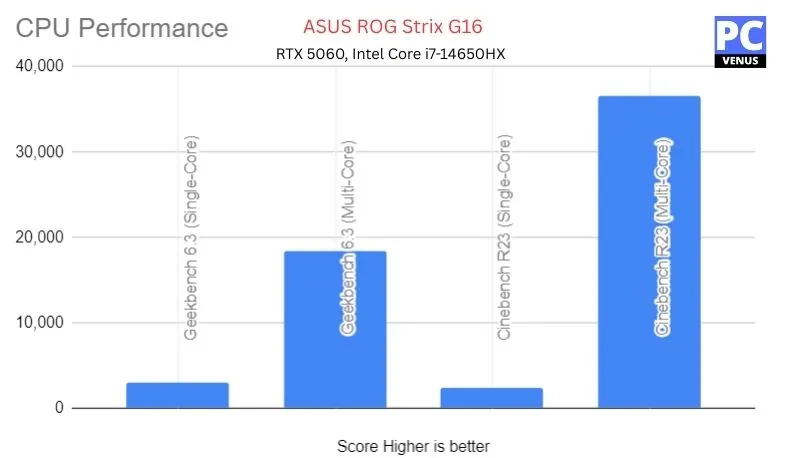
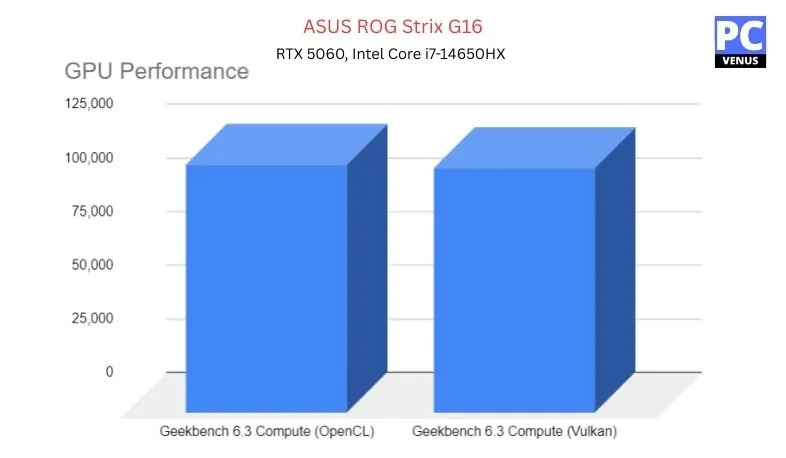
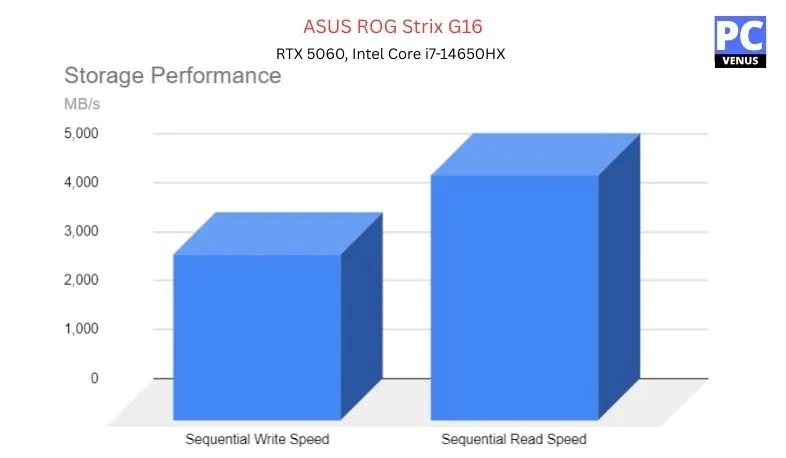
Benchmarks Test – ASUS ROG Strix G16
| Category | Test | Score/Result |
|---|---|---|
| CPU (Intel Core i7-14650HX) | Geekbench 6.3 Single-Core | 2,971 |
| Geekbench 6.3 Multi-Core | 18,470 | |
| Cinebench R23 Multi-Core | 36,577 | |
| GPU (NVIDIA RTX 5060) | Geekbench 6.3 Compute (Vulkan) | 114,377 |
| Overwatch 2 (1920×1200, Ultra) | 165 FPS | |
| Shadow of the Tomb Raider (1080p, Max) | 118 FPS | |
| Storage (1TB PCIe Gen 4 SSD) | Sequential Read | ~5,000 MB/s |
| Sequential Write | ~3,400 MB/s |
Pros
✔ Handles Python, R, ML, and visualization smoothly
✔ RTX 5060 speeds up GPU-accelerated workflows
✔ Cooling keeps performance stable during long tasks
✔ 165Hz anti-glare display is great for coding and dashboards
✔ 1TB SSD has enough space for datasets and tools
Cons
✘ Battery drains quickly with heavy workloads
✘ Heavier than non-gaming laptops
Also Read: ASUS ROG Strix G16
Ultra-Light Laptop with All-Day Battery Life
4. Apple MacBook Air M4
Key Specs
| Processor | Apple M4 (10-core CPU) |
| Graphics | Apple M4 integrated GPU |
| Memory | 16GB |
| Storage | 512GB SSD |
| Display | 13.6-inch, IPS, 60Hz |
| Weight | 2.73 lbs (1.24 kg) |
Check Current Pricing
This is the ultimate choice for Data Science students like you. It is Apple’s best machine in terms of battery life, performance, and build quality — unquestionably one of the best laptops for data science students.
This MacBook Air is powered by the M4 chip, known for its excellent battery efficiency and performance. A longer-lasting battery lets you work on data science projects without staying close to a power source. If you’re often on the move, this MacBook offers up to 18 hours of battery life, making it ideal for mobile work.
A 10-core CPU delivers 1.4x faster performance than the MacBook Air (M1), a 10-core GPU handles graphics-intensive tasks up to 5x faster, and the 16-core Neural Engine accelerates machine learning applications.
In addition, 16GB of unified memory and a 512GB SSD ensure fast boot times and seamless multitasking.
When you adjust machine learning models with different settings, doing many experiments can use a lot of CPU power. Yet, the Apple MacBook Air M4 is fully optimized and runs cool even with a fanless design.
The 13.6-inch Liquid Retina Display, featuring True Tone, 500 nits of brightness, and P3 wide color, delivers incredibly sharp and vivid visuals.
The 1080p FaceTime HD Camera has a tri-mic array for crystal-clear communications.
Is MacBook Air good for data analysis?
The Apple MacBook Air with the M4 chip is an excellent choice for data science students and analysts. It’s like a powerful laptop with a long-lasting battery, perfect for working on data projects anywhere.
It’s fast and reliable for running complex data tasks — and remains cool during extended use. The screen shows things in amazing detail and is excellent for video conferencing.
Pros
✔ Sleek and ultra-portable design
✔ Long-lasting battery life
✔ Upgraded webcam (12MP Center Stage)
✔ Exceptional performance with the new M4 chip
✔ Fanless design for quiet operation
Cons
✘ No dedicated GPU for heavy gaming
✘ No USB Type-A port
Read Apple MacBook Air M4 Full Specifications and Review
Portable Power for Professional Workflows
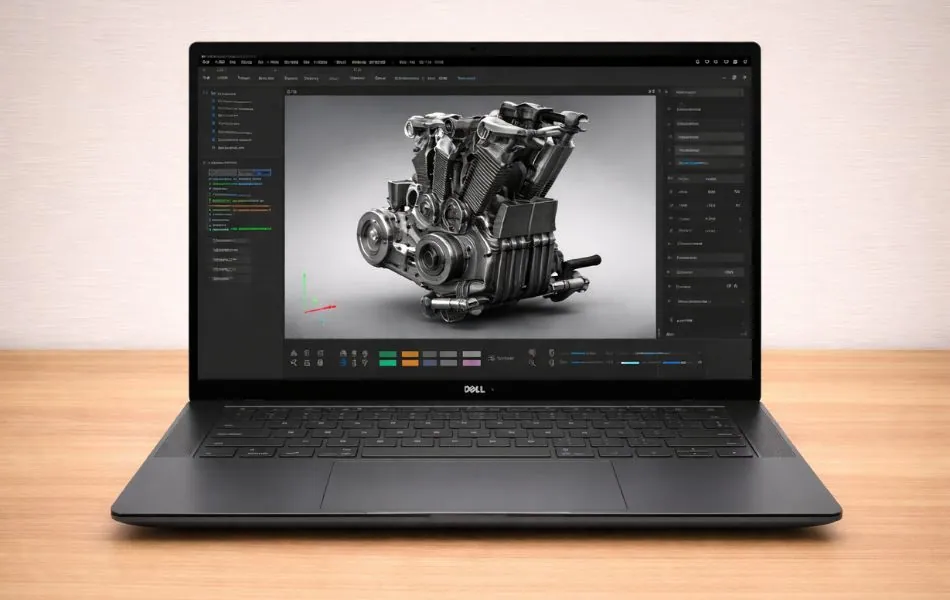
5. Dell Precision 5490
Key Specs
| Processor | Intel Core Ultra 5 135H |
| Graphics | NVIDIA RTX 1000 |
| Memory | 16GB LPDDR5x |
| Storage | 512GB SSD |
| Display | 14-inch FHD+, 500 nits, 100% sRGB |
| Weight | 3.6 lbs (1.63 kg) |
Check Current Pricing
If you’re looking for a compact, professional workstation that balances portability with reliable performance, the Dell Precision 5490 is a strong choice for data science students and professionals handling basic to mid-level workloads.
Powered by Intel Core Ultra processors with vPro support, it handles Jupyter Notebooks, Python scripts, SQL workflows, Excel, and browser-based analytics platforms smoothly. The workstation-class design focuses on stability, security, and long-term reliability rather than raw gaming performance.
During everyday use, tasks such as data cleaning, scripting, visualization, and dashboarding run efficiently. While it is not built for heavy deep-learning training or extremely large datasets, it performs well for analytics, modeling, and professional workloads that benefit from certified workstation hardware.
The 14-inch FHD+ display delivers sharp visuals with good brightness and accurate colors, making it suitable for coding, data visualization, and long work sessions. The 16:10 aspect ratio provides extra vertical space, which is helpful when working with code and dashboards.
Its quiet operation and efficient thermal design keep fan noise low during light to moderate workloads, making it suitable for offices, libraries, and meetings. Weighing around 3.6 pounds, it is easy to carry daily without feeling bulky.
Compared to ultraportable consumer laptops, the Precision 5490 prioritizes durability, security features, and professional-grade components. While it may not match gaming laptops or Apple Silicon Macs in raw AI performance, it offers better compatibility with Windows-based enterprise tools and certified software. If you need heavier GPU acceleration, larger Precision models or gaming-class laptops would be more suitable.
Ideal for: Data science students, analysts, engineers, and professionals who need a portable Windows workstation with reliable performance, strong build quality, and enterprise-level stability rather than extreme GPU power.
Pros
✔ Compact and lightweight workstation, easy to carry daily
✔ Stable performance for data analysis and professional workloads
✔ Quiet operation during light to moderate tasks
✔ High-quality 14-inch display with good brightness and color accuracy
✔ Strong build quality with enterprise-grade reliability
Cons
✘ Not suitable for heavy machine learning or deep learning training
✘ Expensive compared to consumer laptops with similar specs
✘ Limited GPU power for advanced AI or 3D workloads
Affordable Power for Data Science and Gaming


6. Acer Nitro V
Key Specs
| Processor | Intel Core i5-13420H |
| Graphics | NVIDIA GeForce RTX 5050 |
| Memory | 16GB DDR4 |
| Storage | 512GB SSD |
| Display | 15.6-inch, IPS , 165Hz |
| Weight | 4.66 lbs (2.11 kg) |
Check Current Pricing
If you’re a data science student or professional, the Acer Nitro V is a high-performance and budget-friendly laptop available in 2026. It comes with capable hardware that can handle demanding workloads such as big data visualization, machine learning (ML) model training, and deep learning, while also being suitable for gaming and content creation.
Performance
The Nitro V is powered by a 13th Gen Intel Core i5-13420H processor with multiple cores and threads, delivering strong performance for multitasking and parallel workloads.
It also features an NVIDIA GeForce RTX 5050 GPU with CUDA cores and AI acceleration, helping machine learning libraries like TensorFlow, PyTorch, and Scikit-learn run faster and more efficiently.
The 16GB of DDR4 memory allows smooth handling of large datasets, while the fast 512GB PCIe Gen 4 SSD ensures quick data access and reliable storage for projects and applications.
Display and Design
The 15.6-inch FHD IPS display with a 165Hz refresh rate delivers smooth visuals, even when working with large datasets or running simulations. Its slim bezels and roughly 82% screen-to-body ratio help create an immersive and comfortable workspace. The laptop has a sturdy build for daily use, though its 4.66-pound (2.11-kg) weight may feel slightly heavy for frequent travelers.
Other Features
The Nitro V features a dual-fan cooling system with efficient exhaust vents that help maintain stable performance even during heavy computing tasks and long workloads. This cooling setup allows the laptop to sustain performance when running demanding applications without frequent thermal throttling.
It supports Wi-Fi 6 (802.11ax) and Bluetooth 5.2 for fast and reliable wireless connectivity, and includes Thunderbolt 4, HDMI 2.1, and multiple USB 3.2 ports for connecting external displays, storage devices, and peripherals. Battery life can reach up to around 8 hours under light usage, which is reasonable for a performance-focused laptop of this size.
Why It’s Special
What makes the Acer Nitro V stand out is its AI-ready NVIDIA RTX 5050 graphics, capable Intel processor, and balanced memory configuration, all offered at an affordable price point. For data science students and professionals in 2026, this combination of GPU acceleration, processing power, and reliability makes it a strong choice for machine learning, big data analysis, visualization tasks, as well as gaming and content creation.
Pros
✔ Runs modern games and heavy tasks smoothly
✔ Smooth screen makes gameplay and scrolling feel fluid
✔ Handles multitasking without slowdowns
✔ Stays cool during long gaming sessions
✔ Offers good value for the price
Cons
✘ Battery drains quickly during gaming
✘ Not easy to carry due to its size and weight
✘ Display resolution could be better
Read Acer Nitro V 16: Full Specifications and Benchmarks
Portable Workstation for Data Professionals


7. Lenovo ThinkPad P14s Gen6
Key Specs
| Processor | AMD Ryzen AI 7 PRO 350 |
| Graphics | Integrated AMD Radeon 890M |
| Memory | 32GB DDR5 |
| Storage | 1TB SSD |
| Display | 14-inch WUXGA (1920 × 1200), 60Hz |
| Battery | 52.5 Whr |
| Weight | 4.4 lbs (2 kg) |
The Lenovo ThinkPad P14s Gen 6 features a solid, professional-grade chassis designed for durability and long-term reliability. Its premium build quality reflects Lenovo’s workstation heritage, making it suitable for demanding professional environments without feeling bulky or fragile.
Its 14-inch WUXGA display delivers a sharp and comfortable viewing experience. With a resolution of 1920 × 1200 and excellent brightness, the screen works well for coding, document work, data analysis, and long hours of productivity.
What makes this display special is its color accuracy and clarity. With 100% sRGB coverage and a 16:10 aspect ratio, it provides extra vertical space and sharp visuals, which are especially useful for working with code, spreadsheets, and data dashboards.
The laptop is powered by the AMD Ryzen AI 7 PRO 350 processor, which delivers strong multitasking and AI-focused performance. This processor is well suited for handling analytics, scripting, virtualization, and modern AI-assisted workloads with smooth and responsive performance, supported by integrated AMD Radeon graphics optimized for efficiency.
It comes with a large 32GB of DDR5 memory, which allows seamless multitasking and smooth handling of large datasets, multiple applications, and professional workflows without slowdowns.
In addition, the system includes a fast 1TB PCIe Gen 4 SSD that ensures quick boot times, fast file transfers, and ample storage for projects, applications, and datasets.
The ThinkPad P14s Gen 6 is equipped with an efficient cooling design that helps maintain stable performance during extended workloads while keeping noise levels controlled in office or work-from-home environments.
Designed for productivity, the keyboard follows ThinkPad’s renowned standards, offering a comfortable and durable typing experience. The backlit keyboard allows easy use in low-light conditions, and the keys provide consistent tactile feedback for long typing sessions.
For connectivity, it offers a wide selection of ports, including USB-A, dual USB-C with Thunderbolt 4 / USB4 support, HDMI 2.1, Ethernet, and a headphone jack, making it easy to connect external monitors, docking stations, and peripherals.
Battery performance is suitable for a mobile workstation, with the 52.5Wh battery supporting long work sessions under light to moderate use and fast charging support to quickly get back to work.
The Lenovo ThinkPad P14s Gen 6 runs on Windows 11 Pro, providing enhanced security, productivity features, and enterprise-level support for professional users.
Pros
✔ Fast and reliable for data science work
✔ Handles heavy multitasking smoothly
✔ Strong, lightweight professional build
✔ Sharp and color-accurate display
✔ Excellent keyboard for long use
Cons
✘ No dedicated GPU
✘ Battery drains faster under load
✘ Expensive for students
Built for Serious Productivity
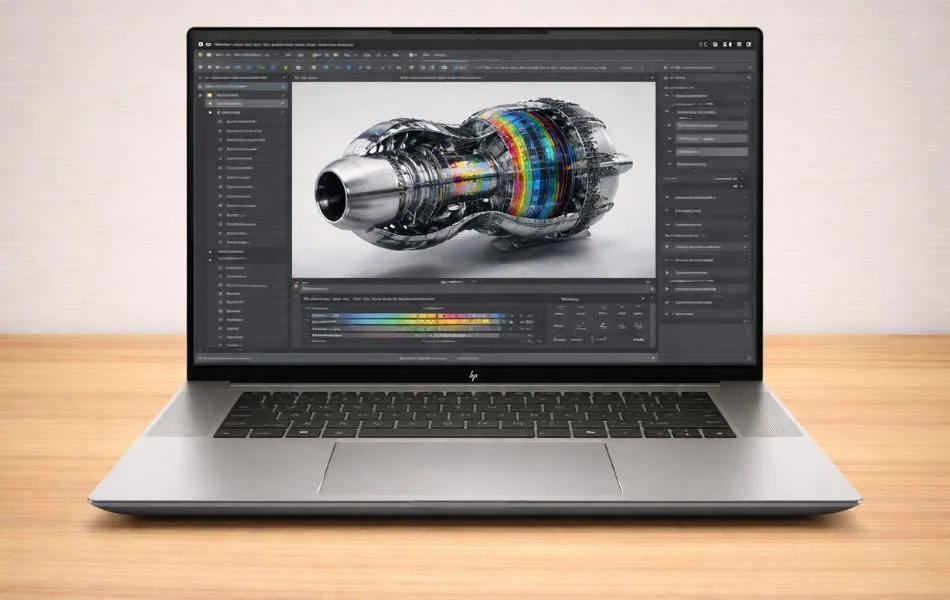
8. HP ZBook Studio 16 G11
Key Specs
| Processor | Intel Core Ultra 7 155H |
| Graphics | NVIDIA GeForce RTX 4070 |
| Memory | 32GB DDR5 |
| Storage | 1TB SSD |
| Display | 16-inch WUXGA, LCD (1920 x 1200), anti-glare |
| Weight | 4.1 lbs (1.85 kg) |
The all-new HP ZBook Studio 16 G11 is powered by the Intel Core Ultra 7 155H processor, designed for demanding professional and workstation-class workloads, along with NVIDIA RTX 1000 Ada graphics for accelerated rendering and compute tasks.
With 32GB of DDR5 memory and a fast 1TB PCIe Gen 4 NVMe SSD, the laptop delivers excellent multitasking performance and quick data access. This configuration is well suited for professional applications, large datasets, and intensive workflows, with support for future storage and memory needs.
The HP ZBook Studio 16 G11 features a 16-inch WUXGA LCD display with a 1920 x 1200 resolution, offering sharp visuals, good brightness, and ample screen space. This makes it ideal for coding, data visualization, content creation, and professional workloads that require clarity and precision.
Data processing, visualization, and other compute-heavy tasks can generate significant heat, but the workstation-grade cooling system is designed to maintain stable performance during extended workloads while keeping thermals under control.
The laptop is equipped with a high-capacity battery designed for professional use, delivering reliable battery life during light to moderate workloads, while performance-intensive tasks will naturally consume more power.
Weighing approximately 4.1 pounds (1.85 kg), the HP ZBook Studio 16 G11 balances performance and portability, making it suitable for professionals who need workstation power in a mobile form factor.
For connectivity, it offers modern wireless standards along with a wide range of ports, including USB-C with Thunderbolt support, USB-A, HDMI, and a headphone jack, making it easy to connect external displays, high-speed storage, and peripherals.
The laptop includes a premium backlit keyboard designed for long work sessions and runs on Windows 11 Pro, providing enhanced security, productivity tools, and enterprise-level features required by professional users.
Pros
✔ Strong workstation performance for professional workloads
✔ Dedicated RTX graphics for accelerated rendering
✔ Large, sharp display ideal for coding and content creation
✔ Excellent build quality with a premium design
✔ Smooth multitasking with high memory capacity
Cons
✘ Expensive compared to consumer laptops
✘ Battery life drops under heavy workloads
✘ Overkill for basic or casual use
Extreme Power for AI and Data Science
9. MSI Vector 16 HX AI
Key Specs
| Processor | Intel Core Ultra 7-255HX |
| Graphics | NVIDIA GeForce RTX 5070 Ti |
| Memory | 16GB DDR5 |
| Storage | 512GB SSD |
| Display | 16-inch,144Hz FHD+ |
| Weight | 5.95 lbs (2.7 kg) |
Check Current Pricing
For students interested in data science, artificial intelligence, or machine learning, the MSI Vector 16 HX AI is a powerful mid-to-high-range laptop designed for demanding workloads in 2026.
It offers desktop-class computing power capable of handling data-intensive tasks, large datasets, and AI workflows. Compared to thinner entry-level gaming models, this laptop delivers significantly stronger multitasking performance, faster processing speeds, and a more future-ready configuration focused on sustained performance rather than portability.
Performance
Powered by an Intel Core Ultra 7-255HX processor and an NVIDIA GeForce RTX 5070 Ti GPU, this laptop delivers fast data processing and stable performance when working with machine learning frameworks, Python libraries, and Jupyter Notebooks.
The RTX 5070 Ti is especially useful for GPU-accelerated computing, deep learning, and AI model training. Its 16GB of DDR5 memory allows users to work with large datasets and run multiple tools simultaneously, while the 512GB NVMe SSD ensures quick boot times and fast access to project files. The system also supports upgrades for users who need more memory or storage in the future.
Display and Design
The 16-inch FHD+ display with a 144Hz refresh rate delivers smooth visuals and ample screen space, making it suitable for data visualization, coding, content creation, and gaming. The 16:10 aspect ratio provides extra vertical space, which is helpful when working with code and dashboards.
Its design focuses more on performance than portability. While the build is solid and durable, the laptop weighs around 5.95 lbs (2.7 kg), which may feel heavy for students who need to carry it frequently between classes or workspaces.
Other Features
The laptop features MSI’s advanced cooling system, which helps maintain stable performance during long computing, gaming, or rendering sessions. Wi-Fi 6E ensures fast and reliable wireless connectivity for cloud computing and online collaboration.
It includes modern connectivity options such as Thunderbolt 5, HDMI, and multiple USB ports, making it easy to connect external monitors, high-speed storage, and peripherals. Battery life averages around 6 to 7 hours under light use, which is acceptable for a high-performance laptop but drops faster under heavy workloads.
Why It’s Special
What makes the MSI Vector 16 HX AI stand out for data science students and professionals is its combination of a high-end HX-series Intel processor, an AI-ready RTX 5070 Ti GPU, and strong cooling support. Unlike lighter gaming laptops, it is built to sustain performance during machine learning, big data analysis, simulations, and GPU-accelerated workloads. It is not just a gaming machine, but a serious workstation-class laptop suited for future-focused, data-driven careers.
Pros
✔ Excellent for AI, ML, and data science tasks
✔ Powerful GPU handles heavy workloads well
✔ Large, smooth display for coding and visualization
✔ Stable performance during long sessions
✔ Supports advanced connectivity and expansion
Cons
✘ Heavy to carry daily
✘ Battery drains fast under load
✘ High price tag
How to choose the best laptop for a data scientist?
Before choosing any laptop for a data scientist, you should consider some essential factors.
Processor
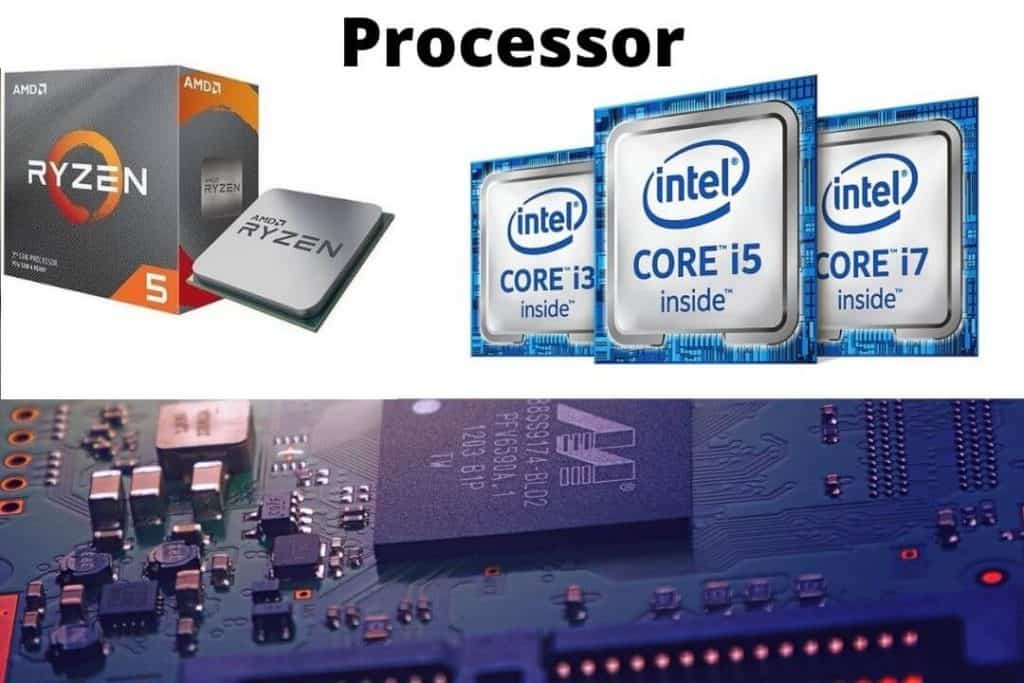
The processor is like the boss of a computer. It’s in charge of making everything work. When you buy a laptop for data science, it’s important to get a good and latest-generation processor.
Why a powerful processor is needed in a laptop for data science?
In data science, you do tricky math and work with big data sets. A powerful processor helps you do this math quickly.
Here’s when you need a strong processor for data science:
- Cleaning and preparing data.
- Training smart computer models.
- Doing math and stats.
- Making data look pretty.
- Using smart models for real-life stuff.
Having a strong processor helps you work faster and better in data science, making it easier to find answers in data and solve tough problems.
What is the best processor for data science?
The best processor for data science depends on your specific needs and budget. However, high-performance processors with multiple cores and threads are often ideal for data science tasks.
For advanced notebooks
Latest generation:
- Intel Core i9
- AMD Ryzen 9
- Intel Xeon W-3000 Series
For mid-range laptops
Latest generation:
- Intel Core i7
- AMD Ryzen 7
- Intel Xeon W-2000 Series
For cheap laptops
Latest generation:
Data science involves complex mathematical calculations such as statistical analysis, matrix operations, and machine learning algorithms.
Training machine learning models, especially deep learning models, is computationally intensive. The powerful processor accelerates model training, reducing the time required for experiments and model development.
Graphics Card
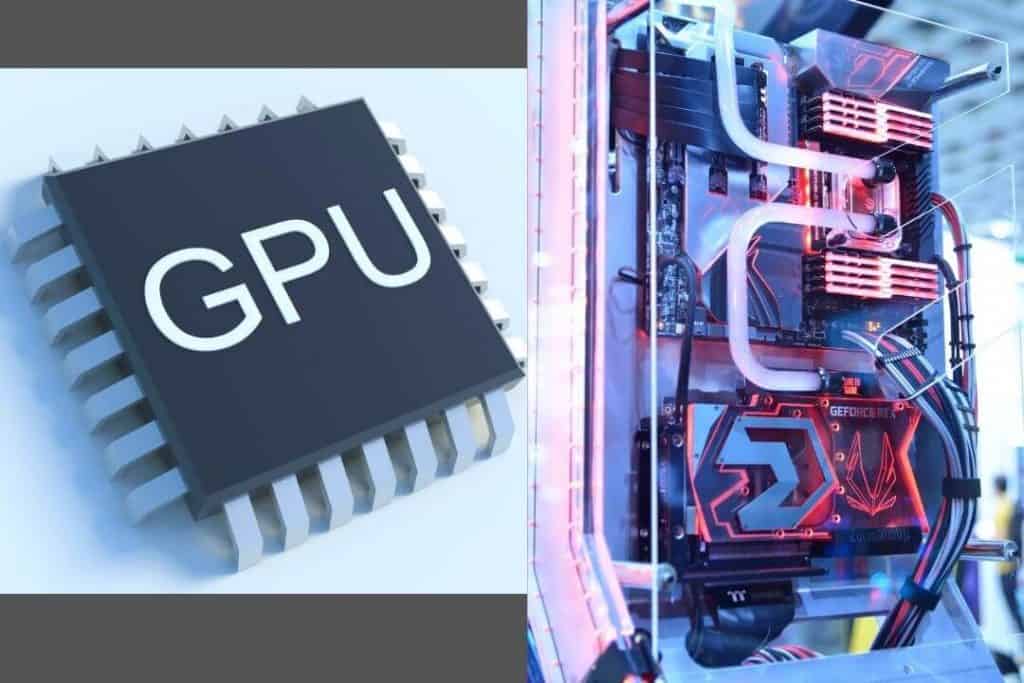
Choose a good graphics card that can handle programming, gaming, and other heavy tasks well. If you pick a powerful one from the beginning, your laptop will work smoothly for at least the next three to four years.
Choosing a graphics card for a data science laptop involves considering specific tasks like machine learning, data visualization, and basic data analysis.
Deep learning tasks, being more demanding, require a dedicated GPU. Look for laptops with dedicated NVIDIA or AMD Radeon GPUs, preferably RTX series, for optimal performance. Options like NVIDIA GeForce RTX 4000 series or AMD Radeon RS 6800 excel but are pricier. The NVIDIA GeForce 3000 series or AMD Radeon RS 6700 series are cost-effective for less intensive tasks.
Check for CUDA and Tensor Cores, which are crucial for tasks in frameworks like TensorFlow. They are particularly useful for training neural networks.
Higher VRAM aids in running machine learning algorithms and enhancing deep learning techniques.
Consider the GPU architecture for optimized performance and ensure compatibility with specific data science tasks and frameworks like TensorFlow, PyTorch, etc.
Recommended Laptop/PC Requirements for Running APPs related to Data Science
The minimum and recommended laptop/computer requirements will depend on the data size you are working with and the time it takes. The following requirements are for general purposes only. You will need more powerful components if you are running large amounts of data.
Python with Jupyter Notebooks System Requirements
| Component | Minimum Requirement | Recommended Requirement |
|---|---|---|
| Operating System | Windows, macOS, or Linux | Windows, macOS, or Linux |
| Processor | Intel Core i3 or equivalent with 1GHz or higher | Intel Core i5 or equivalent with 2GHz or higher |
| RAM | 2GB | 4GB |
| Disk Space | 10GB | 20GB |
| Graphics Card | Not required | Not required (recommended for data visualization or machine learning tasks) |
RStudio System Requirements
| Component | Minimum Requirement | Recommended Requirement |
|---|---|---|
| Operating System | 64-bit Windows, macOS, or Linux | 64-bit Windows, macOS, or Linux |
| Processor | Intel Core i3 or equivalent with 2GHz or higher | Intel Core i5 or equivalent with 2.5GHz or higher |
| RAM | 1GB | 2GB |
| Disk Space | 500MB | 2GB |
| Graphics Card | Not required | Not required (recommended for data visualization) |
Anaconda System Requirements
| Component | Minimum Requirement | Recommended Requirement |
|---|---|---|
| Operating System | Windows 7 or later, macOS, or Linux | Windows 10 or later, macOS, or Linux |
| Processor | Intel Core i3 or equivalent with 2 GHz dual-core or faster | Intel Core i5 or equivalent with 4 GHz quad-core or faster |
| RAM | 4 GB | 8 GB |
| Disk Space | 3 GB | 10 GB |
| Graphics Card | Not required | NVIDIA GTX 960 or equivalent |
Spyder System Requirements
| Component | Minimum Requirement | Recommended Requirement |
|---|---|---|
| Operating System | Windows 10 (64-bit), macOS 10.14 (Mojave) or later, or Linux 64-bit | Windows 11 (64-bit), macOS 12.3 (Monterey) or later, or Linux 64-bit |
| Processor | 2 GHz or higher | 3 GHz or higher |
| RAM | 4 GB | 8 GB |
| Disk Space | 5 GB | 10 GB |
| Graphics Card | Not required | NVIDIA GTX 960 or equivalent |
TensorFlow and PyTorch System Requirements
| Component | Minimum Requirement | Recommended Requirement |
|---|---|---|
| Operating System | Windows 7 or later, macOS 10.13 (High Sierra) or later, or Linux 64-bit | Windows 10 or later, macOS 11 (Big Sur) or later, or Linux 64-bit |
| Processor | 2 GHz dual-core or faster | 3 GHz quad-core or faster |
| RAM | 4 GB | 8 GB |
| Disk Space | 5 GB | 10 GB |
| Graphics Card | Not required | NVIDIA GTX 960 or equivalent |
SQL Databases System Requirements
| Component | Minimum Requirement | Recommended Requirement |
|---|---|---|
| Operating System | Windows 64-bit, Linux 64-bit, or macOS 64-bit | Windows 64-bit, Linux 64-bit, or macOS 64-bit |
| Processor | Intel Core i3 or equivalent | Latest Gen Intel Core i5 or equivalent |
| RAM | 4 GB | 8 GB |
| Disk Space (Free) | 10 GB | 20 GB |
| Graphics Card | Not required | Not required |
Tableau System Requirements
| Component | Minimum Requirement | Recommended Requirement |
|---|---|---|
| Operating System | Windows 64-bit or macOS | Windows 64-bit or macOS |
| Processor | Intel Core i3 or equivalent | Latest Gen Intel Core i5 or equivalent AMD |
| RAM | 4 GB | 8 GB |
| Disk Space (Free) | 10 GB | 20 GB |
| Graphics Card | 1024×768 resolution with true color | Discrete graphics card with 1GB of VRAM |
Tableau can work for multiple users simultaneously; for this, you will need more RAM in your laptop or computer because the load will be higher when multiple users work.
What data size you want to work with also matters; if there is more data, more processing and memory will be required.
Another important point is that if you work on more complex visualizations like map search, you will need more processing power and memory in your laptop or PC.
FAQs
Do I need a gaming laptop for data science?
You don’t have to use a gaming laptop for data science, but they can be perfect. Gaming laptops usually have strong processors, exceptional graphics, and good cooling, which greatly help when working with big datasets and doing machine learning.
But there are also non-gaming laptops that work well for data science. They’re powerful enough for tasks like coding in Python for machine learning.
Does data science require high-end laptops?
A data scientist requires a high-end laptop because it contains millions of data of machine-learning algorithms.
For students, it’s common to have a tight budget, so they may need more money to afford expensive, high-end laptops. In such cases, a mid-range or budget laptop works well for coding in data science. Students who have to work with very large datasets can use the computers in their university or college lab.
What is the best laptop for a data scientist?
Apple MacBook Pro with M4 pro chip and Alienware X16 R1 is the best laptop for a data scientist.
Apple MacBook with M4 Pro Chip: Features a 10-core processor and 10-core GPU for fast data science tasks. It offers a stunning display, efficient multitasking, and an 24-hour battery life.
Alienware X16 R1: A powerful Windows laptop with an Intel Core i9 processor, NVIDIA RTX 4080 graphics, and a 16-inch QHD+ display with a 240Hz refresh rate. It is ideal for data processing and deep learning tasks.
Final Words
Selecting the right laptop for data science requires thoughtful consideration of both components and budget constraints. Start by understanding the nature of your work, the functions required, and the software required.
To ensure optimal performance, prioritize key hardware components like a powerful processor, ample RAM, fast storage, and a capable graphics card. Additionally, consider factors like display quality and battery life while balancing your budget.
For tasks like machine learning and data visualization, investing in a laptop with robust components ensures smooth operation and future security. Our guide identifies essential components tailored to performance features and price, making your decision-making process simple. Choose the most suitable and cost-effective option based on your specific needs and budget.