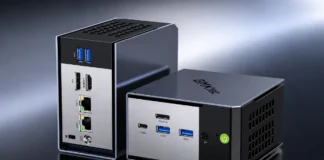

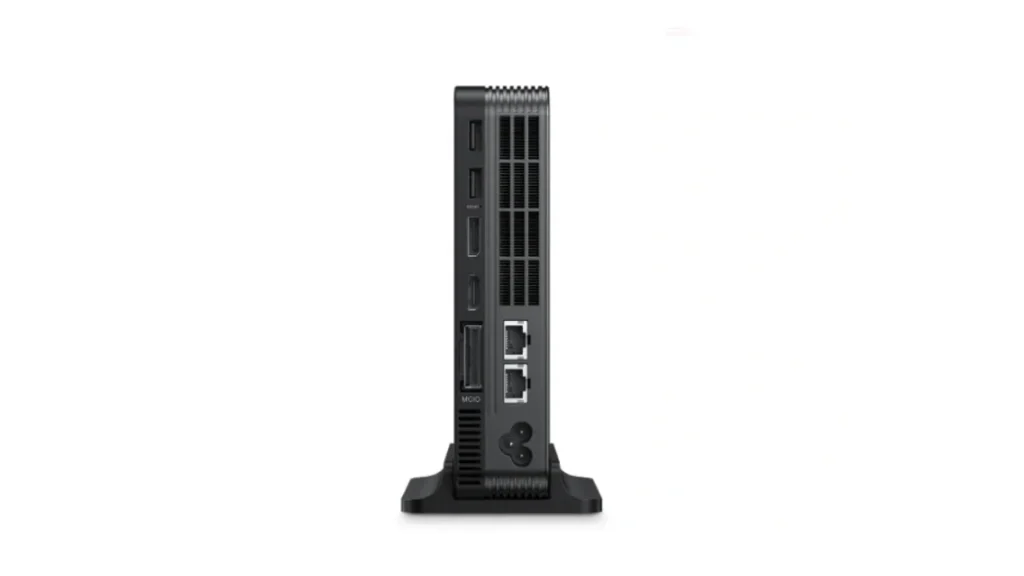
GPD has taken the wraps off the BOX, a new mini PC powered by Intel’s upcoming Panther Lake processors. While the next-generation CPUs are a major part of the story, the BOX also introduces an MCIO expansion port that could make it especially appealing to users looking for faster external GPU and storage connections than current USB4 and OCuLink solutions can provide.
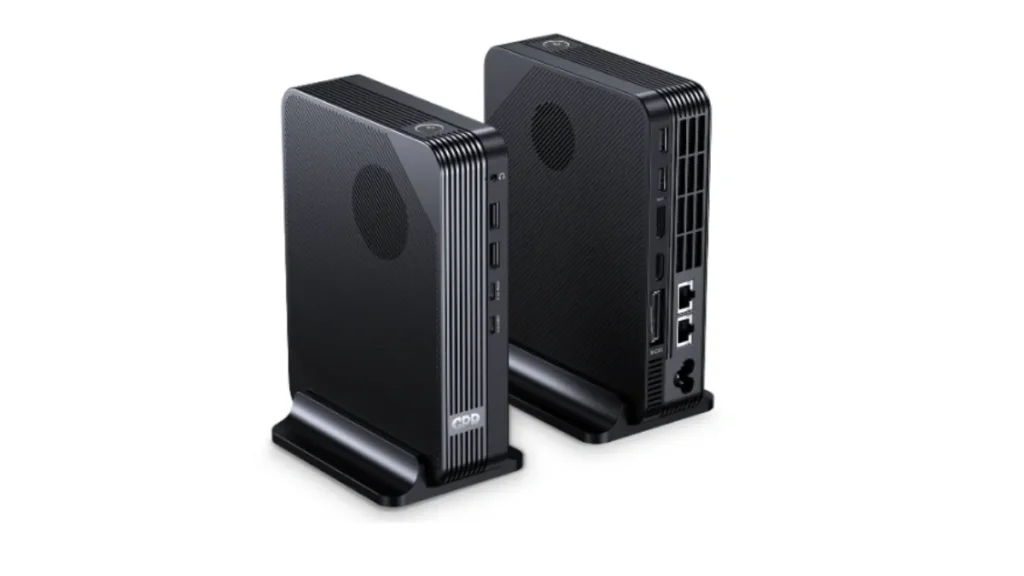
Despite its small size, the BOX is designed for users who need serious performance. GPD is targeting power users, AI developers, content creators, and gamers with a feature set that includes Intel’s latest Core Ultra Series 3 processors, dual USB4 v2.0 ports, PCIe Gen 5 SSD support, and a built-in 160W GaN power supply.
GPD intends to provide two versions of the Mini PC. The more potent Core Ultra X7 358H and Intel’s Core Ultra 7 356H are available to buyers. Although both processors have 16 CPU cores and are based on Intel’s Panther Lake architecture, the X7 358H has better integrated graphics and far better AI performance.
The Core Ultra X7 358H can deliver up to 180 TOPS of AI performance, while the Core Ultra 7 356H is rated for up to 100 TOPS. That gives the Mini PC enough AI power for tasks such as image generation, AI assistants, coding tools, speech recognition, and other machine learning workloads that can run locally on the device.
The most important difference between the two models comes down to expansion support.
The Core Ultra 7 356H version includes an MCIO 8i connector that provides a PCIe 5.0 x8 connection, a feature also highlighted in the TOPC TA255 Mini PC with MCIO x8 Expansion. According to GPD, the interface can offer up to 512Gbps of bidirectional bandwidth, providing much more bandwidth for external devices than current USB4 or OCuLink connections.
Users who plan to connect external GPUs, high-speed storage, or other expansion devices may find the MCIO version especially appealing. GPD says the interface is designed for high-performance peripherals such as external graphics cards, storage systems, AI accelerators, and other bandwidth-intensive devices.
The Core Ultra X7 358H model takes a different approach. Instead of including MCIO expansion, GPD focuses on delivering stronger built-in graphics performance with Intel’s Arc B390 integrated GPU.
According to benchmarks shared by GPD, the Arc B390 integrated GPU can outperform the mobile GeForce RTX 3050 in some workloads. The company also says it delivers a significant performance boost compared to earlier generations of Intel integrated graphics.
Connectivity is another strong point of the BOX. The mini PC includes two USB4 Version 2.0 ports for high-speed storage, external displays, and other modern accessories. Readers interested in next-generation connectivity can also explore the differences between Thunderbolt 4 vs USB4. On models equipped with MCIO, users also get an additional high-bandwidth expansion option, giving the Mini PC more flexibility than many mini PCs currently on the market.
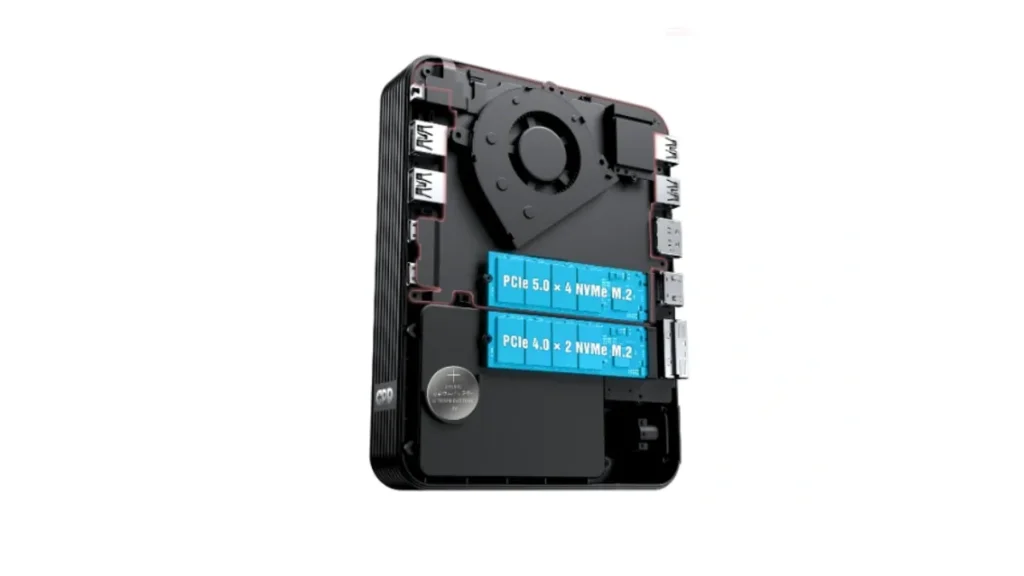
The BOX also offers plenty of room for memory and storage upgrades. It supports up to 64GB of LPDDR5X-8533 memory and includes two M.2 SSD slots. One slot supports PCIe Gen 5 x4 drives for maximum performance, while the second supports PCIe Gen 4 SSDs, giving users a balance of speed and storage capacity, similar to the storage-focused approach seen in the Kioxia EXCERIA G3 PCIe 5.0 SSD lineup.
The BOX’s integrated 160W GaN power supply is one characteristic that sets it apart from many rival small PCs. While GPD has incorporated the power supply directly into the chassis, the majority of high-performance micro PCs still rely on separate power bricks. As a result, there are fewer connections on a desk and the configuration is cleaner while yet offering sufficient power for demanding workloads.
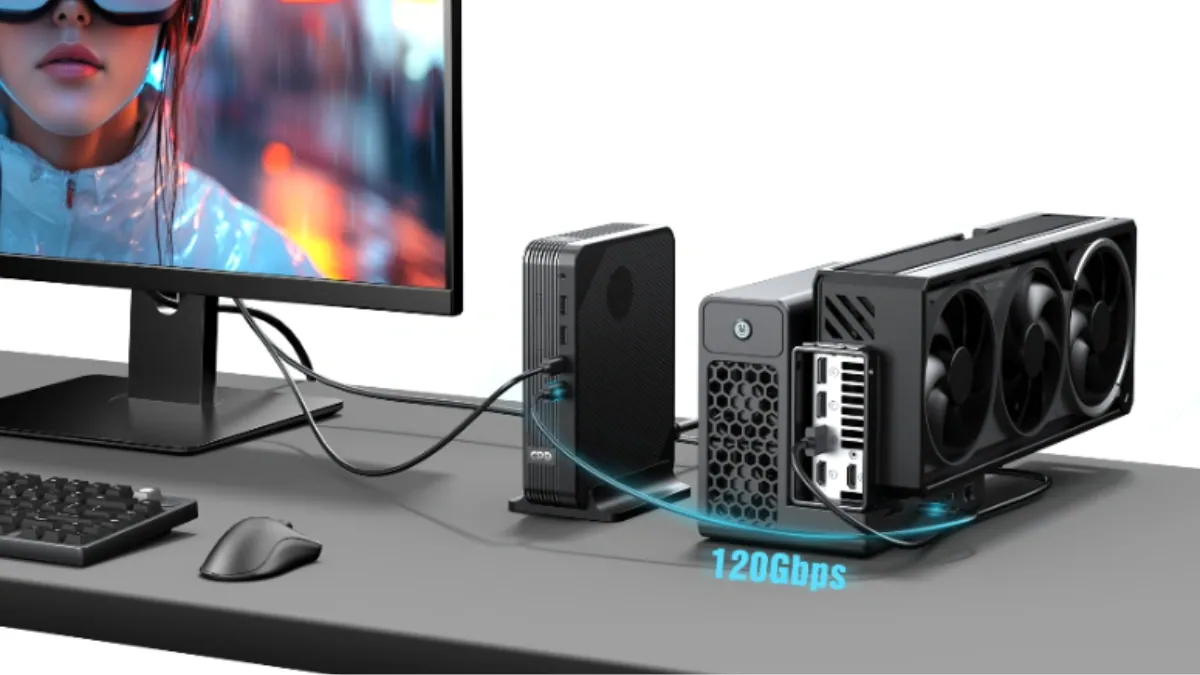
GPD offers an optional G2 external GPU dock for consumers that require desktop-class graphics capability. The dock supports desktop graphics cards and has an 800W Gold-rated power supply. According to GPD, when combined with a GeForce RTX 4090, the configuration can achieve near-native performance with a performance loss of about 2%.
Pricing places the BOX firmly in the premium mini PC category. The Core Ultra 7 356H model with 32GB of memory and a 1TB SSD starts at $1,452, while the Core Ultra X7 358H version starts at $1,534. Buyers who want the optional G2 eGPU dock can purchase bundle configurations ranging from $1,837 to $1,919.
Mini PCs are no longer just for basic office work. Thanks to faster chips, better graphics, and built-in AI, these tiny computers can now handle heavy workloads that used to require a massive desktop.
It joins a growing list of compact systems such as the GMKtec Panther Lake AI Mini PC that are adopting Intel’s latest platform., AI acceleration of up to 180 TOPS, PCIe 5.0 expansion, dual USB4 v2.0 connectivity, and support for desktop-class graphics through the optional G2 dock.
Source: GPD