
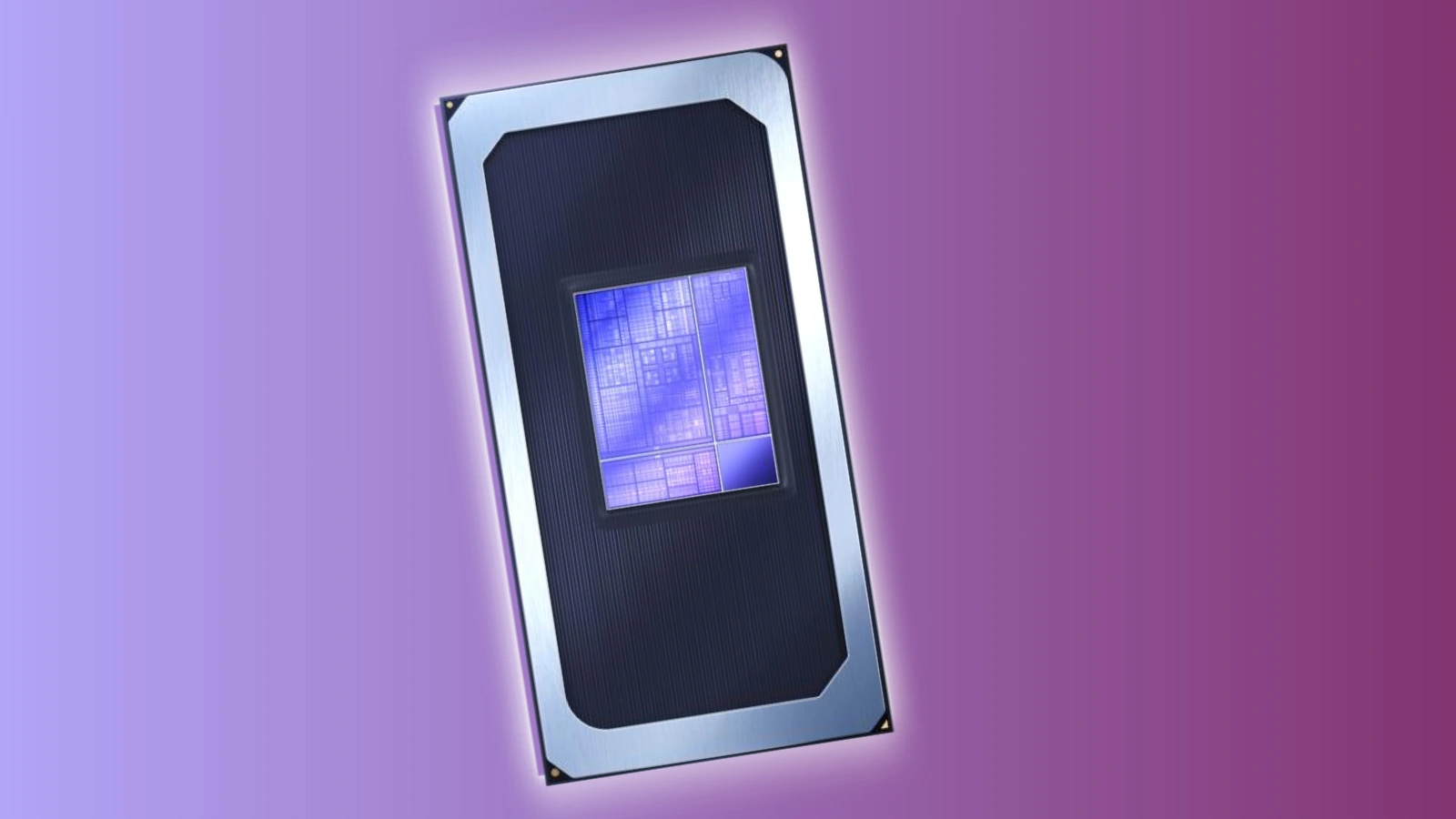
Intel has detailed its new Starfire space processor, designed for spacecraft and other computers operating in extreme environments. The chip combines CPU, GPU, and NPU hardware in a multi-chip Foveros package to handle advanced artificial intelligence workloads. This specialized processor aims to meet strict size, weight, and power constraints in orbit.
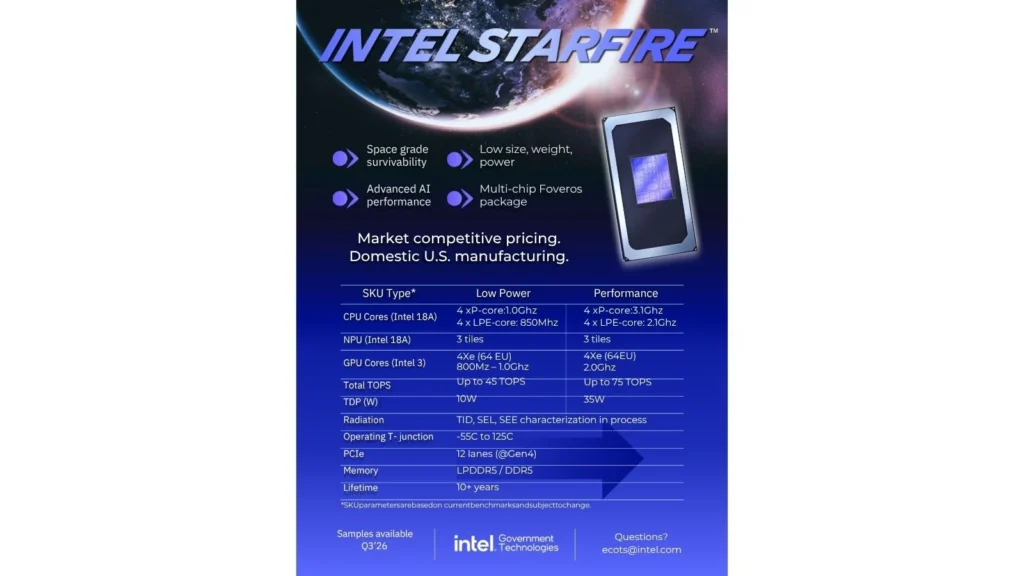
Starfire uses four performance cores and four low-power efficiency cores manufactured on the Intel 18A process node. The integrated graphics processor is manufactured on the Intel 3 process node and includes four Xe cores with 64 execution units. In addition, the three-tile neural processing unit uses Intel 18A technology to handle local AI processing.
Also read: Best Intel 12th Gen Laptops
The hardware has two main power configurations that adjust the CPU and GPU clocks based on resource limits. The low-power configuration has a 10W TDP, running the performance cores at 1.0 GHz and the efficiency cores at 850 MHz. This mode keeps GPU speeds between 800 MHz and 1.0 GHz, yielding up to 45 TOPS of AI performance.
On the other hand, the 35W performance configuration increases the performance cores to 3.1 GHz and the efficiency cores to 2.1 GHz. Under this setting, the graphics hardware reaches 2.0 GHz, and the total AI computing performance rises to 75 TOPS.
Starfire supports LPDDR5 and DDR5 memory alongside 12 PCIe 4.0 lanes for physical connectivity. Intel planned the product lifetime to exceed 10 years (about 120 months) within a junction temperature range of minus 55°C to 125°C. To ensure space-grade survivability, engineers are currently conducting radiation testing for total ionizing dose and single-event latch-up.
The chip will be manufactured entirely in the United States. Intel currently plans to distribute hardware samples to space researchers in the third quarter of 2026.
Source: Intel