
A fresh Geekbench entry has surfaced for Microsoft’s upcoming Surface Laptop 8, pointing to a clear shift toward higher performance with Intel’s Panther Lake chips and a much stronger Arc B390 integrated GPU. The listing gives one of the first detailed looks at what the next generation of Surface laptops could bring, especially on the graphics side.
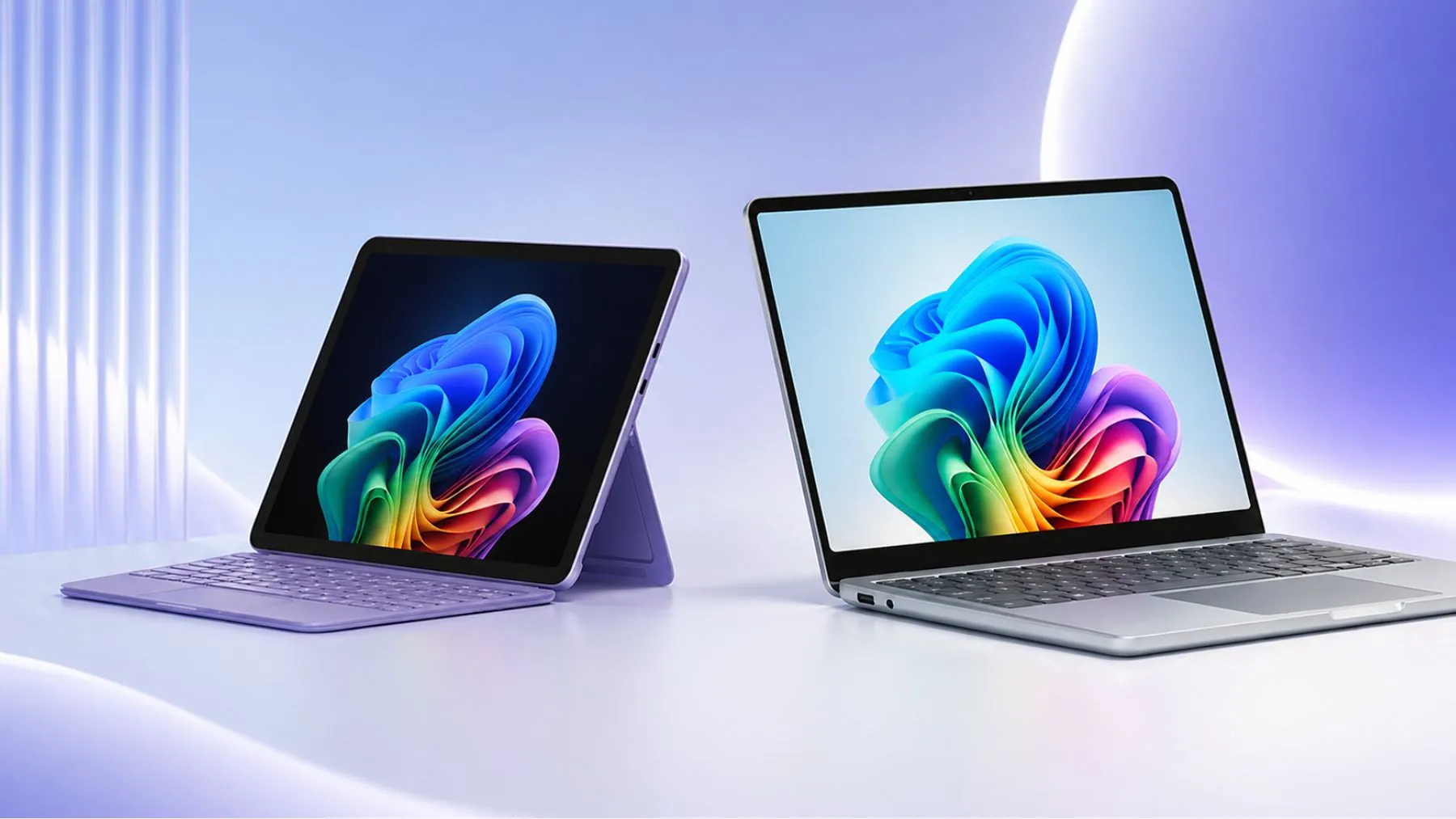
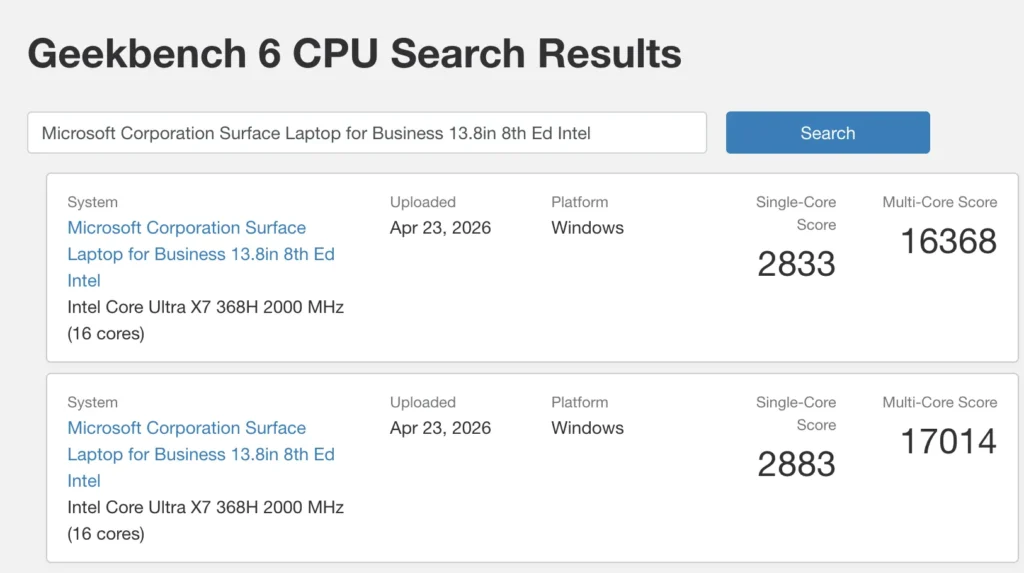
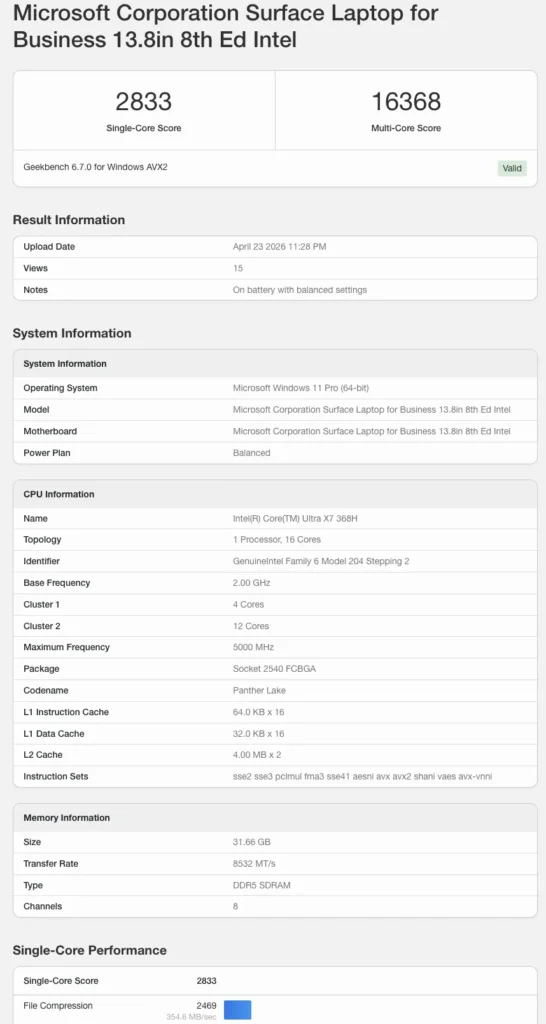
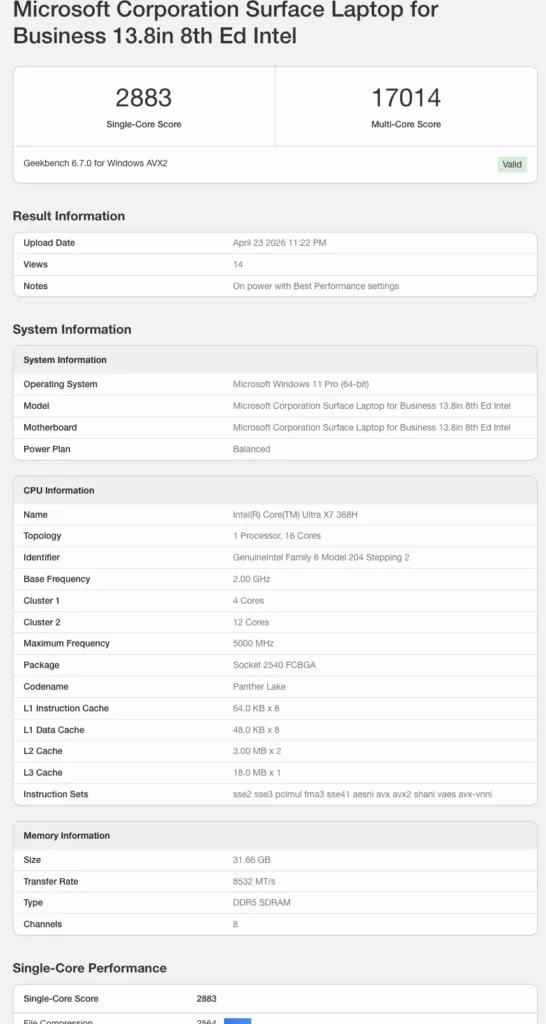
The device appears as a Surface Laptop for Business 13.8-inch (8th Edition), confirming that Microsoft will continue offering Intel-based models alongside its ARM lineup. The tested unit runs on the Intel Core Ultra X7 368H, a 16-core processor with boost clocks reaching up to 5.0GHz, detailed in Intel Core Ultra X7 368H benchmarks. This places it above the chips used in earlier Surface Laptop generations and closer to high-performance laptop territory.
Benchmark results provide an early snapshot of performance based on testing in Cinebench R23. The listing shows scores around 2,800 in single-core and up to 17,000 in multi-core tests, which puts it clearly ahead of previous Surface Laptop models. While final results will depend on cooling and tuning, the jump is already noticeable at this stage.
The biggest upgrade comes from the integrated graphics, reflecting Intel’s newer GPU direction outlined in Intel Nova Lake Xe3P graphics. The Core Ultra X7 368H includes a 12-core Arc B390 GPU, replacing the smaller 4-core graphics found in lower-tier configurations and earlier models. This change alone could reshape how the Surface Laptop handles graphics-heavy tasks, with a much higher ceiling for gaming, creative work, and GPU-accelerated applications.
Memory configurations in the leak show 32GB RAM, with reports indicating that Microsoft may offer options ranging from 16GB up to 64GB, aligning with capacities listed in 32GB RAM laptops. This expands the device’s appeal beyond everyday use, giving more headroom for demanding workloads such as development, content creation, and large multitasking setups.
Display details remain familiar. The tested configuration includes a 13.8-inch panel, matching the current Surface Laptop design. Reports also point to a 15-inch version using similar hardware, giving users a larger-screen option without changing the core platform. There are also indications that OLED panels may be introduced this time, which would mark a shift away from the LCD-only approach used in earlier models.
Microsoft appears to be continuing a dual approach. ARM-based Surface devices focus on battery life and efficiency, while Intel-based “for Business” models target performance and broader software compatibility, a split reflected in devices HP OmniBook Ultra 14. The Surface Laptop 8 fits into the second category, aiming at users who need stronger CPU and GPU capability without moving to a dedicated graphics card.
Panther Lake itself is expected to bring a broader improvement across performance. Early estimates suggest gains in the 15 to 20 percent range compared to previous Intel platforms, though final numbers will depend on configuration and real-world testing.
The timing of the leak lines up with reports of a slight delay in Microsoft’s launch plans. The next Surface lineup is now expected to arrive around mid-May. Pricing has not been confirmed, but rising memory costs could push higher-end configurations above previous generations.
The Surface Laptop 8 has not been officially announced yet, but this leak already points to one of the most significant upgrades in recent years. With a stronger CPU, a much faster integrated GPU, and higher memory limits, the next model looks set to deliver a clear step forward for users who rely on performance without leaving the Surface ecosystem.
Sources: Geekbench via WinFuture & Roland Quandt